When you click on links to various merchants on this site and make a purchase, this can result in this site earning a commission. Affiliate programs and affiliations include, but are not limited to, the eBay Partner Network.
I kind of agree with both of you. If you are hitting the bump stops they need to be shorter, or you need stronger springs. The more you lower the car the stiffer front springs you need. I adhere to the theory of only running as much front spring as you need to stay off the bump stops, that is probably most severe on the brakes, not turning. And then then let the suspension work. How fast it reacts / settles / turns is done with the shock. Some like springs way stiffer than that because they like the feel. I want the tires to stay on the ground even if it gets bumpy. No skipping on the bumps for me. Some kind of travel limit is needed before the steel a-arm hits the steel frame. Hard contact there could bend things and I don't want that. I like some bump stop, short ones, for a little cushion before the metal hits. There are also shock bumpers I have seen used, which can be trimmed to length.
I did my tire temp testing on a skidpad or a tight autocross course without any straight after. Tires cool rapidly. We got different readings on a say 15 degree turn and a faster say 30 degree turn. It basically meant we needed different camber settings depending on what the turns were like. That was why my tight turning autocross tune was not optimum on the high speed race track, you turned the steering wheel much more , or less, on different tracks. My compromise tune was the most common corner speed / gear / rpm / throttle setting. Mine target was to nail a 30 degree turn, 2nd gear, full throttle, on most autocross track. On both slower and faster turns or less throttle it was not optimum.
I too wound up with 850 front springs on my Z28. It needed them. Due to the bump stop testing. But I was severely lowered too, (like 3" ground clearance at the crossmember). I had some really short front tires, like 24". Metalhead if you could do some testing like that it would be interesting to see if your 550 front springs are strong enough. But I know you are running taller tires than I did. They might be, but I would hate to see you bend an a-arm or something. Leave yourself some left-over clearance.
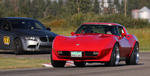
I love the way your car hooks! And that tail wide attitude! I see the cross-steer. I know you have a big drift going on there! Would love to see you run and talk for a while.
The videos are great. 40-80 mostly with 110 peak. Just a little faster than my autocross tracks at 30-70 with 90 peaks. Very quick transitions. Fabulous job driving that rocket.
Last edited by leigh1322; Nov 3, 2021 at 09:54 PM.
Definitely my car would be better with more front spring rate so it doesn't dive so much under brakes. It's all a balance though... At some point I'll go coilovers on the front, with global west extended lower arms, and I'll probably start by trying a 700lb spring rate, and I'd probably go to a stiffer rated glass spring in the rear at the same time. I haven't calculated my current spring rate, but with ~1.5 coils cut I think it would be over 600lb, but probably less than 650.
I wish I had a skidpan available to test with...
Last edited by Metalhead140; Nov 4, 2021 at 03:58 AM.
It took me a bit to figure this out, but a C2 / C3 has 71% Anti-Dive built into the front a-arms with their 10 degree angle. That is quite a bit!
I won't bore you with the math. But what this Anti-Dive would do is stop 71% of the front end brake dive when you hit the brakes hard. So instead of the 1.7" drop I calculated earlier, (which was totally based on weight transfer), the front end drop might only be 0.5" on the brakes in a 1G stop!
Another comment I found on a circle track site, where they actually use this as an adjustment and just another tuning tool.
"With the mechanical resistance created by running Anti Dive, you can potentially run softer springs and the Anti Dive will carry you through the braking zone. When you get to the middle and lift off the brakes, the soft springs can allow the car to roll or drop as Anti-Dive is reduced to nearly zero when you are not loading the suspension with brake torque. Remember, the Anti Dive resistance occurs under braking so a bumpy track can potentially cause trouble – Anti Dive works best on smooth tracks"
Last edited by leigh1322; Nov 8, 2021 at 10:58 PM.
The real cure is to limit the amount of front end vertical travel. Look at any modern sports car. You know they can't have much wheel travel because the tires are so close to rubbing the fenders just sitting still. So in a 50 year old vette you look at those nice graphs of yours and you address front end weight, go with heavy rear weight bias, and heavy enough of spring pound weights to limit front end vertical movement.
I agree the way to make these cars handle to the best of their stock suspension's ability is to stiffen them up (some) with stiffer springs and sway bars. It did handle very well in it's day, but suspension science has changed as much as other technology in 50 years. Reducing the dive and roll eliminates much of the undesireable positive camber change. Understanding the numbers may help some who do not have much direct racing experience, or just find it interesting.
I firmly believe GM (or Duntov) intended for these cars to actually be raced, and intended for them to be improved rather easily. However to make true handling "improvements", one must have either personal experience, personal knowledge, or rely on other's recommendations. I prefer to do a blend of all three myself. I guess I could bolt on a wallet full of somebody else's parts, but this way feels like I have much more control over the outcome. And makes it "mine", and optimizes the potential Duntov saw in the car.
I am actually enjoying doing this deep analysis of my retirement/dream car. As good as my '70 Z28 was/became, it was never the '70 LT-1 Vette that I had really wanted all along .So I am probably obsessing a little bit. I do not have 27 years (again) to mod/test & tune this car to make it the best that it can be. I have but one build left in me and I intend to make it a good one. When it is done I will be retired and driving it in an "electric" world. So be it. They will never understand........ These car's have "soul".
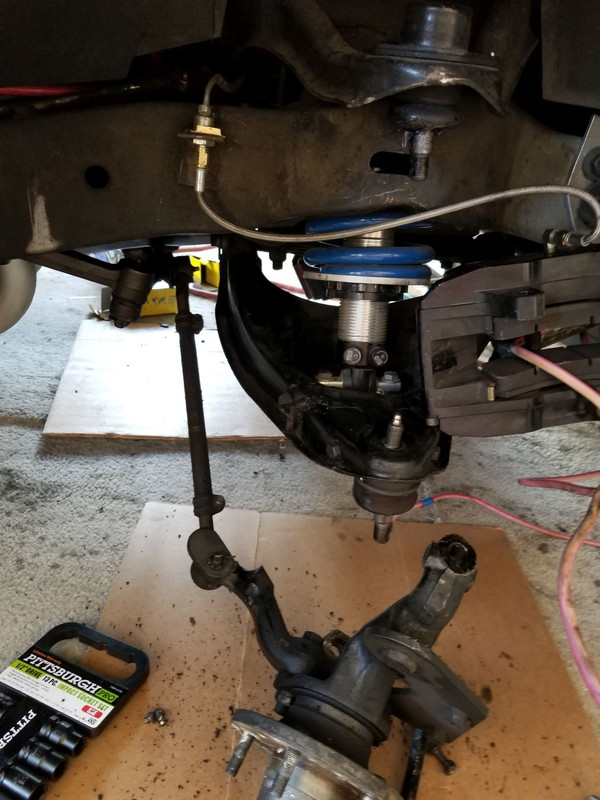
So I have another item of concern with the suspension in general. This may be related to another problem on my car but not 100% sure.
I get a lot of brake piston knock back after high G corners.Worse on s-turns (double pump to get brake pads to seat on the rotors again) This may be due to spindle flex vs rotor position. I have tried to add more preload to the bearings, but with similar results.
Still using factory lower a-arms but with poly bushings. Does anyone else have issues with brake piston knock back after high G-turns.
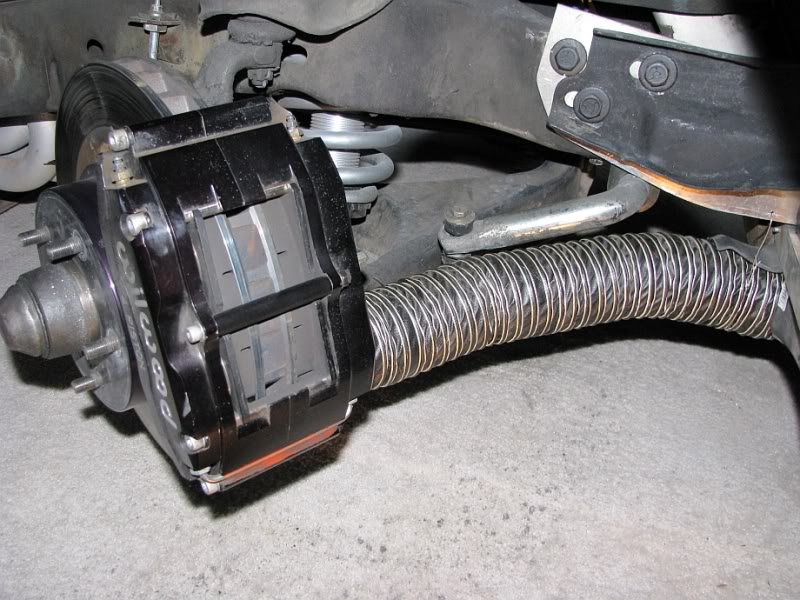
Current brakes are Wilwood D8-6 front with D8-4. Using raybestos ST47 front & ST43 rear pads.
I was considering changing the brake system to 14" rotors with different calipers but most people claim this will make to worse due to larger rotor. Fix what is causing the flex.
Did you every look at other options for wheel hubs /spindles / bearings to reduce this issue.
That is a lot of roll flex during cornering. Here is my best example during a section of the track I drive at. Min speed at the corner is ~ 42 MPH Requires about 90 degree steering wheel turn. This may be not enough speed to generate enough forces. Tires are 275 40R 18 Nitto NT01. But since I have Flaming river R&P steering
the support bracket at the bottom of the frame is fantastic, plus a spreader bar on the upper control arms make the front part of the frame very stiff.
Look how close your rims are to the pavement. In times long ago we used to put white shoe polish from the flat tread to the 1/3 up the side wall to see how much tire was rolling under. Is that a low air pressure problem and or camber?
Look how close your rims are to the pavement. In times long ago we used to put white shoe polish from the flat tread to the 1/3 up the side wall to see how much tire was rolling under. Is that a low air pressure problem and or camber?
I have run 2.4 - 3.2 negitive camber and run 36-38 PSI Hot, there are arrow marks on the tires to show roll over limit. I used white wax pens to see total role over. These tires are after 10 track days.
So I have another item of concern with the suspension in general. This may be related to another problem on my car but not 100% sure.
I get a lot of brake piston knock back after high G corners.Worse on s-turns (double pump to get brake pads to seat on the rotors again) This may be due to spindle flex vs rotor position. I have tried to add more preload to the bearings, but with similar results.
Still using factory lower a-arms but with poly bushings. Does anyone else have issues with brake piston knock back after high G-turns.
Current brakes are Wilwood D8-6 front with D8-4. Using raybestos ST47 front & ST43 rear pads.
.
Did the D8-6 use the stock C-3 caliper mount or did it come with a custom mount? Is a D8-6 a hat type rotor? Is it possible that the caliper is not 100% centered on the rotor causing some deflection under braking? The mount is attached to the upright spindle arm and I can see where bearing being loose would be a problem
Did the D8-6 use the stock C-3 caliper mount or did it come with a custom mount? Is a D8-6 a hat type rotor? Is it possible that the caliper is not 100% centered on the rotor causing some deflection under braking? The mount is attached to the upright spindle arm and I can see where bearing being loose would be a problem
D8-6 use the stock caliper mount. Trying to see if there are other options / spindle design etc for C3 suspension setup.
D8-6 use the stock caliper mount. Trying to see if there are other options / spindle design etc for C3 suspension setup.
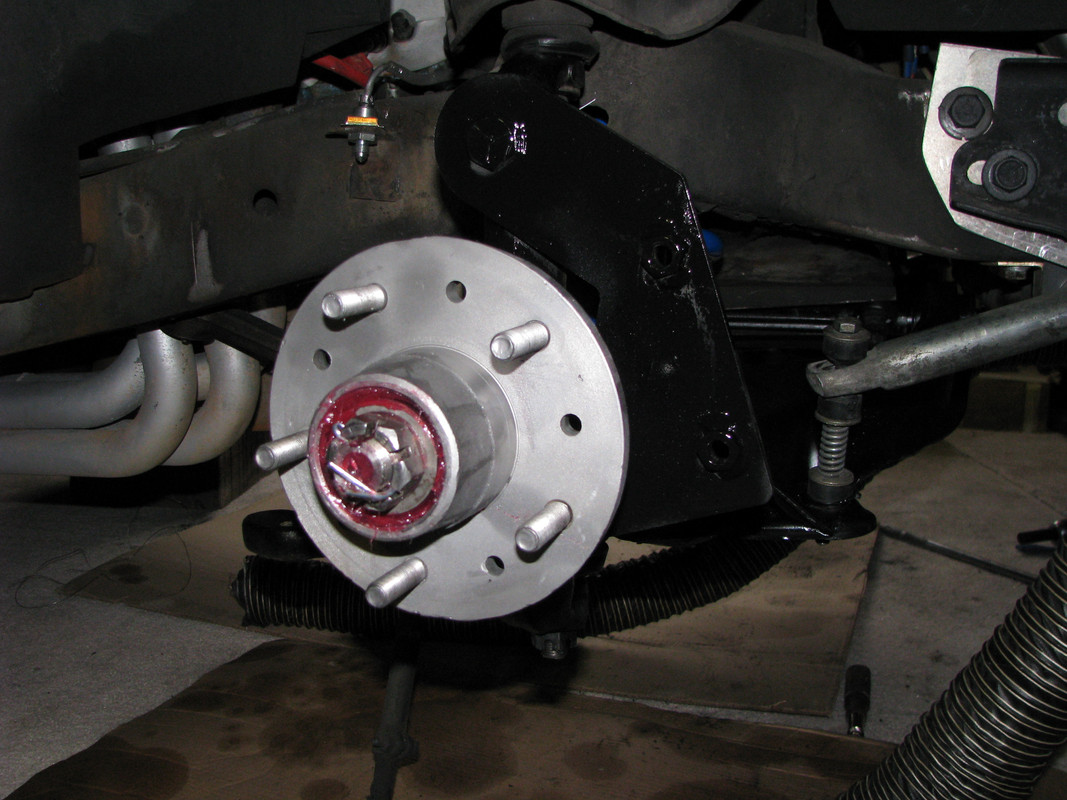
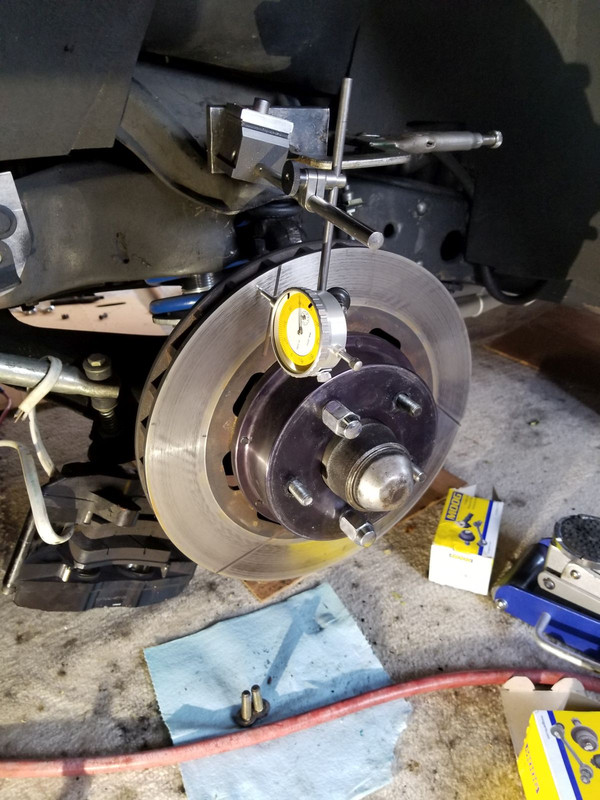
The whole idea of having to use pie shaped wedges to dial in the rotor run out to nearly "ZERO" is just a **** poor design from the 60's. I use a custom hardened steel caliper mount for my GT1 brakes. I've always thought about just getting away from fixed and going to a modern full floating caliper and mount setup.
Can I assume you already have your front wheel bearing free play set to .001" or so? (The center nut can be shimmed or surface ground.) I found spindle bearing fretting wear on the bottom of one of my front spindles that would let the bearing move vertically .0015" on the spindle. IIRC that alone would have been .007" at the rotor lip. If you are still getting pad knockback after that, then there must be some flex between the horizontal part of the spindle and 90 degree spindle upright. I understand the lip piston seals are only designed to handle flex of .010". That's why the rotor runout has to be held so tight. More than that moves the pistons, so you must be getting that much movement or more. If it is not happening in you static rotor setup, then it must be dynamic. It would not take much spindle flex to put you over that limit. I do not see how the caliper brackets themselves could enter into this, they are under great stress while under braking but virtually none in a turn. I agree with GKull that floating calipers have a much larger rubber mounting system (for the entire caliper) tolerating much larger lateral rotor movements.
It helps having access to a media blaster to clean everything up before putting in high temp grease. I replaced the rotors on my hats and was dialing them in to as near zero as possible.
I get a lot of brake piston knock back after high G corners.Worse on s-turns (double pump to get brake pads to seat on the rotors again) This may be due to spindle flex vs rotor position. I have tried to add more preload to the bearings, but with similar results.
I get knockback after high G corners, but it's half a pump to get to my brakes. It happens after several laps once the assembly is at full temperature. My theory is that I'm developing bearing play when the hub heats up. I've also had to drill my bearing caps to keep them from popping off on track . . . so I know they are getting hot.
I'm limited to stock components by vintage racing rules. So I need to just improve/work-around what I have. Getting cooling air to the hub is important.
I get knockback after high G corners, but it's half a pump to get to my brakes. It happens after several laps once the assembly is at full temperature. My theory is that I'm developing bearing play when the hub heats up. I've also had to drill my bearing caps to keep them from popping off on track . . . so I know they are getting hot.
I'm limited to stock components by vintage racing rules. So I need to just improve/work-around what I have. Getting cooling air to the hub is important.
Many years ago when I was researching brake improvements because my stock brakes would fail in just a couple of laps even with 600+ degree brake fluid. Duntov racing had J-56 brakes machined for titanium thermal heat block from the pads to the pistons. Zero brake fade for vintage racing rules.
I saw that cheating abounded and it only came out if somebody protested you. Which wasn't being very gentlemanly. So I went to Wilwood with their thermloc tech and never get to boiling fluid even with glowing rotors.
My hats and rotors are Wilwood. Hat type rotors also keep heat out of the wheel bearings. I used to melt the grease with stockish brakes until I went high temp grease and hat type rotors. They are made of really hard tempered aluminum. Because of the bolt on idea I think that they transfer less heat