When you click on links to various merchants on this site and make a purchase, this can result in this site earning a commission. Affiliate programs and affiliations include, but are not limited to, the eBay Partner Network.
I reached out to my welder. He said "it's been very intricate to work on." My understanding is the casting was particularly dirty and he said he just wants to make sure he gets really good bond into the casting. I told him not to worry so much on how it looks, I have burrs lol. But he has been doing it little by little between building trailers. So it will be done and he hasn't forgotten me. So I'm okay with that.
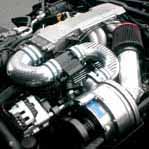
In the meantime... do I attempt tossing on the renegade and seeing if I can get it sealed up enough for a couple dyno pulls?
technique for welding cast aluminum is different then regular aluminum. when tig welding, it is necessary to heat up material slowing to let the impurities float out and start welding when there's a clean puddle. its a slower process. I use 4043 filler wire. I haven't mig welded cast aluminum .
Ran a quick simulation of a 350 with the Profiler 195 heads, headers and a good dual exhaust.
I used your 224 - 230 ish duration cam, used 112 lobe sep, 0.32 cam lift both lobes times 1.5 = 0.48 inch lift both lobes.
I lowered some of the intake discharge coefficients so the maximum Hp results would roughly match the rear wheel dyno data you posted ... trying to take the "corrected for" out of the discussion.
Laid my results on top of your dyno sheet.
The RED graphs are with the stock CFI manifold.
The BLUE graphs are the exact same model with the Renegade dimensions I measured when I had it here.
The stock model matches fairly well, even has the same torque dip, which I think is the headers going in and out of sync.
Your cam has long enough duration for header tuning to matter, but I'll have to look at the waves and see if it's the headers or something else ... when I have more time.
The sim shows a higher bump in the torque, but that can be worked out ... maybe the cam isn't exactly right?
A rough idea of the power you are making at the wheels ... anyway
Ran a quick simulation of a 350 with the Profiler 195 heads, headers and a good dual exhaust.
I used your 224 - 230 ish duration cam, used 112 lobe sep, 0.32 cam lift both lobes times 1.5 = 0.48 inch lift both lobes.
I lowered some of the intake discharge coefficients so the maximum Hp results would roughly match the rear wheel dyno data you posted ... trying to take the "corrected for" out of the discussion.
Laid my results on top of your dyno sheet.
The RED graphs are with the stock CFI manifold.
The BLUE graphs are the exact same model with the Renegade dimensions I measured when I had it here.
The stock model matches fairly well, even has the same torque dip, which I think is the headers going in and out of sync.
Your cam has long enough duration for header tuning to matter, but I'll have to look at the waves and see if it's the headers or something else ... when I have more time.
The sim shows a higher bump in the torque, but that can be worked out ... maybe the cam isn't exactly right?
A rough idea of the power you are making at the wheels ... anyway
butt dyno says that's about right. But the LSA is 114 so that would explain the torque bump. It is a 112 so never mind. Again I can't thank you enough for what you did. Are you still interested in reflowing the Ported unit when it's done? He's making progress just tedious but ultimately it will probably go on.
Edit: the car pulls at the rate it pulled with the old one to 4000 beyond 4000 now.
The rest of the cam specs if it interests you: (also note, 1.52 vs the advertised 1.5 rockers so that needs to be adjusted.)
I'm also running a K&N. It took about a week last time for it to rub the paint off the underside of the hood so I guess I'll let it ride for now. Mine is off on the upper side of the port oddly enough. The EGR passage also makes a little hump in the 6&8 runners but not horrible like others have said.
I didn't RTV the water jacket, if it seals it seals. I hate cleaning that crap off the heads. I used a little dab of indian head last time just to hold the gaskets in place on the head while installing. This time I used a scotch double stick applicator... kind of for wrapping paper but it leaves a thin film of tack like a post it note. Worked great to hold them in place.
yeah I was in two minds about rtv around the water ports because the fel pro gaskets shouldn’t need it imo. I only really applied a thin smear to hold the gaskets in place but I like your idea better.
So I'm going to preface this with the statement I'm very inebriated at the moment but... here goes. Is it unfair to dyno the car with the bored throttle bodies on the Renegade if the stock unit also showed vacuum at the same rpms? I feel it is because they're bigger but I'd be giving her all she's got too. I'm up int he air.i think the A/B/C should be only intake changes.
So I'm going to preface this with the statement I'm very inebriated at the moment but... here goes. Is it unfair to dyno the car with the bored throttle bodies on the Renegade if the stock unit also showed vacuum at the same rpms? I feel it is because they're bigger but I'd be giving her all she's got too. I'm up int he air.i think the A/B/C should be only intake changes.
I’ve be drinking all day myself. You need to give it what it needs.
I’ve be drinking all day myself. You need to give it what it needs.
Yeah I was kind of figuring. It'll probably change a lot of the fuel mapping too though. I may message street lethal about working on the tune. He offered his expertise a while back and maybe it's time.
So I'm going to preface this with the statement I'm very inebriated at the moment but... here goes. Is it unfair to dyno the car with the bored throttle bodies on the Renegade if the stock unit also showed vacuum at the same rpms? I feel it is because they're bigger but I'd be giving her all she's got too. I'm up int he air.i think the A/B/C should be only intake changes.
No it's not "unfair", b/c CFI-EFI did bore'd TB's on his ported intake car and it gained exactly: nothing. Stock TB's are better than good enough for a stock or stockish engine so I'd say....giv'er hell on the dyno! Hope you're not hung, today!
No it's not "unfair", b/c CFI-EFI did bore'd TB's on his ported intake car and it gained exactly: nothing. Stock TB's are better than good enough for a stock or stockish engine so I'd say....giv'er hell on the dyno! Hope you're not hung, today!
Nah I'm fine. But I am seeing what is indicated as vacuum in the plenum which tells me they're possibly restrictive. It did it on the stock unit too but was a lot less. MAP reading starts around 99 at wide open in second and drops to about 87 at 6200. (Mpa or Kpa... I forget) vs 99 to about 94 that I was seeing prior.
As far as how I'm feeling, I've been up working around the house since 8 so Im good. Takes a lot to get me the next day and usually only in the summer (dehydrated). probably going to clean up the garage later and pull the car out again.
Ran a quick simulation of a 350 with the Profiler 195 heads, headers and a good dual exhaust.
I used your 224 - 230 ish duration cam, used 112 lobe sep, 0.32 cam lift both lobes times 1.5 = 0.48 inch lift both lobes.
I lowered some of the intake discharge coefficients so the maximum Hp results would roughly match the rear wheel dyno data you posted ... trying to take the "corrected for" out of the discussion.
Laid my results on top of your dyno sheet.
The RED graphs are with the stock CFI manifold.
The BLUE graphs are the exact same model with the Renegade dimensions I measured when I had it here.
The stock model matches fairly well, even has the same torque dip, which I think is the headers going in and out of sync.
Your cam has long enough duration for header tuning to matter, but I'll have to look at the waves and see if it's the headers or something else ... when I have more time.
The sim shows a higher bump in the torque, but that can be worked out ... maybe the cam isn't exactly right?
A rough idea of the power you are making at the wheels ... anyway
I put some more thought into the torque dip... I think it is 2 things occurring. He rolled into the gas first, which means it transitioned from the part throttle timing table (which has more advance) to the WOT (which has about 35 degrees all in, and only 29 degrees at 2200 rpm) Basically it lost 10 degrees of timing accompanied with the added shot of AE and then PE fueling, it went rich as it lost timing and had extra fuel... So that coupled with the headers (They are Melrose, not equal length but still decent.) is probably exactly what happened. TBI fueling is tricky to get exactly right but the data log I had from the drive home shows a rich dip just after 2200 that comes back around 2700 to my commanded 12.8:1 AFR at wide open. Now not, that is also near the range I was having fueling problems with harmonics in the steel line and vacuum reference on the FPR. The lack of a pulsator to dampen the injector pulses. So there are a few things occurring in that operating range still. (removing the hard line and going to rubber for the 1 foot of feed to each of the TBs made that phenomenon unnoticeable again.)
Didn't have a lot of time today ... hope this isn't more confusing
I think it's the header tuning, at least in the simulation.
At 2200 rpm the exhaust pressure wave is above ATM during the overlap period.
At 3000 rpm the exhaust pressure wave is below ATM during the overlap period.
Here is the residual exhaust in the cylinder from reversion verse rpm with hp & torque.
Boosted actual values (max about 12%) times 10 so you can see it on the graph.
Appears to follow the torque dip.
interesting. So it just seems like it's just assuming tube lengths and thus tuning in the simulation. This is stuff I knew existed but never really cared to learn about simply because it didn't seem to matter that much on most vehicles... but now I've got another rabbit hole I can go down.
I'll get back to this once I read up and understand but basically it seems like the a matter of figuring out if it's helping evacuate the cylinder or reversion... which seems like relatively basic harmonics principles so idk. Time to read up.
The real magic of a simulation isn't how much horsepower I'm going to make, it's being able to see and understand the pressure and velocity graphs.
Everything is in there ... even if it makes your brain hurt a little
Any negative velocity is reversion.
Exhaust flowing back into the combustion chamber or air-fuel flowing back into the intake manifold.
Your engine - around 2300 rpm - shows reversion in the intake and exhaust velocity - first RED arrow.
The positive exhaust pressure wave - from the header tuning - pushes the combustion chamber mixture back up the intake port when the intake value opens during overlap.
The piston is pulling the exhaust back into the combustion chamber as it moves down the bore before the exhaust valve closes.
Some modern performance engines with big cams and good flowing heads don't have an EGR valve because they already dilute the combustion mixture with exhaust because of reversion at low rpm's.
There is also some reversion back into the intake manifold right after the piston reaches BDC and heads up the bore - second RED arrow.
The air in the intake runner doesn't have enough moment yet - Intake Ramming - to overcome the pressure from the piston traveling up the bore and the flow reverses.
Here is the full run of your engine with the STOCK CFI manifold.
So I had the time to assess some things today... basically actually beat the living snot out of it and see how it feels... Feels great and I think I will bump up the rev limiter a little more. It keeps me back in the seat pretty well until it crashes into it... about 6300. So I'll bump it to 6600 and call it safe. The valve train shows no signs of float, it runs hard until it hits it lol.
So I had the time to assess some things today... basically actually beat the living snot out of it and see how it feels... Feels great and I think I will bump up the rev limiter a little more. It keeps me back in the seat pretty well until it crashes into it... about 6300. So I'll bump it to 6600 and call it safe. The valve train shows no signs of float, it runs hard until it hits it lol.
I'm not good at picking up social cues, but I get this weird feeling that Bucc is a fan of Rob? Maybe??
Originally Posted by 84 4+3
So I had the time to assess some things today... basically actually beat the living snot out of it and see how it feels... Feels great and I think I will bump up the rev limiter a little more. It keeps me back in the seat pretty well until it crashes into it... about 6300. So I'll bump it to 6600 and call it safe. The valve train shows no signs of float, it runs hard until it hits it lol.
I'm not good at picking up social cues, but I get this weird feeling that Bucc is a fan of Rob? Maybe??
It sounds awesome. Good reading!
Rob (street Lethal on thirdgen) knows his chit. I can for do it myself but it'll take me years to approach what he can do in a couple hours in regards to tuning. And my understanding is he is just an all around good guy and lives about 15/20 minutes from me so we could tune in person and he can tweak it first hand instead of sending data logs back and forth. (which is a bonus)
Rob (street Lethal on thirdgen) knows his chit. I can for do it myself but it'll take me years to approach what he can do in a couple hours in regards to tuning. And my understanding is he is just an all around good guy and lives about 15/20 minutes from me so we could tune in person and he can tweak it first hand instead of sending data logs back and forth. (which is a bonus)
is this going to be a 100 hp increase over stock manifold





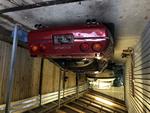












 probably going to clean up the garage later and pull the car out again.





 (which is a bonus)