When you click on links to various merchants on this site and make a purchase, this can result in this site earning a commission. Affiliate programs and affiliations include, but are not limited to, the eBay Partner Network.
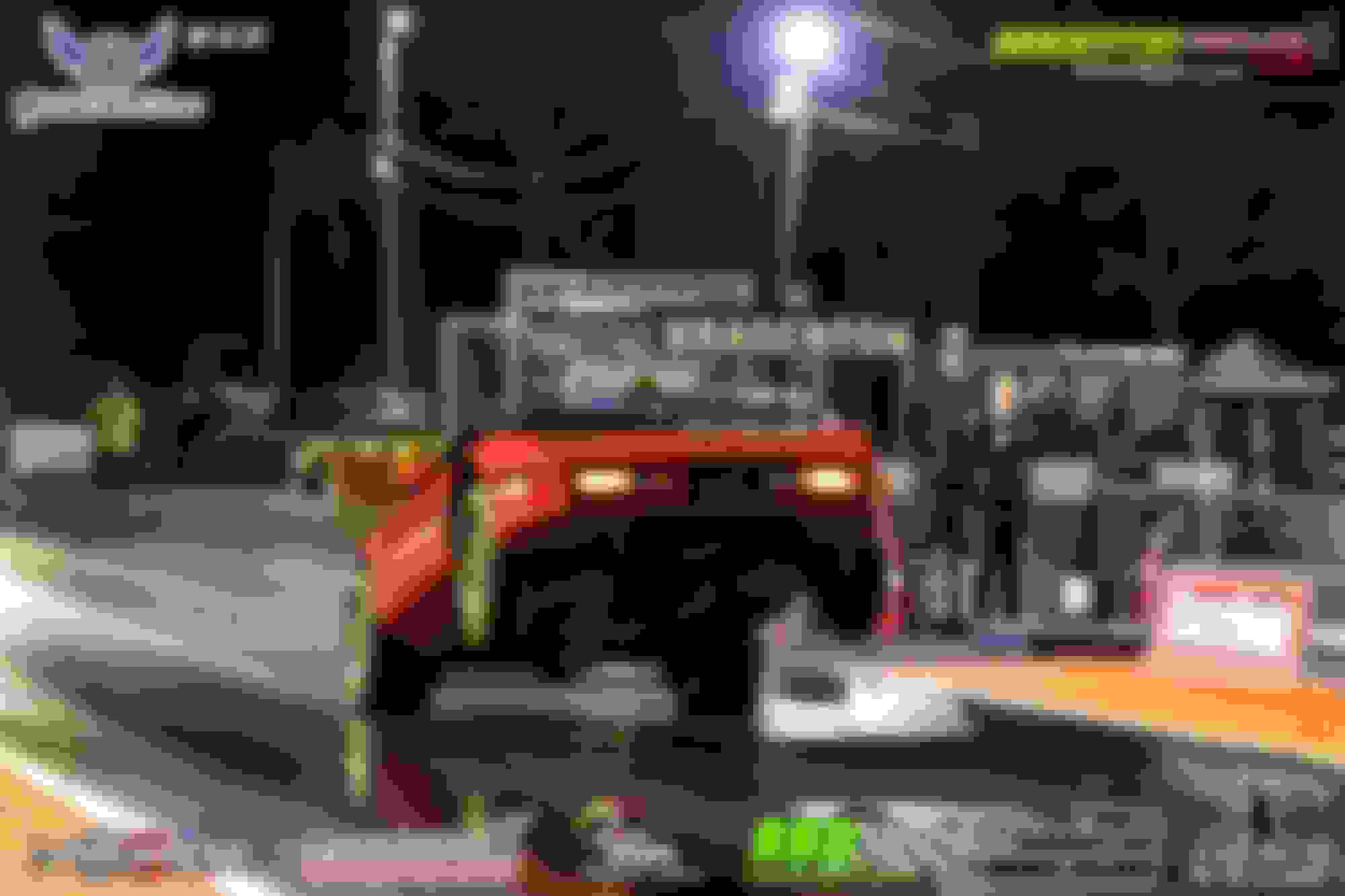
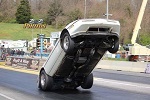
..... After making some changes to the car , I find it necessary to quelch the tendency to lift the front end at launch ... a couple weeks ago at Gainesville , it was going for the rear bumper . Kinda scary when all you see is sky and the nose is still climbing . I pedaled it and brought it down but the landing was pretty hard ... fortunately there was no damage .
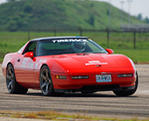
..... So I adjusted the 4 Link bars and installed an improved front suspension limiter and made a hit at Bradenton "Street Heat" last Saturday to get this .....
..... Made some more adjustments to the link bars and moved the Instant Center back another 10" ... that's 26" total since Gainesville ... will go to the TnT at Bradenton on Thursday and we have points races on Saturday and Sunday . Hopefully I will get the front down without losing rear bite ... all adjustments made are keeping the I/C above the anti-squat line to plant the radials and not lose traction .....
This is like saying my gold pants are too tight lol!
Just kidding, thats an awesome problem to have (if your not the one trying to dial it in!)
Lived in st Pete for years. Never got a chance to make it to that track. Looks awesome!
Biggest thing with radial tires is slowing and limiting the front extension. Front shock valving is key and when you are full tight on rebound you will need to resort to tightening up the limiters. Alot of commercial shocks do not have enough rebound damping for radial tires. I have Viking Crusader front shocks AP valving and have a few clicks left with 2" of extension.
Lots of other things can help. Rear extension/seperation can be used to "push the front down " but that's a game of timing the rear seperation vs the front extension. It is a razor's edge and it can cut you because if you wheelstand with the rear suspension separated.... you just made it where the car can climb even higher before hitting the bumper.
Weight. I know all the wives tales about -100lbs = a tenth.... obviously we want the car as light as possible but none of that applies when the car won't work. Sometimes adding 20-25lbs strategically placed on the front end can make a huge difference.... as far forward and as low as you can get it. Weight distribution is a real concern with radial tires. FYI, my car is 54% front and it's not enough. We resorted to a bunch of tricks on my car as it was built and subsequent modifications to get that much. I still carry ballast in the front of my car and have raced as much as 50lbs overweight but it makes the car faster.
Its never ending keeping on top of the suspension as you get faster and I'm still on the struggle bus at times with mine. Good luck with it.
Hi Robert. I agree with Will. One thing that really helped me was revalving my front shocks to slow down the extension so the front end will be pulled down at launch. I think I have Afco double adjustable shocks, but even with full tight, the fronts would drop too quickly. MP Motorsports revalved the shocks and now my lift is manageable. As long as you have rear bite, your car will et faster with the fronts only a couple of inches off the ground. Also will keep you off the wall and save your oilpan. Willie
Do you drive that on the street? How is it with the solid axle ?
..... It was streetable until the 9" rear went in ... I had to cut the back half off of the exhaust and then l sold the street tires ... street driving with a spool is challenging whenever a turn is necessary too .....
Why not wheelie bars? I mean I am sure you thought of it but I am just curious.
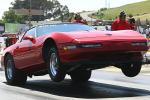
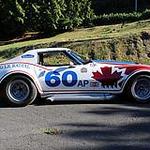
That things looks awesome standing up all over that Bel-Air!!
..... There's no reason that l couldn't run wheelie bars and l have given it a few fleeting moments of thought ... there is just too much energy wasted in picking the front end up ... and wheelie bars have a tendency to unload the rear tires ... I still have a lot of adjustability in the 4 link bars and I'm hoping that I can accomplish a balance of forward motion while maintaining traction ... my 60' times are presently in the 1.35x range and the car recorded a 1.33 a couple weeks ago ... so if l can stay in that range ... or better ... and stay a foot or less above earth I will be pleased ! .....
Biggest thing with radial tires is slowing and limiting the front extension. Front shock valving is key and when you are full tight on rebound you will need to resort to tightening up the limiters. Alot of commercial shocks do not have enough rebound damping for radial tires. I have Viking Crusader front shocks AP valving and have a few clicks left with 2" of extension.
Lots of other things can help. Rear extension/seperation can be used to "push the front down " but that's a game of timing the rear seperation vs the front extension. It is a razor's edge and it can cut you because if you wheelstand with the rear suspension separated.... you just made it where the car can climb even higher before hitting the bumper.
Weight. I know all the wives tales about -100lbs = a tenth.... obviously we want the car as light as possible but none of that applies when the car won't work. Sometimes adding 20-25lbs strategically placed on the front end can make a huge difference.... as far forward and as low as you can get it. Weight distribution is a real concern with radial tires. FYI, my car is 54% front and it's not enough. We resorted to a bunch of tricks on my car as it was built and subsequent modifications to get that much. I still carry ballast in the front of my car and have raced as much as 50lbs overweight but it makes the car faster.
Its never ending keeping on top of the suspension as you get faster and I'm still on the struggle bus at times with mine. Good luck with it.
Will
..... Hey Will ... I do need to get the car scaled again , I haven't done that since the 9" was installed and I'm pretty sure that axle added a few pounds to the back end ... on the front , I removed the headlights and passenger seat but otherwise the car is still pretty hefty ...still running factory power steering , power seat , and power windows ... my front shocks are the cheap Comp Engineering 3 setting "adjustables" ... I know that I need to upgrade them ... I did install some front limiters that have me at 3 1/2" of tire movement and will likely enhance those for a bit less ... If I can't reach my front lift goals , I will be adding some weight to the front end ... I have a weighty "skid plate" designed for the crossmember but haven't had time to implement it yet ...
That's a 5/8" aluminum block attached to the bottom spring stop plate to limit front spring travel ... I have some 3/4" stock that I want to try .....
Hi Robert. I agree with Will. One thing that really helped me was revalving my front shocks to slow down the extension so the front end will be pulled down at launch. I think I have Afco double adjustable shocks, but even with full tight, the fronts would drop too quickly. MP Motorsports revalved the shocks and now my lift is manageable. As long as you have rear bite, your car will et faster with the fronts only a couple of inches off the ground. Also will keep you off the wall and save your oilpan. Willie
..... I spent all my money on tires and wheels ... but new quality front shocks are on top of my shopping list ... l have AFCO's in the back and they helped get the launch where it is now ... AMEN to saving oil pans !
..... I spent all my money on tires and wheels ... but new quality front shocks are on top of my shopping list ... l have AFCO's in the back and they helped get the launch where it is now ... AMEN to saving oil pans !
This is a cool discussion I love the technical stuff about suspensions in drag racing and how they work. I have little experience but love to learn.
How does going with different front shocks change how high it will pull the front end? I understand the shock will unload differently but at the same time if there is enough power to pick up the front up like you are it will just pull the whole thing off the ground no matter what that shock is doing??? How does the front shock effect the rear end? Or is this just so you don't smash the oil pan off with every pass.
If you go to wheelie bars then you can adjust the overall rotation during launch and force the tires to take the brunt of the power moving the car forward rather than rotating the car. But then you have to have some serious tires to take it. But it looks like do have them.
If you go to weight in the front end you are using you're using cantilever effect to keep it down. This is a good option for sure. But it would be a tuning game for sure at every track per the surface and traction to find the least amount needed for the proper launch. But it might not be that sensitive that far away from the rear end.
Wheel speed? Does that come into play here? Get the wheel speed up at launch and the front end will stay down?
Sorry for so many questions I just find this stuff very cool!!
This is interesting to think about for a very specialized use case. I'm not experienced in drag racing, especially at this level. So the following are just some thoughts based on general suspension theory. In general, I think of this problem as having an "excess" of traction but not enough control over the weight transfer. You can afford to trade some traction away to get more control over the rate and amount of weight transfer. The perfect balance is probably with the wheels just barely off the ground, as someone else said. At that point you have already transferred 100% of the load to the rear tires (can't improve traction any more than that) but you aren't staring at the sky.
In general, shocks modify the rates of weight transfer. However, when you get to the point where any pair of wheels are coming off the ground then I don't think the shocks for those wheels can really do anything anymore: you've achieved 100% weight transfer at that point. In the case of wheelies, the rear shock valving seems like it would be important, but the front valving will be more important for controlling things when the wheels come back down. It's entirely possible I'm missing something here, though.
At the rear, the things that could mitigate wheelstands will also hurt traction, so it's a balancing act. For example, lower ride height and CG will help control wheelies but will reduce rearward weight transfer (which you want for traction). If you can soften rear compression damping and increase rebound rate that could help get that balance by keeping the rear from rising as much and as quickly, thereby lowering the CG of the whole car. Lowering rear ride height would help for the same reasons, but your tires and fenders probably put a hard limit on that.
As for car weight, moving weight forward/lower is better than adding weight forward/low. Obviously there are limits to this, and adding weight is faster than having to pedal the car, I'm sure. It's definitely safer!
Originally Posted by C409
..... Made some more adjustments to the link bars and moved the Instant Center back another 10" ... that's 26" total since Gainesville ... will go to the TnT at Bradenton on Thursday and we have points races on Saturday and Sunday . Hopefully I will get the front down without losing rear bite ... all adjustments made are keeping the I/C above the anti-squat line to plant the radials and not lose traction .....
I have questions here, just out of curiosity. Are you saying you moved the rear IC backward (toward the rear tires) 26", thereby shortening the virtual swing arm by that amount? That's a ton! If you're keeping anti-squat percentage the same and above 100%, then shortening the virtual swing arm makes the IC move around more as the suspension moves around on launch. As the rear rises on acceleration (with more than 100% anti-squat), the percent of anti-squat rises more with the shorter swing arm, which causes even more weight transfer and makes the wheelie even worse. This should exacerbate the wheel stand problem, I would think.
Talking about that balance thing again, you might try lowering the IC to see if you can retain enough traction to just barely unload the front tires completely while not sending them skyward. Or at the very least, again cranking up rebound rates on the rear shocks to try to slow down that gain in ride height. Wheelie bars are another means of trading off rear-tire traction for control.
Maybe I'm way out of my boundaries but have You ever looked at a Motocross Bike Starting Device? Basically, when You on the starting line You push the front suspension down and it stays down until it hits the first bump and releases. Then everything is normal for the rest of the race. Maybe I'm too far outside the box.on this one.
Maybe I'm way out of my boundaries but have You ever looked at a Motocross Bike Starting Device? Basically, when You on the starting line You push the front suspension down and it stays down until it hits the first bump and releases. Then everything is normal for the rest of the race. Maybe I'm too far outside the box.on this one.
Interesting you mention that. In MotoGP (road courses), they use launch controls that sack the rear suspension down to control wheelies.
..... The front spring is trying to lift the front of the car ... all the time ... tightening up the extension of the front shocks puts the brakes on that lift ... on the rear with 100% plus anti-squat you get some separation between the axle/tires and the body ... the shock extension would be a little loose to let the tires "plant" and the compression tight to keep the tires from "basketballing" back up and staying in contact with the track ... this is especially true and important with radial tires ... the C4 has unequal length track bars that enhances changes to their geometry with regard to the I/C when there is axle movement ... BTW , the car is still picking the front up too much .....
..... The front spring is trying to lift the front of the car ... all the time ... tightening up the extension of the front shocks puts the brakes on that lift ...
Well...sort of. The front spring is trying to lift the frame (sprung mass) up and away from the front wheel, but it's not trying to lift the tire off the ground. The tire's contact with the ground is purely down to the vertical component of the acceleration force vs the weight (load) on the front tires. The tires will stay on the road as long as the acceleration force trying to lift the front is not greater than the weight on the front tires trying to hold them down. But when that force exceeds the weight on the front tires and they leave the ground, then all spring and shock actions become moot because they have to act through the tires' contact with the ground, which no longer exists. If the front tires could be tied or clamped to the ground it would still matter, but otherwise they are coming off the ground no matter how you have the front shocks set. The only ways to prevent the tires coming off the ground at that point is to add weight to them or reduce the force trying to lift them.
Think of a weight lifter deadlifting a 200lb barbell. We can put springs or dampers between the barbell and the floor, but if the weight lifter can apply more upward force than 200lb, that barbell is coming off the floor no matter what.









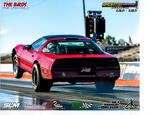


 Trying to minimize wheelies