






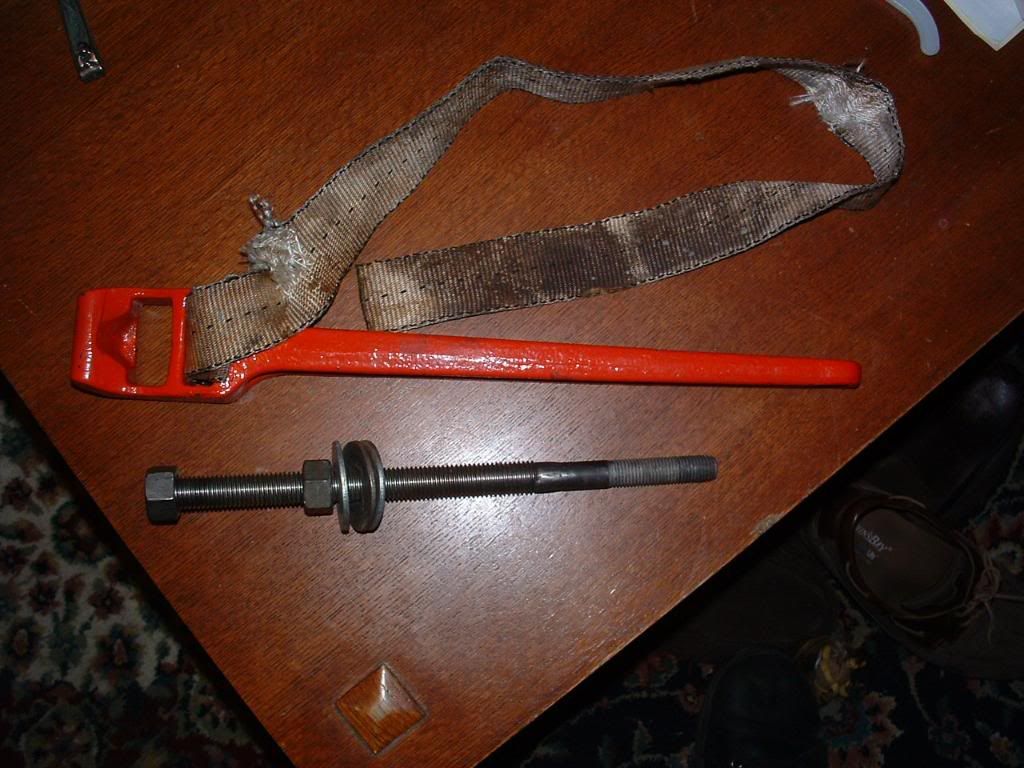
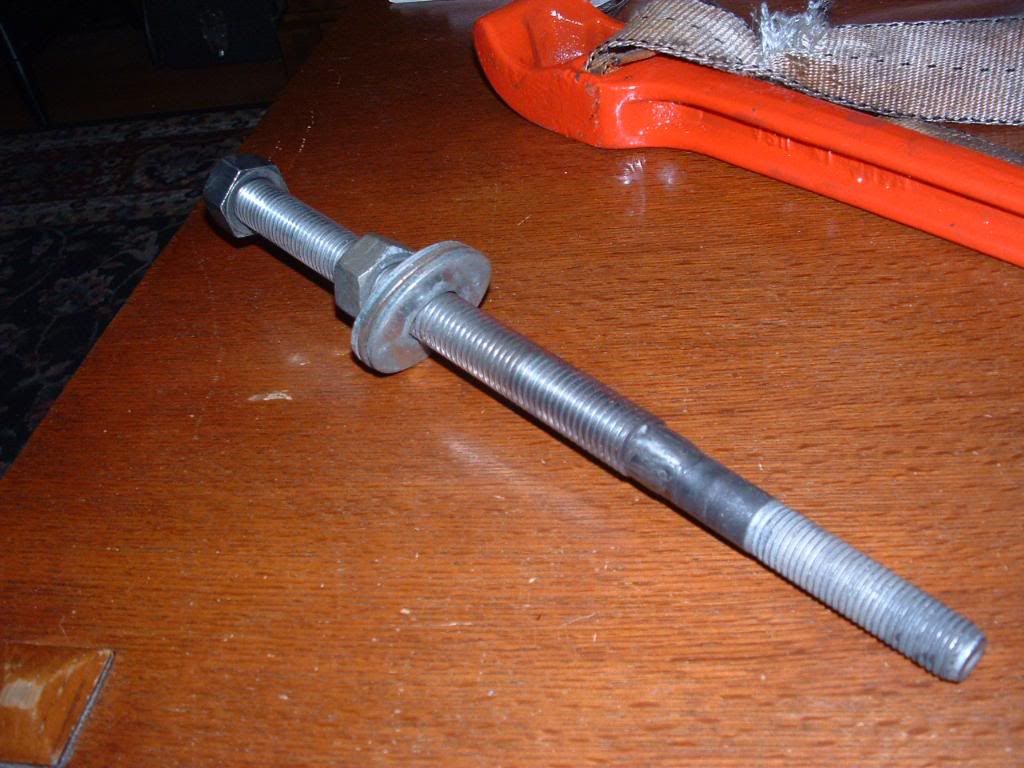

How do I lock the engine

Le Mans Master

Joined: Nov 2005
Posts: 6,993
Likes: 25

I forget where I read it but I Googled it and many people seem to have used it. I never have used it but it seems plausable.
Here's a guy that did it:
http://www.british-cars.net/mgb-tech...2237149280.htm
Here's a guy that did it:
http://www.british-cars.net/mgb-tech...2237149280.htm
Pro

Joined: Jan 2008
Posts: 597
Likes: 0
From: Tulsa Oklahoma
I've done this on a PWC engine. Problem was, we stuck it in the exhaust opening & the piston wedged past the rope a tad. Had hell getting the motor turned the other way to release the rope.
Definitely use the spark plug hole if you do this method.
Definitely use the spark plug hole if you do this method.

Drifting


Joined: Jan 2008
Posts: 1,722
Likes: 138
From: Florida
St. Jude Donor '09
I would find a method to lock the flywheel, I made a locking tool for mine, it made the removal and installation easy.

Advanced

Joined: Oct 2008
Posts: 80
Likes: 0
From: Nova Scotia
You may be able to use the listed methods to remove it. Using the drive train to hold the engine while loosening and especially re-installing the bolt can damage your torque tube couplers (rubber).
I would find a method to lock the flywheel, I made a locking tool for mine, it made the removal and installation easy.
I would find a method to lock the flywheel, I made a locking tool for mine, it made the removal and installation easy.
it seems unlikely that 240 lbs/ft torque (ARP?) at the crank will damage your couplers. If so, we should never use more than ~ 1/2 throttle while driving???
I did the 6th gear method... all is well.
Lots of good advice for the OP on this thread.
Have a good project.

Safety Car


Joined: Jul 2005
Posts: 3,572
Likes: 9
From: Jackson Tn
St. Jude Donor '06-'07-'08-'09
You may be able to use the listed methods to remove it. Using the drive train to hold the engine while loosening and especially re-installing the bolt can damage your torque tube couplers (rubber).
I would find a method to lock the flywheel, I made a locking tool for mine, it made the removal and installation easy.
I would find a method to lock the flywheel, I made a locking tool for mine, it made the removal and installation easy.
Corvette Stories
The Best of Corvette for Corvette Enthusiasts

Top 10 Most Expensive Corvettes Ever Sold on Bring A Trailer
Brett Foote
10 Things Every Corvette Owner Needs (2026 Edition)
Michael S. Palmer
8 Most "Only Corvette Owners Understand" Quirks and Problems
Pouria Savadkouei
10 Reasons the C6 Z06 is Still A Performance Benchmark After 20 Years
Joe Kucinski
How Much Horsepower Every Corvette Engine "LOST" in 1972
Joe Kucinski
Top 10 DOs and DON'Ts for Protecting Your Convertible Top!
Michael S. Palmer
Top 10 Most Explosive Corvettes Ever Made: Power-to-Weight Ratio Ranked!
Joe Kucinski
150 hp to 1,250 hp: Every Corvette Generation Compared by the Specs That Matter
Joe Kucinski
8 Coolest Corvette Pace Cars (and Replicas) of All Time
Verdad Gallardo
Drifting
Joined: Jan 2008
Posts: 1,722
Likes: 138
From: Florida
St. Jude Donor '09
Ask the individuals who designed the drive line and decided to incorporate the use of a locking tool into the removal and installation procedure.
The couplers are not rigid, they spring. You will not get an accurate torque measurement using the drive line to hold the engine when installing the bolt.
You are comparing apples to oranges.
The couplers are not rigid, they spring. You will not get an accurate torque measurement using the drive line to hold the engine when installing the bolt.
it seems unlikely that 240 lbs/ft torque (ARP?) at the crank will damage your couplers. If so, we should never use more than ~ 1/2 throttle while driving???


Race Director


Joined: Apr 2007
Posts: 11,152
Likes: 890
From: South Western Ontario
I was able to use 4th I think and the ebrake to hold it. I had to use a breaker bar and a piece of pipe to break the bolt loose. I don't see how you will hold those Vice Grips but maybe you can get them up against the cross member or engine to hold.
Peter
Peter

Race Director

Joined: Mar 2007
Posts: 18,308
Likes: 21
From: Marlton. Increasing performance one speeding ticket at a time! NJ



Advanced
Joined: Oct 2008
Posts: 80
Likes: 0
From: Nova Scotia
Ask the individuals who designed the drive line and decided to incorporate the use of a locking tool into the removal and installation procedure.
The couplers are not rigid, they spring. You will not get an accurate torque measurement using the drive line to hold the engine when installing the bolt.
You are comparing apples to oranges.
The couplers are not rigid, they spring. You will not get an accurate torque measurement using the drive line to hold the engine when installing the bolt.
You are comparing apples to oranges.
If torque... (240 lbs/ft?) is applied by a wrench at the nose of the crank, as opposed to some ol' con rods and pistons nudgin things along, the rear crank hub can only be left to wonder:
"Geez(!), am I feeling 'apples' torque... or am I feeling 'oranges' torque? I better let the guys further down the drivetrain know whats up, cause one of these flavours could be real bad!"
Can the hub save the day?

Drifting
Joined: Jan 2008
Posts: 1,722
Likes: 138
From: Florida
St. Jude Donor '09
That's an interesting concept.
If torque... (240 lbs/ft?) is applied by a wrench at the nose of the crank, as opposed to some ol' con rods and pistons nudgin things along, the rear crank hub can only be left to wonder:
"Geez(!), am I feeling 'apples' torque... or am I feeling 'oranges' torque? I better let the guys further down the drivetrain know whats up, cause one of these flavours could be real bad!"
Can the hub save the day?
If torque... (240 lbs/ft?) is applied by a wrench at the nose of the crank, as opposed to some ol' con rods and pistons nudgin things along, the rear crank hub can only be left to wonder:
"Geez(!), am I feeling 'apples' torque... or am I feeling 'oranges' torque? I better let the guys further down the drivetrain know whats up, cause one of these flavours could be real bad!"
Can the hub save the day?

Thread Starter
Intermediate
Joined: Oct 2008
Posts: 33
Likes: 0
So I got my baby back last night at around 1am
I used the visegrip with chian tool I discribed above to removed the bolt with a four foot long cheater bar after heating it up with MAP gas and the bolt came right off. The balancer outer wheel came off and I was able to get a puller on the it to remove. To install it I did the 6th gear trick and it worked greate.
Thanks you all for these great recomendation. Saved about $1000 in labor. Now I'm going to take the top down and enjoy a beautifull california day
I used the visegrip with chian tool I discribed above to removed the bolt with a four foot long cheater bar after heating it up with MAP gas and the bolt came right off. The balancer outer wheel came off and I was able to get a puller on the it to remove. To install it I did the 6th gear trick and it worked greate.
Thanks you all for these great recomendation. Saved about $1000 in labor. Now I'm going to take the top down and enjoy a beautifull california day
Advanced
Joined: Oct 2008
Posts: 80
Likes: 0
From: Nova Scotia
So I got my baby back last night at around 1am
I used the visegrip with chian tool I discribed above to removed the bolt with a four foot long cheater bar after heating it up with MAP gas and the bolt came right off. The balancer outer wheel came off and I was able to get a puller on the it to remove. To install it I did the 6th gear trick and it worked greate.
Thanks you all for these great recomendation. Saved about $1000 in labor. Now I'm going to take the top down and enjoy a beautifull california day
I used the visegrip with chian tool I discribed above to removed the bolt with a four foot long cheater bar after heating it up with MAP gas and the bolt came right off. The balancer outer wheel came off and I was able to get a puller on the it to remove. To install it I did the 6th gear trick and it worked greate.
Thanks you all for these great recomendation. Saved about $1000 in labor. Now I'm going to take the top down and enjoy a beautifull california day
Advanced
Joined: Oct 2008
Posts: 80
Likes: 0
From: Nova Scotia
Your computer hardwired? It's gotta be. How many feet of cable down to where you're digging in the hole now?
Interesting that you should make mention of dynamic force.
It would seem that you're now inadvertantly pleading my case.
Do you suppose that maybe, just maybe(?), a flywheel, plus the mass of rotating internal engine components, all spinning at 6000+ RPM might impact a driveline just a tiny, 'eensy weensy' bit harder than some poor bugger yanking 240 lbs/ft with a torque wrench?
I am really happy to hear that the OP made out so well!
Out of respect for his thread, there is no plausible need for me to provide further comment.
