




Is a 160 'stat available?

Instructor


Joined: Jan 2001
Posts: 169
Likes: 0
From: Rock Hill SC

[QUOTE=Bill Dearborn;1587697393]Did you think to check the stock thermo's temp setting. It may surprise you. The stock C5/C6 Thermo's open at 86 deg C/186 deg F.
I did check it. Although I can't recall exactly what is was, I'm pretty sure it was over 200. I bet Ben can confirm the exact temp since he's working on them.
I did check it. Although I can't recall exactly what is was, I'm pretty sure it was over 200. I bet Ben can confirm the exact temp since he's working on them.

Safety Car

Joined: Jan 2012
Posts: 4,885
Likes: 486
From: Cin City
St. Jude Donor '14

Racer
Joined: Jan 2007
Posts: 275
Likes: 55
Bill has it correct. A 160* thermostat will not increase the cooling performance of any car when run in normal usage. The thermostat is fully open at 195* on a stock car and if you have a 160*, it will be fully open as well. The cooling capacity does not change.
HOWEVER, if the 160* thermostat is larger and flows more coolant, then the mass flow rate of the coolant will increase and the overall cooling capacity increases. This is the only thing that will cause lower running temps. If the 195* and 160* thermostats flow the same amount of fluid when fully open then the 160* thermostat will have no effect beyond the cooling system taking longer to come up to full temperature.
The 160* thermostat is great for drag racing. You can run an electric water pump and cool the car down in between runs to a much lower temperature than the stock thermostat would allow.
On the street, a 160* thermostat will cause the coolant to start flowing much, much earlier and the car will take longer to come up to the full running temperature. Coincidentally, this also causes the car to dump more fuel during the warm up as it's trying to get to the full operating temperature as quickly as possible. This causes gas mileage to take a significant hit and will cause extra strain on the catalytic converters as well.
On a racetrack, the 160* thermostat doesn't do jack. After 3-4 laps, the car will be fully heat soaked and come to steady-state operating temperature. The coolant system and oil will shed as much heat as they can via the radiator/coolers. If the cooling system cannot handle the heat coming from the engine, the car will slowly overheat as you're running. A 160* thermostat will be fully open at 160* and will not open any further. If the steady state operating temp is 220*, then the thermostat is nothing but a restriction in the path of the coolant.
Again, ONLY if the 160* thermostat is larger than the 195* (and thus, flows more coolant) will it have any sort of effect on the cooling capacity of the engine. It's only a benefit for drag racing or dyno pulls when you can get the coolant temp lower between runs.
**edit**
Also, the benefits of a cooler running engine are debatable. Ideally, a cooler engine results in more power. How much? Hard to tell. For forced induction, it's a significant amount because cooler air = more dense = more fuel. For an NA engine that isn't 1000+ HP, it's probably not more than 5. When you have 450HP, 5 more isn't going to be felt. You'd have to add about 20 or more to start feeling the effect by the SOTP dyno.
If the engine is designed and tuned for a specific temperature range, then raising or lowering the temperature can hurt performance. In terms of thermodynamic cycles, the hotter an engine, the more efficient it is. A cooler engine, however, warms up the incoming air less and therefore has more fuel to burn, making more power. This doesn't mean it's more efficient, just that it is able to make more power.
HOWEVER, if the 160* thermostat is larger and flows more coolant, then the mass flow rate of the coolant will increase and the overall cooling capacity increases. This is the only thing that will cause lower running temps. If the 195* and 160* thermostats flow the same amount of fluid when fully open then the 160* thermostat will have no effect beyond the cooling system taking longer to come up to full temperature.
The 160* thermostat is great for drag racing. You can run an electric water pump and cool the car down in between runs to a much lower temperature than the stock thermostat would allow.
On the street, a 160* thermostat will cause the coolant to start flowing much, much earlier and the car will take longer to come up to the full running temperature. Coincidentally, this also causes the car to dump more fuel during the warm up as it's trying to get to the full operating temperature as quickly as possible. This causes gas mileage to take a significant hit and will cause extra strain on the catalytic converters as well.
On a racetrack, the 160* thermostat doesn't do jack. After 3-4 laps, the car will be fully heat soaked and come to steady-state operating temperature. The coolant system and oil will shed as much heat as they can via the radiator/coolers. If the cooling system cannot handle the heat coming from the engine, the car will slowly overheat as you're running. A 160* thermostat will be fully open at 160* and will not open any further. If the steady state operating temp is 220*, then the thermostat is nothing but a restriction in the path of the coolant.
Again, ONLY if the 160* thermostat is larger than the 195* (and thus, flows more coolant) will it have any sort of effect on the cooling capacity of the engine. It's only a benefit for drag racing or dyno pulls when you can get the coolant temp lower between runs.
**edit**
Also, the benefits of a cooler running engine are debatable. Ideally, a cooler engine results in more power. How much? Hard to tell. For forced induction, it's a significant amount because cooler air = more dense = more fuel. For an NA engine that isn't 1000+ HP, it's probably not more than 5. When you have 450HP, 5 more isn't going to be felt. You'd have to add about 20 or more to start feeling the effect by the SOTP dyno.
If the engine is designed and tuned for a specific temperature range, then raising or lowering the temperature can hurt performance. In terms of thermodynamic cycles, the hotter an engine, the more efficient it is. A cooler engine, however, warms up the incoming air less and therefore has more fuel to burn, making more power. This doesn't mean it's more efficient, just that it is able to make more power.
Last edited by firebirdfan; Aug 28, 2014 at 12:53 PM.

Race Director


Joined: Jul 2007
Posts: 10,961
Likes: 2,643
From: Texas Hill Country
Bill has it correct. A 160* thermostat will not increase the cooling performance of any car when run in normal usage. The thermostat is fully open at 195* on a stock car and if you have a 160*, it will be fully open as well. The cooling capacity does not change.
HOWEVER, if the 160* thermostat is larger and flows more coolant, then the mass flow rate of the coolant will increase and the overall cooling capacity increases. This is the only thing that will cause lower running temps. If the 195* and 160* thermostats flow the same amount of fluid when fully open then the 160* thermostat will have no effect beyond the cooling system taking longer to come up to full temperature.
The 160* thermostat is great for drag racing. You can run an electric water pump and cool the car down in between runs to a much lower temperature than the stock thermostat would allow.
On the street, a 160* thermostat will cause the coolant to start flowing much, much earlier and the car will take longer to come up to the full running temperature. Coincidentally, this also causes the car to dump more fuel during the warm up as it's trying to get to the full operating temperature as quickly as possible. This causes gas mileage to take a significant hit and will cause extra strain on the catalytic converters as well.
On a racetrack, the 160* thermostat doesn't do jack. After 3-4 laps, the car will be fully heat soaked and come to steady-state operating temperature. The coolant system and oil will shed as much heat as they can via the radiator/coolers. If the cooling system cannot handle the heat coming from the engine, the car will slowly overheat as you're running. A 160* thermostat will be fully open at 160* and will not open any further. If the steady state operating temp is 220*, then the thermostat is nothing but a restriction in the path of the coolant.
Again, ONLY if the 160* thermostat is larger than the 195* (and thus, flows more coolant) will it have any sort of effect on the cooling capacity of the engine. It's only a benefit for drag racing or dyno pulls when you can get the coolant temp lower between runs.
**edit**
Also, the benefits of a cooler running engine are debatable. Ideally, a cooler engine results in more power. How much? Hard to tell. For forced induction, it's a significant amount because cooler air = more dense = more fuel. For an NA engine that isn't 1000+ HP, it's probably not more than 5. When you have 450HP, 5 more isn't going to be felt. You'd have to add about 20 or more to start feeling the effect by the SOTP dyno.
If the engine is designed and tuned for a specific temperature range, then raising or lowering the temperature can hurt performance. In terms of thermodynamic cycles, the hotter an engine, the more efficient it is. A cooler engine, however, warms up the incoming air less and therefore has more fuel to burn, making more power. This doesn't mean it's more efficient, just that it is able to make more power.
HOWEVER, if the 160* thermostat is larger and flows more coolant, then the mass flow rate of the coolant will increase and the overall cooling capacity increases. This is the only thing that will cause lower running temps. If the 195* and 160* thermostats flow the same amount of fluid when fully open then the 160* thermostat will have no effect beyond the cooling system taking longer to come up to full temperature.
The 160* thermostat is great for drag racing. You can run an electric water pump and cool the car down in between runs to a much lower temperature than the stock thermostat would allow.
On the street, a 160* thermostat will cause the coolant to start flowing much, much earlier and the car will take longer to come up to the full running temperature. Coincidentally, this also causes the car to dump more fuel during the warm up as it's trying to get to the full operating temperature as quickly as possible. This causes gas mileage to take a significant hit and will cause extra strain on the catalytic converters as well.
On a racetrack, the 160* thermostat doesn't do jack. After 3-4 laps, the car will be fully heat soaked and come to steady-state operating temperature. The coolant system and oil will shed as much heat as they can via the radiator/coolers. If the cooling system cannot handle the heat coming from the engine, the car will slowly overheat as you're running. A 160* thermostat will be fully open at 160* and will not open any further. If the steady state operating temp is 220*, then the thermostat is nothing but a restriction in the path of the coolant.
Again, ONLY if the 160* thermostat is larger than the 195* (and thus, flows more coolant) will it have any sort of effect on the cooling capacity of the engine. It's only a benefit for drag racing or dyno pulls when you can get the coolant temp lower between runs.
**edit**
Also, the benefits of a cooler running engine are debatable. Ideally, a cooler engine results in more power. How much? Hard to tell. For forced induction, it's a significant amount because cooler air = more dense = more fuel. For an NA engine that isn't 1000+ HP, it's probably not more than 5. When you have 450HP, 5 more isn't going to be felt. You'd have to add about 20 or more to start feeling the effect by the SOTP dyno.
If the engine is designed and tuned for a specific temperature range, then raising or lowering the temperature can hurt performance. In terms of thermodynamic cycles, the hotter an engine, the more efficient it is. A cooler engine, however, warms up the incoming air less and therefore has more fuel to burn, making more power. This doesn't mean it's more efficient, just that it is able to make more power.
10 degrees = 1%. So a 500 HP engine running 220 down to 180....
220-180 = 40 degrees = 4% = 500*.04 = 20 HP.
The benefits of having a cooler combustion chamber have already been outlined if you read the thread.....
Race Director
Joined: Jul 2007
Posts: 10,961
Likes: 2,643
From: Texas Hill Country
by the way, my motorycle(s) all operate in the 155 to 180 range fully warmed up....the only time they get into the 200s is if i get stuck at a stoplight or traffic.
why is this? because they are not subject to the same emissions regulations as the auto industry, but they are coming along.....
http://www.epa.gov/otaq/regs/roadbike/420f03045.pdf
High operating temps are ALL about cleaning up the exhaust. This does matter and is important. However, I put 2000 miles a year on a Vette.....If I run open headers I will still create more pollution in my bone stock EPA regulated daily driver.
why is this? because they are not subject to the same emissions regulations as the auto industry, but they are coming along.....
http://www.epa.gov/otaq/regs/roadbike/420f03045.pdf
High operating temps are ALL about cleaning up the exhaust. This does matter and is important. However, I put 2000 miles a year on a Vette.....If I run open headers I will still create more pollution in my bone stock EPA regulated daily driver.
Racer
Joined: Jan 2007
Posts: 275
Likes: 55
The stock tune switches to closed loop way lower than 160, just fyi.
10 degrees = 1%. So a 500 HP engine running 220 down to 180....
220-180 = 40 degrees = 4% = 500*.04 = 20 HP.
The benefits of having a cooler combustion chamber have already been outlined if you read the thread.....
10 degrees = 1%. So a 500 HP engine running 220 down to 180....
220-180 = 40 degrees = 4% = 500*.04 = 20 HP.
The benefits of having a cooler combustion chamber have already been outlined if you read the thread.....
If your numbers are correct, it only matters for a drag race. For regular street driving and road-coursing the engine is going to be at it's steady state temperature (like 220 or whatever the cooling system is able to keep it at).
Only if the thermostat can flow more coolant will it decrease during steady state use. A 165* thermostat does not automatically equate to a cooler system during steady state use (which is the point you keep trying to make).
Race Director
Joined: Jul 2007
Posts: 10,961
Likes: 2,643
From: Texas Hill Country
Didn't know the engine switched to closed loop so early.
If your numbers are correct, it only matters for a drag race. For regular street driving and road-coursing the engine is going to be at it's steady state temperature (like 220 or whatever the cooling system is able to keep it at).
Only if the thermostat can flow more coolant will it decrease during steady state use. A 165* thermostat does not automatically equate to a cooler system during steady state use (which is the point you keep trying to make).
If your numbers are correct, it only matters for a drag race. For regular street driving and road-coursing the engine is going to be at it's steady state temperature (like 220 or whatever the cooling system is able to keep it at).
Only if the thermostat can flow more coolant will it decrease during steady state use. A 165* thermostat does not automatically equate to a cooler system during steady state use (which is the point you keep trying to make).
My argument is against the one that says, "No one needs a lower temp thermostat," which has been made above.
My argument says that if you want to run lower temps, you need a lower temp thermostat because installing only a radiator will allow you to run cooler up to the point of your thermostats floor.....so you can get down to 195 or so. With a lower thermostat also, you can run 175 or so. To me, 175 is worth the effort. 195 is not.
Corvette Stories
The Best of Corvette for Corvette Enthusiasts

Top 10 Most Expensive Corvettes Ever Sold on Bring A Trailer
Brett Foote
10 Things Every Corvette Owner Needs (2026 Edition)
Michael S. Palmer
8 Most "Only Corvette Owners Understand" Quirks and Problems
Pouria Savadkouei
10 Reasons the C6 Z06 is Still A Performance Benchmark After 20 Years
Joe Kucinski
How Much Horsepower Every Corvette Engine "LOST" in 1972
Joe Kucinski
Top 10 DOs and DON'Ts for Protecting Your Convertible Top!
Michael S. Palmer
Top 10 Most Explosive Corvettes Ever Made: Power-to-Weight Ratio Ranked!
Joe Kucinski
150 hp to 1,250 hp: Every Corvette Generation Compared by the Specs That Matter
Joe Kucinski
8 Coolest Corvette Pace Cars (and Replicas) of All Time
Verdad Gallardo
Racer
Joined: Apr 2014
Posts: 270
Likes: 21

Melting Slicks


Joined: Jun 2012
Posts: 2,226
Likes: 1,029
From: Thomas Texas
The stock tune switches to closed loop way lower than 160, just fyi.
10 degrees = 1%. So a 500 HP engine running 220 down to 180....
220-180 = 40 degrees = 4% = 500*.04 = 20 HP.
The benefits of having a cooler combustion chamber have already been outlined if you read the thread.....
10 degrees = 1%. So a 500 HP engine running 220 down to 180....
220-180 = 40 degrees = 4% = 500*.04 = 20 HP.
The benefits of having a cooler combustion chamber have already been outlined if you read the thread.....
Again, you are stating there is a direct relationship between lower coolant temp and increase in horsepower. There is a direct relationship between intake air temp and power because cooler air is denser and we all know denser air makes more power because you can add more fuel.
Tell us how lower coolant temp when the IAT and oil temp is exactly the same makes more power? You already said hotter oil is thinner so there is less friction.
Also, you state if you install a 160° 'stat, you should install a bigger radiator and change the fans in the tune to come on at a lower temp.
Well here is that cost:
160° 'stat $15 (price may vary depending on brand)
Radiator $600 (used the DeWitts C6 w/o shipping)
Installation $150 (if you have a shop do it)
Tune & Dyno $500 (maybe less if only changing the fans but at a minimum it will be $100 the cost of the HP Tuner license)
Total $1265
I'll let others make the decision is it worth it.
Race Director
Joined: Jul 2007
Posts: 10,961
Likes: 2,643
From: Texas Hill Country
better let you learn how an engine works...... I don't have time to teach you. cylinder temps are not what the iat sensor measures.
and I love how you state a tune is 500 and use that for your total even though you state that it will be 100 or 150 to alter the tune just for the coolant temp.....none of which is necessary, but optimal.
so really it's 600 for a radiator, 30 for a thermostat and another 200 give or take for installation.
so now you prefer to tell people what they can AFFORD???? wow, you are really reaching here. maybe 700 - 1300 is the end of the world to you but that's relative.....
doing things right costs money, otherwise just leave it stock and go about a happy life. and if that's your choice, why are you even posting in this thread? this is not about you or how you feel.
and I love how you state a tune is 500 and use that for your total even though you state that it will be 100 or 150 to alter the tune just for the coolant temp.....none of which is necessary, but optimal.
so really it's 600 for a radiator, 30 for a thermostat and another 200 give or take for installation.
so now you prefer to tell people what they can AFFORD???? wow, you are really reaching here. maybe 700 - 1300 is the end of the world to you but that's relative.....
doing things right costs money, otherwise just leave it stock and go about a happy life. and if that's your choice, why are you even posting in this thread? this is not about you or how you feel.

Pro


Joined: Oct 2008
Posts: 606
Likes: 7
From: Nashville, TN
Firebird and Russ you guys aren't taking into account several important factors like coolant mixture, ambient temperature, and detonation. I have installed a 160 thermostat before with no other changes other than running ~70/30 water/antifreeze and it consistently kept the coolant about 20 degrees lower unless I was really flogging it or it was really hot outside. One could also use water wetter. Now I was in East Tennessee, if you live in Arizona your mileage may vary. If you live where it gets really cold a lot you won't want to dilute your antifreeze. If you don't trust Higgs or myself, look at what Lingenfelter is using and now I see it's on the Z06 as well.
Melting Slicks
Joined: Jun 2012
Posts: 2,226
Likes: 1,029
From: Thomas Texas
better let you learn how an engine works...... I don't have time to teach you. cylinder temps are not what the iat sensor measures.
and I love how you state a tune is 500 and use that for your total even though you state that it will be 100 or 150 to alter the tune just for the coolant temp.....none of which is necessary, but optimal.
so really it's 600 for a radiator, 30 for a thermostat and another 200 give or take for installation.
so now you prefer to tell people what they can AFFORD???? wow, you are really reaching here. maybe 700 - 1300 is the end of the world to you but that's relative.....
doing things right costs money, otherwise just leave it stock and go about a happy life. and if that's your choice, why are you even posting in this thread? this is not about you or how you feel.
and I love how you state a tune is 500 and use that for your total even though you state that it will be 100 or 150 to alter the tune just for the coolant temp.....none of which is necessary, but optimal.
so really it's 600 for a radiator, 30 for a thermostat and another 200 give or take for installation.
so now you prefer to tell people what they can AFFORD???? wow, you are really reaching here. maybe 700 - 1300 is the end of the world to you but that's relative.....
doing things right costs money, otherwise just leave it stock and go about a happy life. and if that's your choice, why are you even posting in this thread? this is not about you or how you feel.
First, answer the question on HOW a lower coolant temp makes more power. I contend it comes from more from lower IAT which, obviously, can be accomplished by changing the intake system to keep air from be heated up by the elevated temps from the engine compartments. Race cars commonly insulate or isolate air intake system into the engine to keep the hot engine from heating it up.
Second, you brought up the point earlier in this thread the fans need to be changed in the tune. I simply added that into the cost. Now you say its not required. So, what is its?
Fourth, I stated I'll let others make the decision is it worth it. You twisted that into "AFFORD". You know very well these are two completely different concepts and everyone makes decisions every day what is worth it so what someone can afford is not the issue. Personally, I can afford any mod you would like to quote. Worth it is a different thing.
By the way, I was offered a free tune by one of the countries best tuners to have my C7 participate in a training class but I declined because I didn't feel it was worth giving up my drive train warranty. I bought HP Tuners Pro about 5 years ago to tuned by 2005 modified C6 after another well known tuner they installed installed a cam, CNC heads, headers, ported FAST 92, and other. So all it would cost is the license fee for me to change the fans.
Now that we've gotten all that settled, I'll let you continue to beat the drum that a 160° 'stat is a good idea without acknowledging there is limited benefit and possibly negative results especially if its a stock car with no or mild mods.

Supporting Vendor

Joined: Nov 2010
Posts: 3,893
Likes: 652
From: Houston, TX
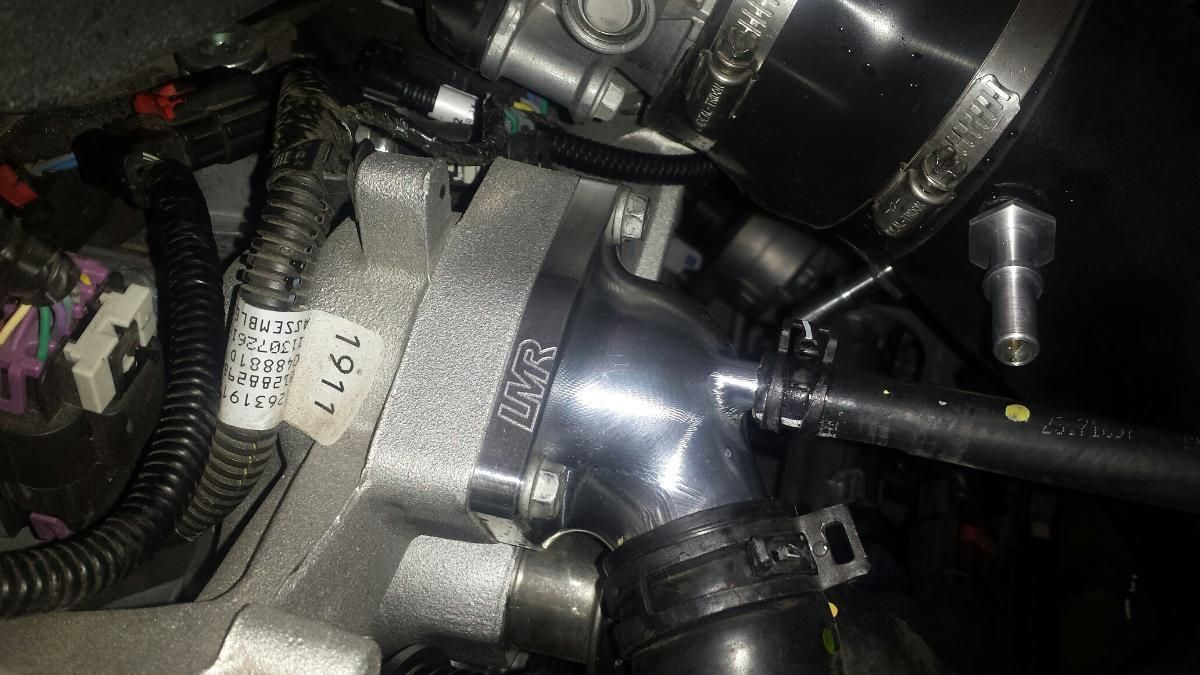
Not sure if this is a repost or if one if my salesman have already responded in this thread but we have had 160* thermostats for sale for almost 6 months or longer. With ours not only do you get the performance gains from the 160* Thermostat but you also get that car show look with the billet housing. They look awesome in the engine compartment. Feel free to call the shop to order yours today.

__________________
Worlds Quickest C8 Corvette 8.83@160MPH
FIRST C7 Corvette in the 7's & 9's
FIRST C7 Corvette in the 7's & 9's
2019 ZR1 LT5 8.874 @ 155
Current C7 World Record Holder 7.55 @ 184 MPH
Quickest and Fastest GEN5 LT Powered Vehicle
LMR1200HP Supercharged C7 8.84 @ 160
LMR1200HP Twin Turbo C7 9.35@155mph-2014
2 TIME OUTLAW DRAG RADIAL LSX CHAMPION 2008/2010
9.47 ZR1 Corvette-2009
LATE MODEL RACECRAFT
713-466-9900
LateModelRacecraft.com
Too many PMs, please call or email instead, thanks!
Current C7 World Record Holder 7.55 @ 184 MPH
Quickest and Fastest GEN5 LT Powered Vehicle
LMR1200HP Supercharged C7 8.84 @ 160
LMR1200HP Twin Turbo C7 9.35@155mph-2014
2 TIME OUTLAW DRAG RADIAL LSX CHAMPION 2008/2010
9.47 ZR1 Corvette-2009
LATE MODEL RACECRAFT
713-466-9900
LateModelRacecraft.com
Too many PMs, please call or email instead, thanks!

Instructor
Joined: Aug 2008
Posts: 220
Likes: 111
From: az
I'm Batman..

Joined: Apr 2014
Posts: 6,142
Likes: 921
From: Lehigh Acres FL
Tech Contributor
To answer the OP - yes, they are now available through Lingenfelter - http://www.lingenfelter.com/mm5/merc...E#.VM7Z2U0tGK4
They also have 170* and 180* available..
Ant
They also have 170* and 180* available..
Ant
Race Director
Joined: Jul 2007
Posts: 10,961
Likes: 2,643
From: Texas Hill Country


Le Mans Master


Joined: Nov 1999
Posts: 7,695
Likes: 51
From: Imperial Beach CA
better let you learn how an engine works...... I don't have time to teach you. cylinder temps are not what the iat sensor measures.
and I love how you state a tune is 500 and use that for your total even though you state that it will be 100 or 150 to alter the tune just for the coolant temp.....none of which is necessary, but optimal.
so really it's 600 for a radiator, 30 for a thermostat and another 200 give or take for installation.
so now you prefer to tell people what they can AFFORD???? wow, you are really reaching here. maybe 700 - 1300 is the end of the world to you but that's relative.....
doing things right costs money, otherwise just leave it stock and go about a happy life. and if that's your choice, why are you even posting in this thread? this is not about you or how you feel.
and I love how you state a tune is 500 and use that for your total even though you state that it will be 100 or 150 to alter the tune just for the coolant temp.....none of which is necessary, but optimal.
so really it's 600 for a radiator, 30 for a thermostat and another 200 give or take for installation.
so now you prefer to tell people what they can AFFORD???? wow, you are really reaching here. maybe 700 - 1300 is the end of the world to you but that's relative.....
doing things right costs money, otherwise just leave it stock and go about a happy life. and if that's your choice, why are you even posting in this thread? this is not about you or how you feel.