When you click on links to various merchants on this site and make a purchase, this can result in this site earning a commission. Affiliate programs and affiliations include, but are not limited to, the eBay Partner Network.
I've seen it mentioned a couple times in various threads that you can run E30 on the stock tune. Does anyone have experience running E30 for any extended period of time and did you notice any benefit? I appreciate any feedback, Thanks.
I notice you seem to be saying that for the higher octane fuel additional hp can be realized by a fuel trim adjustment. I assume this is automatically done? What does it sense in order to adjust for higher octane fuel? I note that for tracking the manual requires 93 octane, to be distinguished from the 91 octane otherwise required. What about maximum timing advance?
After reading the section in the Service Manual about knock sensors, and timing adjustment, I have been assuming that the car will advance the maximum allowed timing until a certain minimal level of knock recognized, which enables it run fine on 91 octane, but better with 93 octane. But if you go beyond 93 (up to 100) can it (and does it) further advance the timing to take advantage of the higher octane? I recognize that there is some fundamental limit beyond which higher octane has no benefit - but your statement suggests its higher than 93.
The short term and long term fuel trims aren't there to give you additional power but rather to allow the car to maintain the specified air/ fuel ratio.
As an example, there is a specific amount of fuel the car is programmed to think it needs to maintain a specified 11.5:1 air fuel ratio at wide open throttle in third gear .....BUT that amount is based on e0 to e10 fuel. Then the wideband o2 sensors tell the ECU if it's hitting the specified air fuel ratio and if it's not the car will instantly fuel trim to get itself to that specified air fuel ratio.
The car has headroom in the fuel trims for around e30.
That's just fueling. Nothing to do with power yet. You can have a car that specifies 2 degrees of timing advance at wide open throttle (the 2.0l Alfa Romeo is one) with zero knock and it similarly will fuel trim up to e30 but you'll not get any additional power from it.
The Corvette, however, is programmed from the factory with aggressive timing tables that in this case can take advantage of around 100 octane or e30 roughly.
This is not unheard of. Audi also programs many many many of it's cars this way.
The idea behind this strategy is that you target higher timing advance than the octane will support and you rely on an extremely effective ignition knock control strategy to pull back that timing to right at the edge of peak efficiency without going into damaging knock.
There's a ton of headroom in these ignition knock control systems. When you first look at these strategies and see knock retard values of 10 degrees across all cylinders on 91 octane you're thinking..."uh oh this car is knocking like crazy.". That's not the case at all. The car is NOT knocking like crazy but rather pulled back 10 degrees of timing so it is knocking exactly zero more than it would be running 105 octane race fuel....it's just running alot less timing advance.
Now every car manufacturer or every tuner will request a bit different of timing advance. You have some headroom to work with on these cars with good ignition knock control systems. ....BUT there is a limit.
If you are knock retarding 10 degrees pretty much all the time on 91 octane, now what happens if someone accidentally fills the tank with 87 octane? What happens if you get a "bad tank" of gas? You still want sufficient headroom in an ignition knk control system to be able to pull back more timing in the case of unforseen knock. I don't have a ton of experience with really really crappy fuel such as California winter blend 91 octane but I have had probably a few hundred logs sent to me from cars running that fuel and I e seen up to around 12 degrees of knock retard happening before things start pissing off the engine and ECU.
so how do you know if your car can benefit from higher octane or not?
Simple. You log it. You will know what your car is targeting by looking at the knock retard values versus actual timing advance.
So on a car that is targeting 28 degrees of timing but only able to make around 18 degrees of timing on 91 octane you will see 10 degrees knock retard.
Now you start your experiment.
Now you empty the tank and try 93 octane.
East coast 93 octane fuel will show that same car now running 22 degrees max timing advance and now only knock retarding 6 degrees.
So keep on going with the experiments.
So now you try 96 to 98 octane fuel or e20 to e25 and you see 24 to 25 degrees timing advance with 3 to 4 degrees of knock retard. I used to also see these timing numbers adding one bottle of Lucas octane booster to 93 octane (don't use that in cars with cars and cars under warranty).
So now you try 100 octane or e30 and see 28 degrees timing advance with no knock retard. Great deal!
Now finally you can try 105 octane ms109 to check your work and you will see the identical 28 degrees advance and no knock because you reached the max timing the car was programmed to target. With a change in those tables you'd be able to take advantage of that.
You'd need to modify the timing advance tables to take advantage of the 105 octane fuel or e85 as far as power wise
Youd need to change the fueling tables to take advantage of the e85. Not to gain more power there but to have the fueling you need to run e85 which takes around 30 percent more fuel than non ethanol fuel. You'd obviously also need to be certain your fuel pressure can keep up with this demand ( I purposely say fuel pressure as opposed to injectors on a gdi).
Fuel trims can keep up with e30. That's going to net you similar timing as 100 octane.... around 25hp over 93 octane and 35hp over 91.
We need tuning to take advantage of 105 / e85...add 12 HP to the above
I notice you seem to be saying that for the higher octane fuel additional hp can be realized by a fuel trim adjustment. I assume this is automatically done? What does it sense in order to adjust for higher octane fuel? I note that for tracking the manual requires 93 octane, to be distinguished from the 91 octane otherwise required. What about maximum timing advance?
After reading the section in the Service Manual about knock sensors, and timing adjustment, I have been assuming that the car will advance the maximum allowed timing until a certain minimal level of knock recognized, which enables it run fine on 91 octane, but better with 93 octane. But if you go beyond 93 (up to 100) can it (and does it) further advance the timing to take advantage of the higher octane? I recognize that there is some fundamental limit beyond which higher octane has no benefit - but your statement suggests its higher than 93.
I notice you seem to be saying that for the higher octane fuel additional hp can be realized by a fuel trim adjustment. I assume this is automatically done? What does it sense in order to adjust for higher octane fuel? I note that for tracking the manual requires 93 octane, to be distinguished from the 91 octane otherwise required. What about maximum timing advance?
After reading the section in the Service Manual about knock sensors, and timing adjustment, I have been assuming that the car will advance the maximum allowed timing until a certain minimal level of knock recognized, which enables it run fine on 91 octane, but better with 93 octane. But if you go beyond 93 (up to 100) can it (and does it) further advance the timing to take advantage of the higher octane? I recognize that there is some fundamental limit beyond which higher octane has no benefit - but your statement suggests its higher than 93.
The short term and long term fuel trims aren't there to give you additional power but rather to allow the car to maintain the specified air/ fuel ratio.
As an example, there is a specific amount of fuel the car is programmed to think it needs to maintain a specified 11.5:1 air fuel ratio at wide open throttle in third gear .....BUT that amount is based on e0 to e10 fuel. Then the wideband o2 sensors tell the ECU if it's hitting the specified air fuel ratio and if it's not the car will instantly fuel trim to get itself to that specified air fuel ratio.
The car has headroom in the fuel trims for around e30.
That's just fueling. Nothing to do with power yet. You can have a car that specifies 2 degrees of timing advance at wide open throttle (the 2.0l Alfa Romeo is one) with zero knock and it similarly will fuel trim up to e30 but you'll not get any additional power from it.
The Corvette, however, is programmed from the factory with aggressive timing tables that in this case can take advantage of around 100 octane or e30 roughly.
This is not unheard of. Audi also programs many many many of it's cars this way.
The idea behind this strategy is that you target higher timing advance than the octane will support and you rely on an extremely effective ignition knock control strategy to pull back that timing to right at the edge of peak efficiency without going into damaging knock.
There's a ton of headroom in these ignition knock control systems. When you first look at these strategies and see knock retard values of 10 degrees across all cylinders on 91 octane you're thinking..."uh oh this car is knocking like crazy.". That's not the case at all. The car is NOT knocking like crazy but rather pulled back 10 degrees of timing so it is knocking exactly zero more than it would be running 105 octane race fuel....it's just running alot less timing advance.
Now every car manufacturer or every tuner will request a bit different of timing advance. You have some headroom to work with on these cars with good ignition knock control systems. ....BUT there is a limit.
If you are knock retarding 10 degrees pretty much all the time on 91 octane, now what happens if someone accidentally fills the tank with 87 octane? What happens if you get a "bad tank" of gas? You still want sufficient headroom in an ignition knk control system to be able to pull back more timing in the case of unforseen knock. I don't have a ton of experience with really really crappy fuel such as California winter blend 91 octane but I have had probably a few hundred logs sent to me from cars running that fuel and I e seen up to around 12 degrees of knock retard happening before things start pissing off the engine and ECU.
so how do you know if your car can benefit from higher octane or not?
Simple. You log it. You will know what your car is targeting by looking at the knock retard values versus actual timing advance.
So on a car that is targeting 28 degrees of timing but only able to make around 18 degrees of timing on 91 octane you will see 10 degrees knock retard.
Now you start your experiment.
Now you empty the tank and try 93 octane.
East coast 93 octane fuel will show that same car now running 22 degrees max timing advance and now only knock retarding 6 degrees.
So keep on going with the experiments.
So now you try 96 to 98 octane fuel or e20 to e25 and you see 24 to 25 degrees timing advance with 3 to 4 degrees of knock retard. I used to also see these timing numbers adding one bottle of Lucas octane booster to 93 octane (don't use that in cars with cars and cars under warranty).
So now you try 100 octane or e30 and see 28 degrees timing advance with no knock retard. Great deal!
Now finally you can try 105 octane ms109 to check your work and you will see the identical 28 degrees advance and no knock because you reached the max timing the car was programmed to target. With a change in those tables you'd be able to take advantage of that.
You'd need to modify the timing advance tables to take advantage of the 105 octane fuel or e85 as far as power wise
Youd need to change the fueling tables to take advantage of the e85. Not to gain more power there but to have the fueling you need to run e85 which takes around 30 percent more fuel than non ethanol fuel. You'd obviously also need to be certain your fuel pressure can keep up with this demand ( I purposely say fuel pressure as opposed to injectors on a gdi).
The short term and long term fuel trims aren't there to give you additional power but rather to allow the car to maintain the specified air/ fuel ratio.
As an example, there is a specific amount of fuel the car is programmed to think it needs to maintain a specified 11.5:1 air fuel ratio at wide open throttle in third gear .....BUT that amount is based on e0 to e10 fuel. Then the wideband o2 sensors tell the ECU if it's hitting the specified air fuel ratio and if it's not the car will instantly fuel trim to get itself to that specified air fuel ratio.
The car has headroom in the fuel trims for around e30.
That's just fueling. Nothing to do with power yet. You can have a car that specifies 2 degrees of timing advance at wide open throttle (the 2.0l Alfa Romeo is one) with zero knock and it similarly will fuel trim up to e30 but you'll not get any additional power from it.
The Corvette, however, is programmed from the factory with aggressive timing tables that in this case can take advantage of around 100 octane or e30 roughly.
This is not unheard of. Audi also programs many many many of it's cars this way.
The idea behind this strategy is that you target higher timing advance than the octane will support and you rely on an extremely effective ignition knock control strategy to pull back that timing to right at the edge of peak efficiency without going into damaging knock.
There's a ton of headroom in these ignition knock control systems. When you first look at these strategies and see knock retard values of 10 degrees across all cylinders on 91 octane you're thinking..."uh oh this car is knocking like crazy.". That's not the case at all. The car is NOT knocking like crazy but rather pulled back 10 degrees of timing so it is knocking exactly zero more than it would be running 105 octane race fuel....it's just running alot less timing advance.
Now every car manufacturer or every tuner will request a bit different of timing advance. You have some headroom to work with on these cars with good ignition knock control systems. ....BUT there is a limit.
If you are knock retarding 10 degrees pretty much all the time on 91 octane, now what happens if someone accidentally fills the tank with 87 octane? What happens if you get a "bad tank" of gas? You still want sufficient headroom in an ignition knk control system to be able to pull back more timing in the case of unforseen knock. I don't have a ton of experience with really really crappy fuel such as California winter blend 91 octane but I have had probably a few hundred logs sent to me from cars running that fuel and I e seen up to around 12 degrees of knock retard happening before things start pissing off the engine and ECU.
so how do you know if your car can benefit from higher octane or not?
Simple. You log it. You will know what your car is targeting by looking at the knock retard values versus actual timing advance.
So on a car that is targeting 28 degrees of timing but only able to make around 18 degrees of timing on 91 octane you will see 10 degrees knock retard.
Now you start your experiment.
Now you empty the tank and try 93 octane.
East coast 93 octane fuel will show that same car now running 22 degrees max timing advance and now only knock retarding 6 degrees.
So keep on going with the experiments.
So now you try 96 to 98 octane fuel or e20 to e25 and you see 24 to 25 degrees timing advance with 3 to 4 degrees of knock retard. I used to also see these timing numbers adding one bottle of Lucas octane booster to 93 octane (don't use that in cars with cars and cars under warranty).
So now you try 100 octane or e30 and see 28 degrees timing advance with no knock retard. Great deal!
Now finally you can try 105 octane ms109 to check your work and you will see the identical 28 degrees advance and no knock because you reached the max timing the car was programmed to target. With a change in those tables you'd be able to take advantage of that.
You'd need to modify the timing advance tables to take advantage of the 105 octane fuel or e85 as far as power wise
Youd need to change the fueling tables to take advantage of the e85. Not to gain more power there but to have the fueling you need to run e85 which takes around 30 percent more fuel than non ethanol fuel. You'd obviously also need to be certain your fuel pressure can keep up with this demand ( I purposely say fuel pressure as opposed to injectors on a gdi).
Thanks! How does it keep the timing "right on the edge" with "0" knock? It must be constantly trying to seek the minimum "knock retard" necessary to do that. That is, it must either allow a certain very low percentage of "knock", so it knows it is on the edge, or alternatively, occasionally reduce the "knock retard" slightly to verify that it is still "on the edege".
I had a 1/4 tank of 93, I'm going to top off with E30.
Cut the 93 with E85 and not the E30 blend to achieve the desired mixture. Reason being that other 70% is pisswater 87 at best. The biggest downside to pump E blends is you never know what the gasoline portion is, and it's usually the bottom of the barrel (pun mildly intended) lowest octane/cheapest. The low octane is going to offset the gains and may end up net worse. At least with "E85" it should be at least 60-70% ethanol.
Thanks! How does it keep the timing "right on the edge" with "0" knock? It must be constantly trying to seek the minimum "knock retard" necessary to do that. That is, it must either allow a certain very low percentage of "knock", so it knows it is on the edge, or alternatively, occasionally reduce the "knock retard" slightly to verify that it is still "on the edege".
yes. The knock sensors. The ECU interprets the knk sensor voltage and reacts by keeping the dangerous knk down. The knk sensors detect with such quickness I don't even bother monitoring knock voltage on a professional level logger. They're not quick enough. You're just measuring background knock. So I just monitor knock retard
Cut the 93 with E85 and not the E30 blend to achieve the desired mixture. Reason being that other 70% is pisswater 87 at best. The biggest downside to pump E blends is you never know what the gasoline portion is, and it's usually the bottom of the barrel (pun mildly intended) lowest octane/cheapest. The low octane is going to offset the gains and may end up net worse. At least with "E85" it should be at least 60-70% ethanol.
I went out to do some testing because I'm not really interested in running e30 or trying to mod my car for the quarter mile but I do have a lot of interest in our cars systems.
Here are key rpm points (4500, 5000, 5500, 6000, 6500) across the rev band in 4th gear on 93 octane fuel.
Look at the Short term fuel trims to see the car is pretty much perfectly fueled for e10. Very little fuel trimming.
Look at the timing values for max timing at those rpm points
Look at the air intake volume for a rough estimate of power at those rpm points.
Look at air intake temps to make sure I standardized both runs.
93 octane...
Here are the same rpm points now on e30. I suspect it's closer to e25 based on fuel trim data.
Look at the fuel trims to know there is more ethanol in there. They are now up around 10 percent additive to add fuel to maintain the same specified air fuel ratio.
Looks like there was probably plenty of headroom to add more e85 or possibly my pump was only putting out e60 or so out of their e85 pump. E85 pumps do not put out exactly e85. They can be a bit all over the place. I should have brought an ethanol tester.
Nevertheless here is the e25 or e30 run. Same surface area. Same gear.
As you can see from the results, they are less than what I had been told. I was told we target 28 degrees and I suspect that's with a tune only.
It looks like possibly 24 degree targets and that our stock ECU is good to take advantage of up to around 96 octane or e25 ish.
With an e30 tune I suspect we could pick up another 16hp or so.
On the stock ECU it looks like perhaps around an 8hp gain from e25 to e30
Cut the 93 with E85 and not the E30 blend to achieve the desired mixture. Reason being that other 70% is pisswater 87 at best. The biggest downside to pump E blends is you never know what the gasoline portion is, and it's usually the bottom of the barrel (pun mildly intended) lowest octane/cheapest. The low octane is going to offset the gains and may end up net worse. At least with "E85" it should be at least 60-70% ethanol.
The blender pump he pictured uses E10 87 as the base fuel, nothing wrong with the quality of that as it's the standard fuel available most places, then adds in additional E98 to reach the E30 level.
On another note, the Sunoco near my office just added 94-octane (vs. 93 previously) at the pump so I need to go try that out sometime soon.
Cut the 93 with E85 and not the E30 blend to achieve the desired mixture. Reason being that other 70% is pisswater 87 at best. The biggest downside to pump E blends is you never know what the gasoline portion is, and it's usually the bottom of the barrel (pun mildly intended) lowest octane/cheapest. The low octane is going to offset the gains and may end up net worse. At least with "E85" it should be at least 60-70% ethanol.
Thanks for the feedback guys. I had a 1/4 tank of 93, I'm going to top off with E30. I'll report back if my engine explodes.
Wow that's crazy savings over 91, can't find that around my way you lucky dawg. You'll be fine running the e30, it burns cleaner, it's oxygenated (unlike gasoline) and you may notice your tail pipe soot will be a little less too. As was said, for total performance I manually mix pump 93 and and a solid e85 (it's nice that our pumps are sometimes closer to 90) to achieve an e25-ish blend.
I've tried e35, e35 w/Boostane but saw no benefit at the track. My logs show a commanded 12.24 afr at WOT and I think going any farther on an e blend is gonna lean you out too much. Disclosure I'm not a tuner and its just my thoughts. Iirc stoich with e30 was right around that number?. For reference when I was running e85 in my 6th gen my target a/f was 9.0 at WOT.
Side note to BVVRDR, I saw 28 degrees on the dyno (in 4th) but haven't seen that on the track, only reached 26.5 iirc. Oddly enough my timing crashes to 19-20, and stays there, when shifting into 5th..thru the traps..and I'm not sure why ? Maybe a HP Tuners cleanup can address that and maybe it will pull harder from 120mph on.
Wow that's crazy savings over 91, can't find that around my way you lucky dawg. You'll be fine running the e30, it burns cleaner, it's oxygenated (unlike gasoline) and you may notice your tail pipe soot will be a little less too. As was said, for total performance I manually mix pump 93 and and a solid e85 (it's nice that our pumps are sometimes closer to 90) to achieve an e25-ish blend.
I've tried e35, e35 w/Boostane but saw no benefit at the track. My logs show a commanded 12.24 afr at WOT and I think going any farther on an e blend is gonna lean you out too much. Disclosure I'm not a tuner and its just my thoughts. Iirc stoich with e30 was right around that number?. For reference when I was running e85 in my 6th gen my target a/f was 9.0 at WOT.
Side note to BVVRDR, I saw 28 degrees on the dyno (in 4th) but haven't seen that on the track, only reached 26.5 iirc. Oddly enough my timing crashes to 19-20, and stays there, when shifting into 5th..thru the traps..and I'm not sure why ? Maybe a HP Tuners cleanup can address that and maybe it will pull harder from 120mph on.
Thanks for sharing your experiences.
I went out this morning as I had a quarter tank left of the e25 - e30.
This ECU is very adaptive.
I was in about 10 degrees lower ambients (and intake temps) and more regularly achieved timing in the 24s.
The g/s peaked almost 10 higher at 396.
This was roughly 10 more horsepower.
Traps agree at 1mph higher and .5 sec better 60-130...
I can trap around 123.5 to 124 in 50f weather which I only get around 10 days per year. It would be very interesting to see what e30 does in those ambients as well.







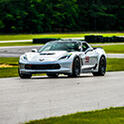
 E30 on Stock tune