




Would you bore this engine block

Le Mans Master

Joined: Sep 2001
Posts: 7,739
Likes: 630
From: Unreconstructed, South Carolina

http://www.animatedengines.com/otto.html
go thru the sequence
pull driver valve cover and pay attention to #1 Intake & Exhaust valve movement.
with a breaker bar on damper bolt, slowly rotate motor CW.
Watch-Note Ex open
Watch-Note Ex close
Watch-Note In open
*Watch-Note In close *
*just as Intake becomes closed, #1 piston will be at or Very near True TDC AND rotor should point at #1 Cap Terminal AND Ignition should fire #1.
<~> if not, re-clock distributor OR walk the wires around the cap OR some of Both.
go thru the sequence
pull driver valve cover and pay attention to #1 Intake & Exhaust valve movement.
with a breaker bar on damper bolt, slowly rotate motor CW.
Watch-Note Ex open
Watch-Note Ex close
Watch-Note In open
*Watch-Note In close *
*just as Intake becomes closed, #1 piston will be at or Very near True TDC AND rotor should point at #1 Cap Terminal AND Ignition should fire #1.
<~> if not, re-clock distributor OR walk the wires around the cap OR some of Both.

Race Director


Joined: Nov 2006
Posts: 19,445
Likes: 353
From: Athens GA
St. Jude Donor '12-'13, '15- '16-'17-'18-'19, '21
Pistons rotate twice.....per sequence....as has been stated several times.
Feeling what you take for compression at the spark plug hole can be actually the exhaust cycle (with valve cover off, the exhaust valve will be fully compressed/open). The only way to tell true compression is with the valve cover off and both valves fully closed. They should both be fully extended upwards with maybe a slight loose feeling. At that point with the number one cylinder, the distributor will be just about to fire. That means the rotor will be pointing at the #1 terminal on the distributor cap.
That's it......nothing else is correct.
Check out this article for better visualization.
https://www.chevytalk.org/fusionbb/s...hp?tid/198828/
Feeling what you take for compression at the spark plug hole can be actually the exhaust cycle (with valve cover off, the exhaust valve will be fully compressed/open). The only way to tell true compression is with the valve cover off and both valves fully closed. They should both be fully extended upwards with maybe a slight loose feeling. At that point with the number one cylinder, the distributor will be just about to fire. That means the rotor will be pointing at the #1 terminal on the distributor cap.
That's it......nothing else is correct.
Check out this article for better visualization.
https://www.chevytalk.org/fusionbb/s...hp?tid/198828/
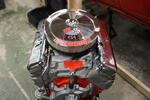
Old Pro Solo Guy


Joined: Dec 2017
Posts: 8,095
Likes: 4,449
From: Marlton NJ
you must confirm that the rotor is pointing at that #1 spot while on the compression stroke (by intake close method or finger on spark plug method.and a screwdriver touch to confirm that the piston is "up")
The #1 piston is "up" again a crank turn later but it is on the exhaust stroke (exhaust open/closing) and that is where you do not want to line up the rotor and #1 wire.(probably #6 then).
Can you confirm it is lined up on the Compression Stroke?

Thread Starter
Racer


Joined: Jun 2017
Posts: 495
Likes: 85
So I just rechecked the timing, and it is fine. It's not 180 off. Checked watching the intake valve open and close and by putting my finger in the spark plug hole, just to be sure.
My problem is compression. I just checked cranking compression on all cylinders
#1: 150psi
#3: 0 psi
#5: 150 psi
#7: 150 psi
#2: 150 psi
#4: 145 psi
#6: 0 psi
#8: 150 psi
Not sure what to do at this point, and not sure how this could have happened. Had a professional machine shop totally refurbish the heads, and pistons and rings are brand new and gapped.
Maybe some debris got onto the head gasket when I installed it, but I would think that would affect the adjacent cylinders.
It's also weird there is no compression at all.
I'm going to recheck valve lash right now...stab in the dark.
Any advice is appreciated.
My problem is compression. I just checked cranking compression on all cylinders
#1: 150psi
#3: 0 psi
#5: 150 psi
#7: 150 psi
#2: 150 psi
#4: 145 psi
#6: 0 psi
#8: 150 psi
Not sure what to do at this point, and not sure how this could have happened. Had a professional machine shop totally refurbish the heads, and pistons and rings are brand new and gapped.
Maybe some debris got onto the head gasket when I installed it, but I would think that would affect the adjacent cylinders.
It's also weird there is no compression at all.
I'm going to recheck valve lash right now...stab in the dark.
Any advice is appreciated.
Last edited by mongoose87; Jun 20, 2019 at 12:47 AM.

Le Mans Master

Joined: Mar 2004
Posts: 7,502
Likes: 1,510
From: Little Rock AR
Perfect! Ignore ignition for now.
Need to verify the valve lash on those 2 cylinders. Too tight will hold valves open all the time and prevent any compressipn. Lets hope that is the issue. It is the easiest fix.
If not a lash problem, you will be pulling it apart for a look see.
Need to verify the valve lash on those 2 cylinders. Too tight will hold valves open all the time and prevent any compressipn. Lets hope that is the issue. It is the easiest fix.
If not a lash problem, you will be pulling it apart for a look see.
Corvette Stories
The Best of Corvette for Corvette Enthusiasts

Top 10 Most Expensive Corvettes Ever Sold on Bring A Trailer
Brett Foote
10 Things Every Corvette Owner Needs (2026 Edition)
Michael S. Palmer
8 Most "Only Corvette Owners Understand" Quirks and Problems
Pouria Savadkouei
10 Reasons the C6 Z06 is Still A Performance Benchmark After 20 Years
Joe Kucinski
How Much Horsepower Every Corvette Engine "LOST" in 1972
Joe Kucinski
Top 10 DOs and DON'Ts for Protecting Your Convertible Top!
Michael S. Palmer
Top 10 Most Explosive Corvettes Ever Made: Power-to-Weight Ratio Ranked!
Joe Kucinski
150 hp to 1,250 hp: Every Corvette Generation Compared by the Specs That Matter
Joe Kucinski
8 Coolest Corvette Pace Cars (and Replicas) of All Time
Verdad Gallardo
Le Mans Master
Joined: Sep 2001
Posts: 7,739
Likes: 630
From: Unreconstructed, South Carolina
Perfect! Ignore ignition for now.
Need to verify the valve lash on those 2 cylinders. Too tight will hold valves open all the time and prevent any compressipn. Lets hope that is the issue. It is the easiest fix.
If not a lash problem, you will be pulling it apart for a look see.
Need to verify the valve lash on those 2 cylinders. Too tight will hold valves open all the time and prevent any compressipn. Lets hope that is the issue. It is the easiest fix.
If not a lash problem, you will be pulling it apart for a look see.

Race Director
Joined: Nov 2006
Posts: 19,445
Likes: 353
From: Athens GA
St. Jude Donor '12-'13, '15- '16-'17-'18-'19, '21
Perfect! Ignore ignition for now.
Need to verify the valve lash on those 2 cylinders. Too tight will hold valves open all the time and prevent any compressipn. Lets hope that is the issue. It is the easiest fix.
If not a lash problem, you will be pulling it apart for a look see.
Need to verify the valve lash on those 2 cylinders. Too tight will hold valves open all the time and prevent any compressipn. Lets hope that is the issue. It is the easiest fix.
If not a lash problem, you will be pulling it apart for a look see.
Fingers crossed.
The heads being rebuilt will not necessarily be the problem.
Incorrect setting the valves would be most likely the problem. About the only other issue would be a broken ring but for zero compression that would mean both 1st and 2nd ring would have to be broken. Plus 2 cylinders....???
Good luck.
Thread Starter
Racer
Joined: Jun 2017
Posts: 495
Likes: 85
Perfect! Ignore ignition for now.
Need to verify the valve lash on those 2 cylinders. Too tight will hold valves open all the time and prevent any compressipn. Lets hope that is the issue. It is the easiest fix.
If not a lash problem, you will be pulling it apart for a look see.
Need to verify the valve lash on those 2 cylinders. Too tight will hold valves open all the time and prevent any compressipn. Lets hope that is the issue. It is the easiest fix.
If not a lash problem, you will be pulling it apart for a look see.
I loosened the rockers just until zero lash, but no pre-load, and tested compression again, and it showed 150 psi.
Thank God!
I really thought I did this correct the first 2 times I tried to do this. I set pre-load to 1/2 turn, but is it possible that once the lifters were pumped up it made the valves slightly open?
Now that I ran the engine, the lifters are pumped up, and if I go to zero lash, and turn another 1/2 turn, I can see the valve spring being compressed. This seems like the same thing will happen; shouldn't I see the lifter compressing when I set pre-load?
How do you set pre-load once the lifters are pumped up? Is it the same?
How can I make sure I don't over tighten them again?
Last edited by mongoose87; Jun 20, 2019 at 01:34 PM.

Racer
Joined: Aug 2018
Posts: 252
Likes: 48
From: Cincinnati, Ohio
Old school - have the car running at idle at temp - Loosen rocker nut till it starts to tap the slowly tighten till its gone then go a 1/2 turn more. Should do all of rockers like that - Makes a mess but you will know for sure they are set right. some people take an old set of valve covers and cut holes for each rocker or cut the center out.

Le Mans Master
Joined: Mar 2004
Posts: 7,502
Likes: 1,510
From: Little Rock AR
Depends on how you are determining "zero lash".
If you are moving the pushrod up and down while tightening and stop tightening exactly where the pushrod stops going up and down.....you are at zero lash. If you are twisting that pushrod while you tighten the adjusting nut and waiting for resistance, you could easily overtighten that adjustment. Twisting the pushrod is only for those that have already done it enough times that they have a better feel for it.
If you are moving the pushrod up and down while tightening and stop tightening exactly where the pushrod stops going up and down.....you are at zero lash. If you are twisting that pushrod while you tighten the adjusting nut and waiting for resistance, you could easily overtighten that adjustment. Twisting the pushrod is only for those that have already done it enough times that they have a better feel for it.
Last edited by stingr69; Jun 20, 2019 at 03:23 PM.

Instructor
Joined: Apr 2011
Posts: 161
Likes: 17
From: NW CT

Thread Starter
Racer
Joined: Jun 2017
Posts: 495
Likes: 85
Depends on how you are determining "zero lash".
If you are moving the pushrod up and down while tightening and stop tightening exactly where the pushrod stops going up and down.....you are at zero lash. If you are twisting that pushrod while you tighten the adjusting nut and waiting for resistance, you could easily overtighten that adjustment. Twisting the pushrod is only for those that have already done it enough times that they have a better feel for it.
If you are moving the pushrod up and down while tightening and stop tightening exactly where the pushrod stops going up and down.....you are at zero lash. If you are twisting that pushrod while you tighten the adjusting nut and waiting for resistance, you could easily overtighten that adjustment. Twisting the pushrod is only for those that have already done it enough times that they have a better feel for it.
I still can't figure out how to put pre-load on the lifter if the lifter is pumped up, other than doing it how DAD111 describes it. I'm not sure I want to get my freshly painted engine covered in oil so soon.
If I apply pre-load to the lifter, and it compressed the valve spring, will it eventually bleed down and be fine?
Le Mans Master
Joined: Mar 2004
Posts: 7,502
Likes: 1,510
From: Little Rock AR
I believe that was my mistake. I tried the twisting method until they were essentially not able to twist by hand.
I still can't figure out how to put pre-load on the lifter if the lifter is pumped up, other than doing it how DAD111 describes it. I'm not sure I want to get my freshly painted engine covered in oil so soon.
If I apply pre-load to the lifter, and it compressed the valve spring, will it eventually bleed down and be fine?
I still can't figure out how to put pre-load on the lifter if the lifter is pumped up, other than doing it how DAD111 describes it. I'm not sure I want to get my freshly painted engine covered in oil so soon.
If I apply pre-load to the lifter, and it compressed the valve spring, will it eventually bleed down and be fine?
Lifters do not "pump up" just from running. They only fill up.
Up and down pushrod method is more foolproof.

Race Director


Joined: Apr 2003
Posts: 19,352
Likes: 654
From: Tampa, Florida
Race Director
Joined: Nov 2006
Posts: 19,445
Likes: 353
From: Athens GA
St. Jude Donor '12-'13, '15- '16-'17-'18-'19, '21
Glad to see you got it figured out.
I have adjusted hydraulic valves on many a sbc over the years. Running it and loosening it until it starts to tap is what we always did. Like someone mentioned...a spare set of cheap valve covers cut open to allow access was what we used. Make sure the cover still covers where the oil comes out of the rocker/pushrod. It acts as a deflector.
They also make clips that you can put over the stock rockers which deflect the oil downward so not a big mess. You have to remember to take the clips off. The clips do not work on roller rocker arms which is what most of us are using these days.
You can also do it not running by turning the engine over manually with spark plugs out and valve covers off. Turn each piston until it tops out, and loosen the rockers of the valves that are fully extended upwards until slack (make sure it is not the exhaust stroke) and you can adjust both by turning the pushrod while tightening until resistance and then 1/2 turn more. There is a another procedure where you can actually do 2 cylinders at a time as they are both fully closed but I forget that one.
Pardon me if you know this procedure already.
Good luck.
At least you know you don't need to tear the engine down.

I have adjusted hydraulic valves on many a sbc over the years. Running it and loosening it until it starts to tap is what we always did. Like someone mentioned...a spare set of cheap valve covers cut open to allow access was what we used. Make sure the cover still covers where the oil comes out of the rocker/pushrod. It acts as a deflector.
They also make clips that you can put over the stock rockers which deflect the oil downward so not a big mess. You have to remember to take the clips off. The clips do not work on roller rocker arms which is what most of us are using these days.
You can also do it not running by turning the engine over manually with spark plugs out and valve covers off. Turn each piston until it tops out, and loosen the rockers of the valves that are fully extended upwards until slack (make sure it is not the exhaust stroke) and you can adjust both by turning the pushrod while tightening until resistance and then 1/2 turn more. There is a another procedure where you can actually do 2 cylinders at a time as they are both fully closed but I forget that one.
Pardon me if you know this procedure already.
Good luck.
At least you know you don't need to tear the engine down.