




C3 Handling thread

Team Owner


Joined: Apr 1999
Posts: 21,953
Likes: 1,445
From: Reno Nevada
2024 C3 of the Year Finalist- Modified

I have a question for you all about short course parking lot racing. Currently have 474lb-ish front springs (they’ve been cut so effective spring rate is higher), a 400 pound mono rear spring, 1.125” front sway bar and no rear bar. The rear also has adjustable strut rods. The car has been lowered and has 245/45r18 in the front and 285/35r19 in the rear - 300 tw tires. I have Koni single adjustable shocks that are a few clicks away from their highest rebound setting. The car weighs 3100 lbs. The alignment is factory spec.
The engine is a 383 with about 450hp/475tq (estimated) with a TH350.
My question is, the front in doesn’t seem to want to bite in the corner. It almost feels lazy. How do I tune out the understeer? Is it a camber issue? Do I need to drop the valving for more weight transfer? Tire pressure??
I need it to bite and rotate the rear to get it around the sharp corners as quickly as possible.
The engine is a 383 with about 450hp/475tq (estimated) with a TH350.
My question is, the front in doesn’t seem to want to bite in the corner. It almost feels lazy. How do I tune out the understeer? Is it a camber issue? Do I need to drop the valving for more weight transfer? Tire pressure??
I need it to bite and rotate the rear to get it around the sharp corners as quickly as possible.
I don't know your rear end gear ratio or th max MPH attained on your courses. But do you manually shift up and down 1 - 2? Most cars coming out of the show room have a safety margin of understeer since that is easier for Average Joe Schmoo to recover from on the street. Oversteer for the average consumer is bad. I actually drive in over steer if I want to where the car is in a 4 wheel drift and I have to just keep hoping that the front tires hold all the way through a turn.
My advice is as a start is buy white shoe polish and put a white band on the inside and outside of your tires and get to testing. Skid pans going both directions. Just draw a big circle in a level parking lot and try to go as fast as you can without leaving the circle. something like 100 or 120 feet diameter. It's actually fun and you get to learn the limits of your car. You can get someone to video or high speed photography of what is really going on. That's how I determined early on my rear squating problem.
I'm very unclear on how any auto tranny could have rear traction with your estemated HP and TQ unless you have the biggest diameter stock 1700 stall where the motor can't get into the power band.
When ever you have an alignment done it has to be set the same or as close to it as possible side to side.
Front 63-82 Corvette Daily Driver Advanced Street Autocross Baseline Track Baseline
Toe 1/32″ 0″ 3/16″ out 0-1/16″ out I would not recommend toe out
Camber 0° neg .25° neg 1.5-2° neg 1-2° neg These are VB&P old setting with tires of the day. They should be set by watching you tire wear
Caster 2.75° pos 2.75° pos 2.75° pos 2.75° pos Kind of factory settings
Caster (With Offset A-Arms) 4.75° pos 4.75° pos 4-4.75° pos 4-4.75° pos Or as much as possible today I'm up to about 6
Rear 63-82 Corvette Daily Driver Advanced Street Autocross Baseline Track Baseline
Toe 1/8″ in 1/8″ in 1/8″ – 1/4″ in 1/8″ – 1/4″ in Rear toe in is a self straightening factor
Camber 0° neg .50° neg .75-1.5° neg .75-1.5° neg

Racer


Joined: May 2020
Posts: 498
Likes: 167
I don't know your rear end gear ratio or th max MPH attained on your courses. But do you manually shift up and down 1 - 2?
I'm very unclear on how any auto tranny could have rear traction with your estimated HP and TQ unless you have the biggest diameter stock 1700 stall where the motor can't get into the power band. neg
Because of the short course I stayed with the auto. I figured with the torque output I could stay in second gear around most of the course and wouldn’t have to worry about missed shifts. The rear gears are 3:55’s.
The trans has a 2,500 stall 12” converter. In terms of power I compare it to my 2016 Camaro SS with a tune. The Corvette is faster than the Camaro. The Corvette is also 300lbs lighter.
For the launches, I dunno?? Maybe it’s the very firm rebound setting in the shocks keeping the rear down allowing it to gain traction? All I know is at a stop light - I can floor it and it just goes. No bog or wheel spin. If you ever make it to the DFW area we’ll go for a drive.. 😬
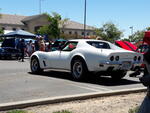
Race Director


Joined: Mar 2016
Posts: 14,399
Likes: 8,204
From: Napa Valley California
Hey Leigh,
I know our suspension set ups are really close and I hope to have mine on the road sometime next year.
One thing I will mention, Van Steel has a new rear sway bar they recently came out with.
Its 5/8” diameter but is shorter in length which they say does two things:
1. since the bar is shorter it is completely inside the frame rails and allows for wider width rear tires without any interference.
2. With the shorter design their testing showed it functioned close to their 3/4” rear sway bar.
I know Van Steels bump steer kit has been a hot ticket in recent discussions.
I called Van Steel to order it and both Dan and Eric discouraged me from putting the kit on my car.
They said the bump steer kit is designed primarily for track cars and not designed or needed for street driven cars.
My car is set up for street driving with some spirted twisting mountain and costal roadways.
At this time my set up is all Van Steel:
Front,
Upper and lower tubular A Arms with poly bushings, 550# semi coil over springs, QA-1 single adjustable shocks, 1 1/8” sway bar, HD tie rod sleeves, Moog ball joints, solid engine mounts and spreader bar.
The car has been converted to manual steering and manual brakes.
496 big block, 5 spd manual, Tremec TKO-600.
Rear,
2” offset trailing arms, poly bushings, Tom’s axles, Tom’s 3” half shafts, 1350 u joints, rear coil overs with 450# springs, QA-1 single adjustable shocks, Delrin solid mount rear differential kit that raises the rear differential, 5/8” rear sway bar, adjustable Heim joint smart struts,
Mid section,
G Force steel transmission crossmember and 4 point roll bar.
Completely welded all factory stitch seams on the frame and welded all frame gussets pursuant to the Jim Shea, Chevrolet Corvette Power Book.
17” X 8” wheels on all four corners with yet to be determined tires.
I know our suspension set ups are really close and I hope to have mine on the road sometime next year.
One thing I will mention, Van Steel has a new rear sway bar they recently came out with.
Its 5/8” diameter but is shorter in length which they say does two things:
1. since the bar is shorter it is completely inside the frame rails and allows for wider width rear tires without any interference.
2. With the shorter design their testing showed it functioned close to their 3/4” rear sway bar.
I know Van Steels bump steer kit has been a hot ticket in recent discussions.
I called Van Steel to order it and both Dan and Eric discouraged me from putting the kit on my car.
They said the bump steer kit is designed primarily for track cars and not designed or needed for street driven cars.
My car is set up for street driving with some spirted twisting mountain and costal roadways.
At this time my set up is all Van Steel:
Front,
Upper and lower tubular A Arms with poly bushings, 550# semi coil over springs, QA-1 single adjustable shocks, 1 1/8” sway bar, HD tie rod sleeves, Moog ball joints, solid engine mounts and spreader bar.
The car has been converted to manual steering and manual brakes.
496 big block, 5 spd manual, Tremec TKO-600.
Rear,
2” offset trailing arms, poly bushings, Tom’s axles, Tom’s 3” half shafts, 1350 u joints, rear coil overs with 450# springs, QA-1 single adjustable shocks, Delrin solid mount rear differential kit that raises the rear differential, 5/8” rear sway bar, adjustable Heim joint smart struts,
Mid section,
G Force steel transmission crossmember and 4 point roll bar.
Completely welded all factory stitch seams on the frame and welded all frame gussets pursuant to the Jim Shea, Chevrolet Corvette Power Book.
17” X 8” wheels on all four corners with yet to be determined tires.
Team Owner
Joined: Apr 1999
Posts: 21,953
Likes: 1,445
From: Reno Nevada
2024 C3 of the Year Finalist- Modified
Hey Leigh,
1. since the bar is shorter it is completely inside the frame rails and allows for wider width rear tires without any interference.
2. With the shorter design their testing showed it functioned close to their 3/4” rear sway bar.
I know Van Steels bump steer kit has been a hot ticket in recent discussions.
I called Van Steel to order it and both Dan and Eric discouraged me from putting the kit on my car.
They said the bump steer kit is designed primarily for track cars and not designed or needed for street driven cars.
.
1. since the bar is shorter it is completely inside the frame rails and allows for wider width rear tires without any interference.
2. With the shorter design their testing showed it functioned close to their 3/4” rear sway bar.
I know Van Steels bump steer kit has been a hot ticket in recent discussions.
I called Van Steel to order it and both Dan and Eric discouraged me from putting the kit on my car.
They said the bump steer kit is designed primarily for track cars and not designed or needed for street driven cars.
.
 I've been screwed over ordering aftermarket parts since I was in highschool!
I'm very surprised by van steels bump steer answer. You want to avoid positive camber gain with verticle wheel travel. So the faster you attempt to go around a turn without bump steer kit the less front tire traction because your tire contact patch goes away. your car becomes unpredictable. I even put a bump steer kit on my off road side by side and made the steering beautiful
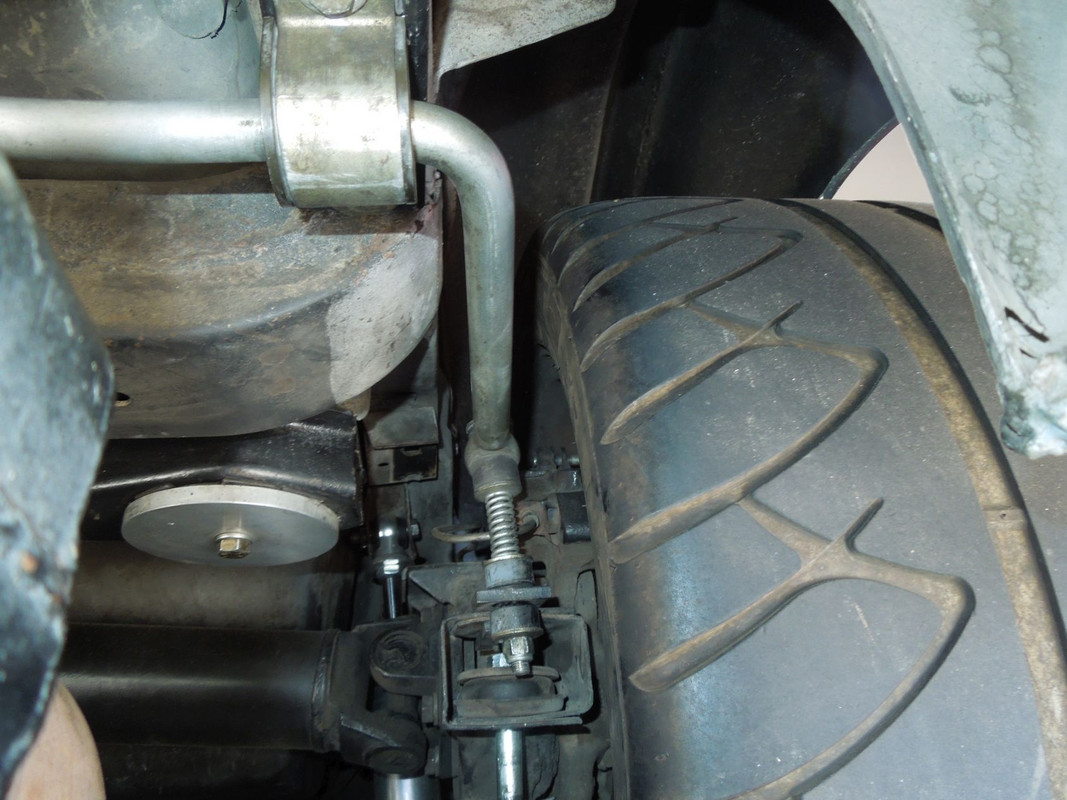
Plenty of clearance
Thread Starter
Old Pro Solo Guy


Joined: Dec 2017
Posts: 8,079
Likes: 4,431
From: Marlton NJ
I have a question for you all about short course parking lot racing. Currently have 474lb-ish front springs (they’ve been cut so effective spring rate is higher), a 400 pound mono rear spring, 1.125” front sway bar and no rear bar. The rear also has adjustable strut rods. The car has been lowered and has 245/45r18 in the front and 285/35r19 in the rear - 300 tw tires. I have Koni single adjustable shocks that are a few clicks away from their highest rebound setting. The car weighs 3100 lbs. The alignment is factory spec.
The engine is a 383 with about 450hp/475tq (estimated) with a TH350.
In terms of from a dig, it just straight hooks. No wheel spin - it just goes. In fact I’m waiting for an axle to break…. It hits that hard.
My question is, the front in doesn’t seem to want to bite in the corner. It almost feels lazy. How do I tune out the understeer? Is it a camber issue? Do I need to drop the valving for more weight transfer? Tire pressure??
I need it to bite and rotate the rear to get it around the sharp corners as quickly as possible.
The engine is a 383 with about 450hp/475tq (estimated) with a TH350.
In terms of from a dig, it just straight hooks. No wheel spin - it just goes. In fact I’m waiting for an axle to break…. It hits that hard.
My question is, the front in doesn’t seem to want to bite in the corner. It almost feels lazy. How do I tune out the understeer? Is it a camber issue? Do I need to drop the valving for more weight transfer? Tire pressure??
I need it to bite and rotate the rear to get it around the sharp corners as quickly as possible.
It sounds like you have a very good setup for autocross, but anything can be improved.
Yes, lazy turn-in likely means you have too much understeer.
You can reduce understeer in many ways. And it varies depending if you get it during transitions, or steady-state (zero throttle) or steady state (WOT), or braking.
You did get a lot of very good suggestions above. But everyone has a different view point.
I tend to start with the tires:
Tires:
- 245-45-18. 8" tread and 7.5-9.0" recommended wheel width
- have you optimized you caster and camber alignment settings and tire pressures by tire temps, scuffing, chalk marks and tire wear? if not there are large traction improvements to be had. You want the inside tire edge temp just slightly hotter than the others, and do not want a cool or hot outer edge. You set tire pressures by what the tire wants for max traction and even temps. For autocross you REALLY need custom alignment settings, and should be doing them your self, because you will need to experiment to see what your car likes best. Stock settings will not cut it. Buy a few alignment tools, you can do this for $100. Both me and Cargotzman have many write-ups on this. You can get by with: Two $10 laser levels from Amazon. Two four ft aluminum square beams or 90 * angle iron from Home Depot. Two 20ft locking tape measures. A $20 angle inclometer cube from Amazon, magnetic base. A half dozen 1/8" thick floor tiles to level the floor under your tires. A 18-24" straightedge or level to lean vertically against your tires, or even better the wheel lips, with spacers.
- Are you running a 9.0" or 9.5" wide wheel? The absolute maximum recommended width? If not you are having much more tire squirm right/left than you realize. A Go-Pro video of you tire sidewalls may be eye opening . When I widened my wheels on my 245-45-16 from a 8.0" wheel to a 9.5" wheel I had to reduce camber (to 0.6*), drop 6psi (to 24#), to get even tire temps again. Everybody at the time said my tire pressures were too low. Some of them were running as high as 45#. But facts do not lie. I had wider wheels. My G-readings went up a lot, from 1.04G to 1.20G IIRC (in 1988). Then I had to re-tune the sway-bars too., because the front changed more than the rear.
- Can you fit a wider tire? A small amount of rubbing on the steering box bolts is not that big of a deal. It will only happen at slow parking lot speeds at full lock. You don't even care about full lock. I even restricted full lock to put wider tires/wheels on the front. My 10" front wheels just kissed the upper a-arm. I even had to re-bend the sway bar. How far are you willing to go with mods? Flares fit real nice on C3s and then you can go to huge front tires, like 315s.
- After you have optimized your current front tire setup, alignment settings, and have even tire temps. Then move on to handling. Because increasing tire traction on one end will change that.
- In a skidpad in a parking lot, a circle you drew, or a 30 mph constant radius ramp you have easy, safe and repeatable access to you, asses the handling balance.
- Try the "ramp" at steady speed. Which end faster & faster. Which end breaks traction first? Then do that same ramp on trail braking going in? The do it under WOT power coming out?
- For autocross use, you do NOT want to tune it for maximum speed with no throttle, Sorry about that. You won't be able to use the gas, and it will spin under the braking. Dial in some more understeer, suspension settings only, like sway bar settings only. Do NOT mess with any of the alignment settings that maximized your tire traction. When the rear only moves a foot or so to the left on heavy trail braking, you are probably set pretty good. If it does not "step-out" at all, you likely have more understeer than necessary. And if too much, well spinning out is not ideal. If you can not use a lot of throttle, in the middle of the corner, try more understeer.
- Changing this on a C3 is not easy.
- Concentrate on the three steady states in the turn first, 1) braking, 2) stable, 3) WOT in the corner.
- The transitions themselves, from 1 state to another, are handled later by the shocks.
- You can't reduce traction at either end to fix a balance problem. That would hurt tire traction somewhere. So it has to be changed with either springs or sway bars. Half of it is handled by sway bars, and they are far easier to change.
- Here is your wheel rates and roll rates for the spring/bar package you mentioned. I'll attach the handling spreadsheet that I wrote for our C3s. I modified it from the one I used in Pro Solo on my race car. I think your numbers look pretty good. These are the weights the tires feel at the tread.
- You total roll rate limits your suspension movement in a corner to less than an inch of shock movement. That's good. But I would not go any stiffer. You need some compliance, and need to be able to feel the car roll, and settle in. You have about the roll handled by the springs and half by the sway bars. That gives you good smooth transitions and the shocks can probably handle both. The shocks need to be able to control how fast the car rolls.

- Based on what you told me about a shop doing your alignment, I think that is the bulk of your problem. Get the front to stick more, and it will turn better, and understeer less.
- If you have done that, and still feel it understeers too much, you can up the rear sway bar size. The problem is, we have very few sway bar choices.
- Here are what the available bars add in terms of weight to the rear tires.
-

Van Steel recommends somewhere around the 3/4 bar with your spring package. In my opinion you may want to try slightly less. The BB bar, 5/8" bar, somewhere around there? - You could easily find yourself in a situation where one rear bar is too soft, too much understeer, and the next step up is too firm, and has more oversteer than you would like. When you are very close, even very small adjustments can push the feel one way or the other. It is like balancing a broomstick on your hand almost.
- There are some adjustable sway bars out there for the C3, but that would mean starting all over again with their package, IIRC both Ridetech and DSE offer one.
- If you are stuck between rear bars, you can go change the front. You can soften it a small amount by adding spring links to the the sway bar connecting links. Adjusting them just slightly loose (like 1/8" increments)makes the rear bar softer and adds oversteer.
- Long ago, Rancho used to make sway bars for our C3s that had sliding links. I used that style, and something similar, on my race car and found it was incredibly sensitive to 1/8" of movement.
- Shocks should really only be use to affect transient handling, ie: between straight a settling into the turn, or between braking and neutral. A lot of people use them as a crutch to affect the above settings. Once you have optimized your tire settings for traction, and your handling balance for the three steady states, why mess with them?
- Varying the rebound front to rear can have a large effect on stomping out a squirelly feel when jumping on the brakes in a turn, etc. But concentrate on the one second while the car is shifting it's balance. If you are shooting for one foot of tail shift to the left, it helps to have a little transient understeer for a second, so that you don't overshoot it, etc. But if you want the front to cut sharply you want to add a little transient oversteer to get the front moving quickly. If you want to do this level of shock tuning, I would suggest double adjustable shocks. I think you can get to where you want with alignment and sway bar adjustments.
- On your single adjustable shocks, you may want to try softer than what you have them set to now, to make sure you need them that stiff. You could already be too far. Stiff rebound clams the inside tire down, not letting it extend, and loads the outside tire more quickly. Yes it feels go-cart like quick. but can you feel the car roll, and settle, in that half-second? How is the car in the wet vs the dry? If it is too much of a handful in the wet, you will need softer settings in the wet. Then it may also help in the dry. You could pick one compromise setting. Or you may need two different settings wet & dry. etc. At one point my car was way too stiff. It felt great in the dry. But bumps and the wet made it skip all over. Softer everything let it soak up a bump without breaking traction. Ditto for the rain. I could sneak up on the lower g-limit and still feel it. It did make the car respond a little bit slower in the dry. But I learned that "slow hands equaled fast times" and that became less of a problem, and actually helped me feel the limit better. Plan ahead...and move the wheel slowly. Or as slow as you can.
Well that is enough suggestions for one response!
Last edited by leigh1322; Jul 11, 2024 at 11:38 AM.
Race Director

Joined: Mar 2017
Posts: 11,947
Likes: 4,506
From: Virginia
While on the topic of sway bars, here are some measurements of available front options, from an old thread.
https://www.corvetteforum.com/forums...-sway-bar.html
This does NOT include the effect of any spring-loaded sway bar links you may choose to use, as shown in @gkull's post above. One inch of deflection of the wheel is less than one inch of deflection of the swaybar, due to the way they are mounted. I suspect @leigh1322's spreadsheet accounts for this. The important thing to note is that there is a huge spread in relative stiffness among available front sway bars.
https://www.corvetteforum.com/forums...-sway-bar.html
This does NOT include the effect of any spring-loaded sway bar links you may choose to use, as shown in @gkull's post above. One inch of deflection of the wheel is less than one inch of deflection of the swaybar, due to the way they are mounted. I suspect @leigh1322's spreadsheet accounts for this. The important thing to note is that there is a huge spread in relative stiffness among available front sway bars.
The stock 1977 bar is solid, 7/8" diameter.
https://www.gmheritagecenter.com/doc...t-Corvette.pdf
Using this handy sway bar calculator:
http://www.gtsparkplugs.com/Sway-Bar-Calculator.html
Edit: I did measure my swaybar. Width 33", arm length 5". The dimensions of all should be the same, so the relative torsional stiffness numbers should be relative.
EDIT: Updated with new measurements for the correct bar dimensions.
Stock 7/8" Bar: 775 lb/in
Stock 1" Bar: 1321 lb/in
Addco 1 1/8" Bar: 2116 lb/in (should be the same as the stock 80-82 1 1/8" bar)
QA-1 1 1/4" Bar: 2451 lb/in (Hollow, 1.25 - 0.375 = 7/8" ID, so your stock bar would fit exactly inside)
Solid 1 1/4" Bar: 3226 lb/in (Theoretical, I don't know of anyone who makes this)
These numbers are all relative, not absolute, so normalizing for your stock bar (divide all numbers by the 775 from the 7/8" bar). These numbers did NOT change, but I added a few.
7/8" Bar: 1.00
1" Bar: 1.70
Addco: 2.73
QA-1: 3.16
1.25" Solid: 4.16
So the QA-1 is slightly stiffer than the Addco bar (or the stock bar in my 80, for example), but is much lighter. Both aftermarket bars are about three time stiffer than what is on your car now.
https://www.gmheritagecenter.com/doc...t-Corvette.pdf
Using this handy sway bar calculator:
http://www.gtsparkplugs.com/Sway-Bar-Calculator.html
Edit: I did measure my swaybar. Width 33", arm length 5". The dimensions of all should be the same, so the relative torsional stiffness numbers should be relative.
EDIT: Updated with new measurements for the correct bar dimensions.
Stock 7/8" Bar: 775 lb/in
Stock 1" Bar: 1321 lb/in
Addco 1 1/8" Bar: 2116 lb/in (should be the same as the stock 80-82 1 1/8" bar)
QA-1 1 1/4" Bar: 2451 lb/in (Hollow, 1.25 - 0.375 = 7/8" ID, so your stock bar would fit exactly inside)
Solid 1 1/4" Bar: 3226 lb/in (Theoretical, I don't know of anyone who makes this)
These numbers are all relative, not absolute, so normalizing for your stock bar (divide all numbers by the 775 from the 7/8" bar). These numbers did NOT change, but I added a few.
7/8" Bar: 1.00
1" Bar: 1.70
Addco: 2.73
QA-1: 3.16
1.25" Solid: 4.16
So the QA-1 is slightly stiffer than the Addco bar (or the stock bar in my 80, for example), but is much lighter. Both aftermarket bars are about three time stiffer than what is on your car now.
Last edited by Bikespace; Jul 11, 2024 at 11:59 AM.
Corvette Stories
The Best of Corvette for Corvette Enthusiasts

Top 10 Most Expensive Corvettes Ever Sold on Bring A Trailer
Brett Foote
10 Things Every Corvette Owner Needs (2026 Edition)
Michael S. Palmer
8 Most "Only Corvette Owners Understand" Quirks and Problems
Pouria Savadkouei
10 Reasons the C6 Z06 is Still A Performance Benchmark After 20 Years
Joe Kucinski
How Much Horsepower Every Corvette Engine "LOST" in 1972
Joe Kucinski
Top 10 DOs and DON'Ts for Protecting Your Convertible Top!
Michael S. Palmer
Top 10 Most Explosive Corvettes Ever Made: Power-to-Weight Ratio Ranked!
Joe Kucinski
150 hp to 1,250 hp: Every Corvette Generation Compared by the Specs That Matter
Joe Kucinski
8 Coolest Corvette Pace Cars (and Replicas) of All Time
Verdad Gallardo
Race Director
Joined: Mar 2017
Posts: 11,947
Likes: 4,506
From: Virginia
Thread Starter
Old Pro Solo Guy
Joined: Dec 2017
Posts: 8,079
Likes: 4,431
From: Marlton NJ
Leigh, Sounds like you have a lot more experience than most of us mere mortals.
My car came factory as a gymkhana suspension car.
The original Bilstien's died a few years back. The factory rear leaf springs died early 90's.
So, my Car.
Factory front gymkhana springs with one coil cut. Bilstien B6's I think on the front. (Memory is a bit fuzzy, 6's on one end, 8's on the other). Offset and slotted upper A arm shafts. (Thanks Leigh). On factory A arms. Moog ball joints, tie rod ends etc. Factory power steering, NOT a replacement control valve, the original. Big difference! Energy suspension bushings on the control arms. Factory 1 1/8" sway bar. Energy suspension links and bushings.
4deg.castor .5 neg camber and just a touch of toe in. Almost zero.
Rear, VB&P 300 lb. Mono spring with the correct Bilstien shocks. 3/4 inch VB&P sway bar. Energy suspension links and bushings. Rubber bushings on forward trailing arms. Heim jointed adjustable strut rods. (Had poly for 25 years without issue). Just a touch of toe in in the rear. .4neg camber.
How do I like it? I like it alot.
Local track is fairly short between turns. A couple of off camber turns to keep you on your toes. Decent on the track for an old guy and street tires.
Very nice on twisty roads. Ride quality is actually pretty nice.
Oh, and ride height. 27" front to arch in fender 27 3/4" rear.
My car came factory as a gymkhana suspension car.
The original Bilstien's died a few years back. The factory rear leaf springs died early 90's.
So, my Car.
Factory front gymkhana springs with one coil cut. Bilstien B6's I think on the front. (Memory is a bit fuzzy, 6's on one end, 8's on the other). Offset and slotted upper A arm shafts. (Thanks Leigh). On factory A arms. Moog ball joints, tie rod ends etc. Factory power steering, NOT a replacement control valve, the original. Big difference! Energy suspension bushings on the control arms. Factory 1 1/8" sway bar. Energy suspension links and bushings.
4deg.castor .5 neg camber and just a touch of toe in. Almost zero.
Rear, VB&P 300 lb. Mono spring with the correct Bilstien shocks. 3/4 inch VB&P sway bar. Energy suspension links and bushings. Rubber bushings on forward trailing arms. Heim jointed adjustable strut rods. (Had poly for 25 years without issue). Just a touch of toe in in the rear. .4neg camber.
How do I like it? I like it alot.
Local track is fairly short between turns. A couple of off camber turns to keep you on your toes. Decent on the track for an old guy and street tires.
Very nice on twisty roads. Ride quality is actually pretty nice.
Oh, and ride height. 27" front to arch in fender 27 3/4" rear.
IMHO Street setups are much easier to tune. They are just not as critical. You are not sliding the car at both ends and trying to get the slide to balance perfectly like a broomstick. If 100% is where the tires slide, I tried to stay at 105% as much as possible on the track.
On the street most of your driving is at 50% or less of what the car is capable of. Maybe short bursts to 80% or 90%. Probably never sliding it.
So "feel" and "ride" take center stage.
The car feels more lively the closer it is to neutral, and the less understeer it has. It is fun to drive on the street, even at 30% to 70% of it's capabilities.
The issue comes with emergency manuevers: sudden wheel jerks, 100% panic braking, etc. maybe even in a corner. The rear will get "light" and it could come around, and the car spin. I would recommend testing it under these panic conditions, especially 100% braking while not straight, and see how loose the rear gets. Please do this in a parking lot where you have lots of room. The test braking will prepare you if you ever need to do it for real, and you may find it too severe or uncontrollable, and need to reduce oversteer/ increase understeer. This is why the factory dials more understeer into the cars, for legal liability.
If you like it that way, fine. But you mentioned the tail oversteers easily in the wet. So you could be on the edge of what is "acceptable". If you want to "soften" the rear bar for less oversteer/more understeer, you can easily & cheaply add the spring links to the rear sway bar, and add 1/8" or 1/4" movement before the springs bottom and go solid. You will notice that. It should not effect the rest of the handling very much at all, but should help keep the tail planted.
You only have about 1" of movement back there, so taking 1/4" out of the rear bar link should make a decent change you can feel.
Last edited by leigh1322; Jul 11, 2024 at 01:39 PM.

Instructor

Joined: Jun 2023
Posts: 177
Likes: 74
From: California
+1 for Van Steel. They've always been extremely helpful and make great products.
It's not terribly complicated to get these cars to handle well. The standard "street & slalom" kits available from Van Steel, Ridetech, etc. are a great place to start. With just a little bit of fine tuning and the right tires, these kits can be surprisingly competitive for a "one size fits all" solution.
When researching on this forum, jb78L-82 was all over the place singing the praises of a simple 550/360 spring package with Bilstein HD/Sport shocks. This is pretty much the same as the kits mentioned above and by golly he was right. It was a great balance between street comfort and at-the-limit performance. This setup was very livable on the street even with my aggressive alignment specs.
Would a full coilover setup be better? Only if one knows how to adjust it properly, otherwise it's just shiny parts. With my "basic" setup I've beaten plenty of cars with coilovers. (I say this green with envy as I would love to be able to afford Van Steel's JRi coilover setup).
Here's the setup I used for street & autocross:
550 lb/in front springs cut 1/2 coil
360 lb/in composite rear spring w/8" bolts
Bilstein HD front shocks
Bilstein Sport rear shocks
Front spreader bar
1.25" front sway bar
5/8" rear sway bar
-Started with no rear sway bar and it understeered like a pig. Installed a 3/4" bar and looped it in the first corner. 5/8" was the Goldilocks bar.
SPC upper arms (allow for more camber/caster adjustment w/o shims)
Tall upper ball joint (I forget if 1/2" or 3/4")
Poly bushings everywhere
Smart strut rods
Borgeson steering
Stock brakes (power), stock replacement pads
It's not terribly complicated to get these cars to handle well. The standard "street & slalom" kits available from Van Steel, Ridetech, etc. are a great place to start. With just a little bit of fine tuning and the right tires, these kits can be surprisingly competitive for a "one size fits all" solution.
When researching on this forum, jb78L-82 was all over the place singing the praises of a simple 550/360 spring package with Bilstein HD/Sport shocks. This is pretty much the same as the kits mentioned above and by golly he was right. It was a great balance between street comfort and at-the-limit performance. This setup was very livable on the street even with my aggressive alignment specs.
Would a full coilover setup be better? Only if one knows how to adjust it properly, otherwise it's just shiny parts. With my "basic" setup I've beaten plenty of cars with coilovers. (I say this green with envy as I would love to be able to afford Van Steel's JRi coilover setup).
Here's the setup I used for street & autocross:
550 lb/in front springs cut 1/2 coil
360 lb/in composite rear spring w/8" bolts
Bilstein HD front shocks
Bilstein Sport rear shocks
Front spreader bar
1.25" front sway bar
5/8" rear sway bar
-Started with no rear sway bar and it understeered like a pig. Installed a 3/4" bar and looped it in the first corner. 5/8" was the Goldilocks bar.
SPC upper arms (allow for more camber/caster adjustment w/o shims)
Tall upper ball joint (I forget if 1/2" or 3/4")
Poly bushings everywhere
Smart strut rods
Borgeson steering
Stock brakes (power), stock replacement pads
Last edited by wheresmyhorsepower; Jul 18, 2024 at 10:15 AM.
Safety Car


Joined: May 2004
Posts: 4,363
Likes: 1,587
From: los altos hills california
I watched quite a few autocross videos back when that was my thing. What impressed me the most was watching some cars appear to rotate about their polar axis around turns, and 'not drive around them'. The best of these was Danny Popps LT1 and you can lterally see what I am talking about in his first turn here. Never quite got there myself regularly but that was my handling goal.
Good thread by the way, wish I was still in the game even though it ws only at the club level
Good thread by the way, wish I was still in the game even though it ws only at the club level
Last edited by ignatz; Jul 11, 2024 at 02:50 PM.
Thread Starter
Old Pro Solo Guy
Joined: Dec 2017
Posts: 8,079
Likes: 4,431
From: Marlton NJ
Yup
Danny Popp can drive.
His tail slides out behind the front about 12-18".
What I call throttle oversteer.
It really rotates the car quickly.
The trick is to make it stop there, and then stick.
That's exactly what I was talking about.
Then you can run full power thru most of the corner.
Several seconds faster than the other way of "driving around" the cones.
That's what GKull and I are talking abut on a track car, you can use a little bit, of "controllable" oversteer, to your advantage.
Danny Popp can drive.
His tail slides out behind the front about 12-18".
What I call throttle oversteer.
It really rotates the car quickly.
The trick is to make it stop there, and then stick.
That's exactly what I was talking about.
Then you can run full power thru most of the corner.
Several seconds faster than the other way of "driving around" the cones.
That's what GKull and I are talking abut on a track car, you can use a little bit, of "controllable" oversteer, to your advantage.
Team Owner
Joined: Apr 1999
Posts: 21,953
Likes: 1,445
From: Reno Nevada
2024 C3 of the Year Finalist- Modified
Read up on what the car setup is and they are running 800# or even 850# front springs and 315 hooser autoX slicks front tires. I ran the "R" compound slicks for road racing and I tried 315 width with my light front end 42% front weight 58% rear and didn't have enough weight to get them up to heat going into oversteer, Tires cool off on long straights. So that is why I stayed with 295 and you need to be over 180 degrees to make them sticky. It was like driving on grease on the warm up lap to get tires and brakes up to temp. That is why you see cars weaving back and forth coming up to the green flag. AutoX tires as so soft compound slicks that you burn the tires at braking the the start timing light to get some heat in the rears.
I got sponcered tire rack tires. All you have to do is be a SCCA track class champion in your division. It was costing me about 10 grand in tires/brakes/ entry fees to get to the top for a class champ annual trophy that might have cost $200 at the trophy shop in 2006 and 2007. But it allowed me to get to drive very nice race cars.
Life is funny. Your born into a family and have opportunities. I didn't have a silver spoon. So I was never able to do it right. But I was competing at an historic race car event with all the big rig car hauler multi car car teams and mega buck cars. Got to talking to the owner and if you can't beat them join them. I got hired.
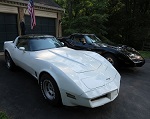
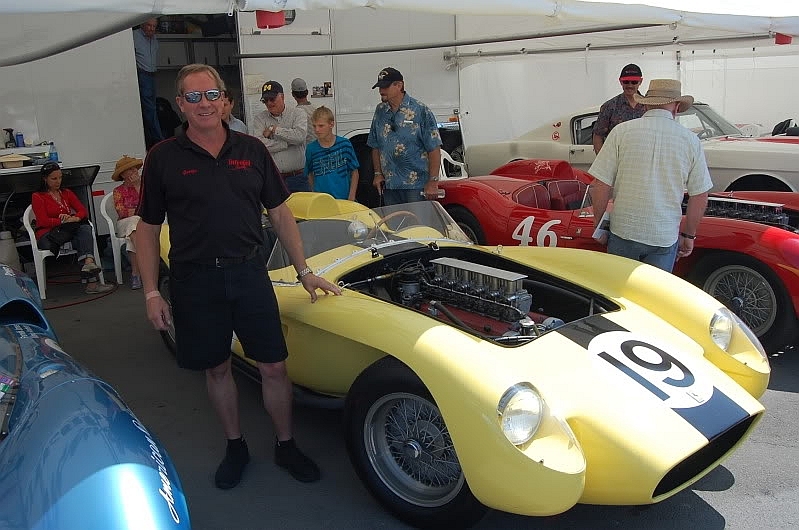
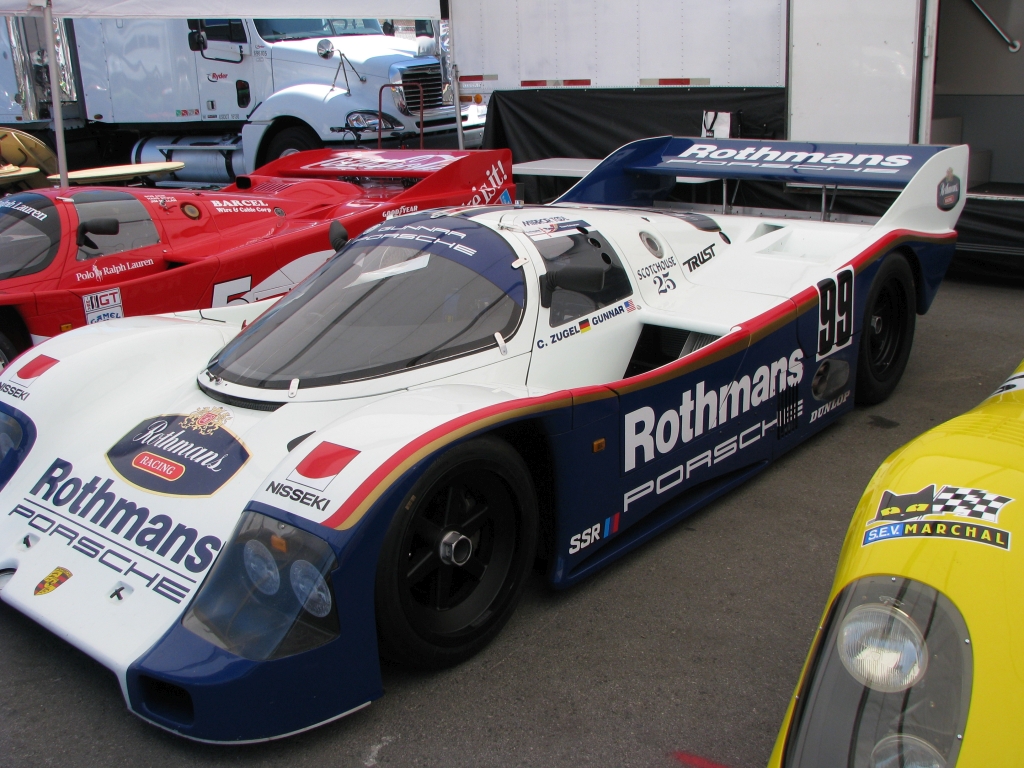
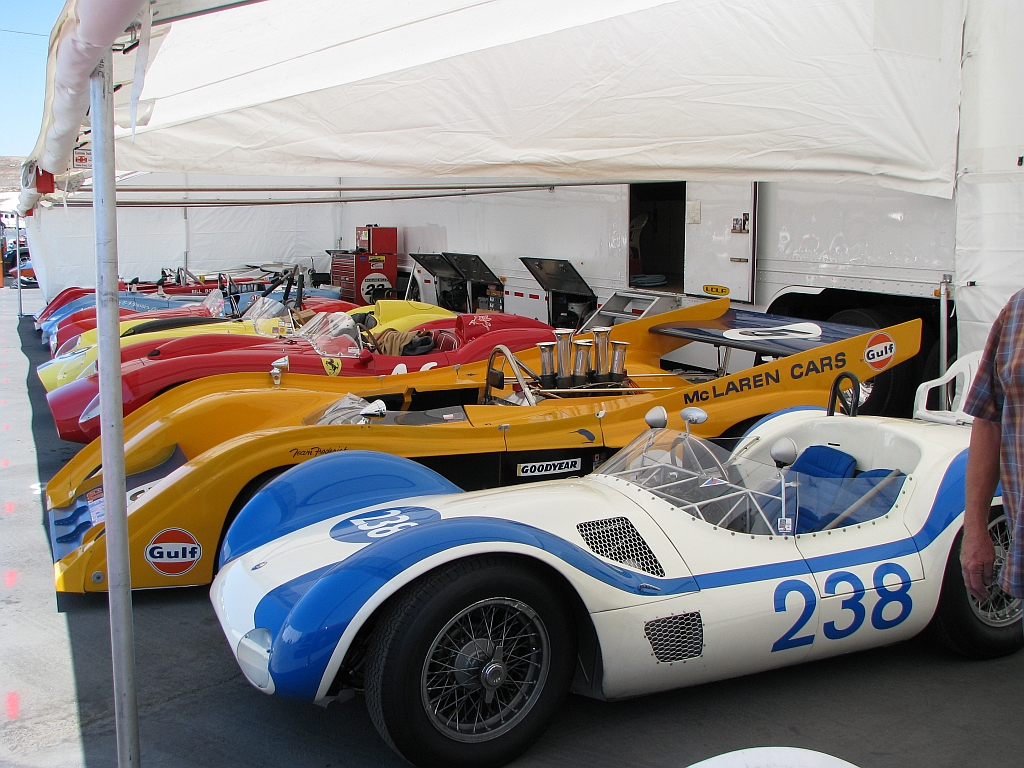
Some of the cars we took to races all over
I got sponcered tire rack tires. All you have to do is be a SCCA track class champion in your division. It was costing me about 10 grand in tires/brakes/ entry fees to get to the top for a class champ annual trophy that might have cost $200 at the trophy shop in 2006 and 2007. But it allowed me to get to drive very nice race cars.
Life is funny. Your born into a family and have opportunities. I didn't have a silver spoon. So I was never able to do it right. But I was competing at an historic race car event with all the big rig car hauler multi car car teams and mega buck cars. Got to talking to the owner and if you can't beat them join them. I got hired.
Some of the cars we took to races all over
Racer
Joined: May 2020
Posts: 498
Likes: 167
I’ve been told by Ridetech and Vansteel that you don’t want a rear sway bar on a C3 for short tight courses. They said the bar will bind up the chassis not allowing the car to rotate around the cones. I have the stock steering box that will soon be replaced with a Borgeson unit. My only reservation so far is that I’m not a fan of the lite steering the Borgeson box provides. So it will have to be modified to provide more “feel.”
Last edited by JC 1975; Jul 11, 2024 at 11:11 PM.
Safety Car
Joined: May 2004
Posts: 4,363
Likes: 1,587
From: los altos hills california
I don't know what this means - "They said the bar will bind up the chassis". I guess the rear is supposed to flop around? That would be felt at the front of the car which might explain the huge front spring rates. Or something else?
Race Director
Joined: Mar 2017
Posts: 11,947
Likes: 4,506
From: Virginia
There are some examples of heim-based solutions in this thread:
https://www.corvetteforum.com/forums...r-bracket.html
That would be a pretty amazing admission that VanSteel and Ridetech would rather sell you nothing, than sell you the aftermarket-style rear sway bar, so there must be something else going on.
Racer
Joined: May 2020
Posts: 498
Likes: 167
Binding was probably the wrong word. I should have said the rear sway bar makes the suspension too tight for very short tight parking lot courses. The rear sway bar doesn’t allow you to put the power to the ground similarly to not having one on a very short tight track. They said if I was to do anything else besides parking lot racing the rear sway bar will need to go back on.
A rear sway bar generally takes away rear grip, basically lifting the inside tire.
A rear sway bar generally takes away rear grip, basically lifting the inside tire.
Thread Starter
Old Pro Solo Guy
Joined: Dec 2017
Posts: 8,079
Likes: 4,431
From: Marlton NJ
I’ve been told by Ridetech and Vansteel that you don’t want a rear sway bar on a C3 for short tight courses. They said the bar will bind up the chassis not allowing the car to rotate around the cones. I have the stock steering box that will soon be replaced with a Borgeson unit. My only reservation so far is that I’m not a fan of the lite steering the Borgeson box provides. So it will have to be modified to provide more “feel.”
The fastest way around a corner is full throttle thru most of the corner, and for that you need much less rear sway bar.
But with that setup, during "no-throttle" turning, the car will have a lot more understeer, and would feel better with a rear sway bar. You know, like on the street, where you do not typically use WOT in every corner.
Using full power, or not, during a corner, makes an enormous change in the handling balance of the car, (especially in 1st & 2nd gear).
There is no product that can do both, the physics prevent it.
So you need to choose a rear sway bar, according to how much throttle you normally use in a corner.
Now is their choice of no sway bar, or their ___ size rear sway bar, correct for all corvettes?
Absolutely not.
Their are way too many variables from car A to car B, and driver A to driver B.
I had two sway bar tunes for my Solo car.
The light rear sway bar track version that understeered a lot at not throttle but was perfectly balanced at WOT.
The street version, with more rear sway bar, much less understeer, and was much more enjoyable at part throttle. I just have to wait until it is a little straighter to use WOT.
It was so dramatic, I would change the setting before the 120 mile drive home, so I could enjoy the drive.
Last edited by leigh1322; Jul 12, 2024 at 12:17 PM.