When you click on links to various merchants on this site and make a purchase, this can result in this site earning a commission. Affiliate programs and affiliations include, but are not limited to, the eBay Partner Network.
If I may make a suggestion, go to the nearest harbor freight or auto parts store and get a cheap $50 hvlp primer gun set. Then go to koi and get a gallon of primer and a gallon of thinner. Borrow a portable compressor if you dont have one. Dont go the rattle can route, you can spend a little more and get much better primer. You can have the best painter in the world but if your work below the paint isnt right it will never look good. The way I see it, it is 90% prep and 10% paint
Of course you can chime in, lol. That’s why we’re all here
Do you think it is that big of a problem to prime with a spray can? I mean, if it will produce crappy results then I can definitely find a different route like the one you suggested. I was going to just take it to Maaco and be done with it because I’m not worried about being a show quality car. But then I got so many concerns about how their is no prep work with them. So I made the decision to just tackle it myself.
Hobestly, If I could spray it I would. Here is my issues.
1) I live in a condominium and my “workshop” is just a covered parking spot next to cars on either side. So painting there is definitely a bad idea because I’ll overspray all the vehicles. Now I could wait til they go to work and spray it. Or I could put some plastic up and make a “booth”.
2) I don’t have a compressor to use a spray gun.
3) Everything I have ever seen shows that the spray should go from one panel to the other with no stoppage. The problem here is that I am in a wheechair, so the ability to hold the gun, spray, and move my wheelchair down the length of the car seems like it will create quite a challenge.
I met a guy who is willing to spray the car with his equipment in his barn. But I would have to drive the car over to him which would dirty up all my surfaces. Although I suppose I could clean them again when I arrive.
I've done some paint work in the past, alrhough I try to shy away from doing it too much on cars due to the labor involved and the fact that I don't have a spray booth that I can easily control temperature, dust levels and ventalation. But I do lots of painting of parts and vintage metal working machines etc... that do not need to be show quality. If you don't mind here are a few of my suggestions:
If you have access to a compressor, i'd really recommend getting a HVLP gun and some proper catalyzied epoxy primer, to seal in the areas you've sanded followed by high build 2K primer. Myself I wouldn't put cheap primer under good paint, plus you are really going to want to stick with one paint system, primer through top coat to avoid possible reactions between the products.
Suprisingly if you buy in gallon sizes from a autobody wholesaler I think you'll find proper primer isn't much more expensive then rattle cans. The only downside is you'll have to clean the paint gun out after each use, which requires acetone and cleaning brushes. The autobody wholesalers will also sell DA sanding pads in various grits for pennies each.
I'd say you may want to also think about doing some hand sanding in grits upto 600 on the high build primer, the DA is ok for removing lots of material quickly but it can also make some impressions that may not be vissible until a shiny top coat is applied so once your donw with the DA I'd carefully smooth it all out by hand.
For most products don't allow more than a MAX of 24 hours to go by between coats unless your sanding (preferrably less), so for example, apply epoxy primer, wait a 1-2 hours (depending on heat/humidity) then apply 2K high build primer, let it dry for a day do your sanding, clean/prep the surface, spray 2 or 3 coats of colour with 1 hour or so in between coats (depending on heat and humidity) then move directly onto clear coats without allowing much time to pass. This requires some planning as without a booth to bake the paint on you need to allow enough time to do all the coats you need to do in fairly quick sucession to avoid adhesion issues. You also have to make sure you have all the products includinh cleaning supplies on hand the day you do the paint work, and you'll need to keep an eye on how it is drying and the heat/humidity. Make sure to mix the paint properly, don't alter the formula for reducer/paint/activator use what is recommended. Depending on the paint system you may change the activator used in paint to adjust for heat/humidity (low, med or high temp activator) although some paint systems just don't give that option.
One last thing, your doing this work outside so you have good air flow but anytime your working with urethane paint your dealing with Isocynates and other toxic chemicals, at a minimum you want to wear gloves, cover your skin with long sleeves etc... and use a mask with charcoal filter(s) that you change at recommended intervals (often every 8 hours). I personally use a full face supplied air system to elimate all the inhilation risks.
Sorry if this sounds like a lot, its not as bad as it sounds, but there are a lot of little gottacha's with paint work to keep in mind. All the best with it.
Edit: you know based on your situation being in a apartment, and the car being in a parking garage I think the best route for you would be to do all the sanding prep work yourself then take it to a paint shop and let them do the primer(s) and top coat. You'll save lots of money on labor and likely get nice results and won't risk getting overspray etc... on anybody else's car or anyone complaiming about toxic paint fumes.
Now understanding your situation better I see what you are up against. I take it for granted sometimes that I own my house and have a 2 car detached garage that I can work in and not be concerned with other vehicles etc. You have to work with what you got! If you must go the rattle can route they do sell epoxy primer, etching primer and high build primer in cans. Just be sure to get it coated as evenly as possible and wet sand the final round with 600 grit on a flat sanding board. Ive used a paint stick shortened to match the sandpaper, takes a while but you'll wind up with a nice flat body. Some people use a guide coat to be able to see any high or low spots, I've painted 3 cars without it and they've turned out pretty good.
Hmmmmmm....now my mind is pondering the possibilities.
Bandi, you mentioned an HVLP sprayer, I do not have an air compressor so I’m wondering if I could use one of the HVLP electric sprayers. Harbor Freight sells a spray gun for $100 but it seems like it’s sold for home usage. Would it work?
If not, I could buy a compressor, but what is the smallest I could get away with? Obviously gravity feed sprayers are cheap enough. It’s the compressor I’m more worried about.
I am trying to do the best job on the smallest dime too. I’m willing to take the time to prep it right. I’m even willing to try my hand at painting. What’s the worst that could happen, lol.
I definitely don’t know a lot about types of paint and how to mix them or anything like that. I have always just been the guy that sands by hand, primes and paints with rattle cans.
Hell, at this point I might as wel make the paint job I want....gloss black with murdered-out flames on the front. Or something of that nature. Black with ghosted flames.
Point me in the right direction as this process is super new to me. I’m all about function before fashion and I feel like I’m finally at the fashion point for the exterior.
Best thing to do in my opinion is get online and start researching. I know there are different procedures to doing body work on these vettes compared to a steel body car, but I don't know all the details myself. I too will need to do some research soon as I plan on painting mine this year, hopefully in the spring.
As far as priming goes, you could probably get away with a 20-25 gallon compressor and go panel by panel. I did that with my firebird and the body turned out great. That was my first paint job some 20 years ago, and although I havent repainted it since, it doesn't look too bad. But I borrowed a friends paint booth to do the painting which had a large compressor and exhaust fans. I know you'll need a flexible primer for the bumpers but not sure about the body.
I like Deltron products. I've also used Omni for another project. Cheaper by a lot, and to me not much difference in quality. If you use metallic paint, be sure to do a final misting of color coat all over the car to avoid "zebra stripes" where you will see lines of metallic in the paint. Lots of hours taping things off.
After painting you'll most likely want to color sand (wet sand) to remove the orange peel. Depending on how heavy the orange peel is, you could start with 1000-1200 grit sand paper and finish with 1500. Then you'll need a buffing compound to polish off the sanding marks using a wool or cloth buffing pad, finishing off with yet another buffing compound that has I believe a 10,000 or better grit finish using a foam pad.
Theres a **** ton of work to do after its actually painted, you're going to spend days getting it smooth and clean. You'd hate to do all that work just to have the paint flake off after a year or to due to inferior products. I'm basing all of this on personal experience with two trans ams I painted and own.
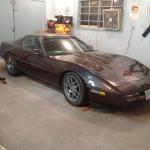
Well guys, I sanded the car with 220 grit and realized that I didn’t want to do that bullshit anymore. So I cleaned her and sent her off to the dreaded MAACO for a paint job. I discussed the options with the salesman and settled for the base package with an upgraded clear in the actual paint. I also paid an extra $200 for more prep and sanding to be done. So for a grand total of $918.99 I was able to get this...
Well guys, it’s been a bit. I have put more miles on BLK_BETE driving around to shows and just cruising. Sadly though, I am now broke again and not in the $department, lol.
I was driving down the road the other night and lost 3rd gear. Basically I was driving with no issues until I stopped at a red light, accelerated through 1-2 gears and when the auto wanted to shift from 2->3 it just revved to the max and no shift. I limped her home in second gear. I got under the car today, removed the governor and no issues with it. I can’t imagine it being the TV cable as I have put a bunch of miles on it with no issue shifting until now.
So I guess it’s time to swap the 4L60e like I originally planned for. I knew it was a matter of time before I lost the 700r4 but didn’t expect this soon. Although, I have been hammering the throttle lately.
Any advice on transmission swap? Must stay automatic. My harness is plumped for an electronic trans, originally the motor was mated to a 4l80e I believe (02 Silverado).
In other news...I was working the planning stage of bagging the Vette. I really like to be unique so instead of lowering the car with a kit or coilovers, I decided to try and put the car on air suspension.
I spoke with Eric @VanSteel, he suggested swapping the suspension to 88+ to get the extra space. But no idea if that’ll help, how much is involved, and how much it costs.
RN, I am thinking of going with some motorcycle air suspension. The air shocks are thinner in diameter than car versions. They seem to be the same length as the C4 and can hold 1100lbs per shock. With 5” of total travel from 9.25”-14.25”.
I was planning on installing the air management systems underneath the car where the spare tire is stored. Any ideas are greatly appreciated.
Awesome build! Is the Maaco base package single stage? Good videos on youtube on how to make that paint job shine (looks like you have the tools!) Check out link below. For me, I like the first set of wheels you had on, looks way better IMO but overall love the progress!
Awesome build! Is the Maaco base package single stage? Good videos on youtube on how to make that paint job shine (looks like you have the tools!) Check out link below. For me, I like the first set of wheels you had on, looks way better IMO but overall love the progress!
Thanks for the video, I may have to try this. Yes, the Maaco is their base package with an upgrade to the urethane paint not the epoxy paint.
Also, I love the old wheels too. I would’ve stayed with them but the brakes don’t fit in the 17s. I’m saving my pennies for something better. I’m not a fan of these ugly 19s. Even my paint job can’t hide the ugly. Lol.
Well guys, the 700r4 did not hold up to the LQ4’s stock power levels. Maybe it was the fact that it’s 36 years old, but either way I’m into a transmission swap now.
Now let me tell you, getting the transmission out was not easy. And so I imagine putting the new one in will be even more exciting. I decided to go with a built 4l80e from Lizard Performance Transmissions here in FL. I chose this builder because he is a small shop and offers delivery. I also went with a 3000 stall converter and a TCI EZ-TCU controller for the transmission. I chose the controller based on the ability to add paddle shifters in the future.
I am planning on running a transmission cooler with -6AN plumbing. I have yet to decide on a cooler and a placement for the cooler. I’m thinking in front of the radiator and also incorporating the stock cooling system into the additional trans cooler.
Hopefully will be back on the road shortly.
4l80e is a monster compared to the 700R4. About the same length- sure. But it weighs nearly 100lbs extra and usually requires alot of transmission tunnel modifications. Have you read up on the swap? Do you know how to adjust the transmission shift pressure? It will require a hydraulic gauge which can read 0-500psi hooked into the line pressure port of the transmission. I've done 4l80e swaps in tight transmission tunnel so I Know you will need to plan for this in advance, there won't be anyway to get the gauge onto the transmission unless you have a significant amount of room on the side of the trans to reach the port from underneath the car. Somehow.
Next,
DO you know the frailties of the 4l80e? It is extremely robust but, if you run it hard with the shifter in 4th (Normal drive position) It will break the roller clutch.
Always put the 4l80e into 3rd gear before you make any kind of Wide Open Throttle pass. You can read up about this online several places. Basically when the lever is in 4th position the over-run clutches are NOT engaged so the only thing transferring power from the input shaft down is the roller clutch, which is a sprag holding in 1, 2, and 3rd gear. And it will break very easily if loaded with the shifter in D4 position.
Next another big issue seen all the time is reverse, because people jam the trans from reverse to drive too fast. You need to wait a couple seconds between R and Drive or you will burn reverse right up. Not a big deal to do but if you don't know it wont take much.
Next the 4l80e with a high stall converter like any automatic transmission will throw a LOT of heat around. The OEM cooler sizes and even larger aftermarket coolers are barely enough. I have had customers need two large -6an fan-controlled transmission coolers in a series just to bring the heat down.
You need the transmission to stay 155*F to 165*F For best life span. anything over 178*F is reducing life span. I believe around 200*F for example will cut the trans life in half.
finally,
I would make sure the 4l80e is a 02-04 model with rear lube, has been internally dual fed, AFL valve fix, most people avoid the trans-go shift kit plate and trans-go pressure relief mod, they "Work" But you hear mixed results with those items ("leaky" separator plate and "leaky" Pressure mod causes slipping in rebuilt units sometimes),
make sure its got the .108" thick intermediate snap ring, and especially a lube-to-line modification (.050"~ hole drilled to bypass line pressure into converter charge)
Lube to line is a proven mod and in my transmission that mod reduced my running temps by around 15-20*F because it keeps the fluid flowing through the cooler at all times.
4l80e is a monster compared to the 700R4. About the same length- sure. But it weighs nearly 100lbs extra and usually requires alot of transmission tunnel modifications. Have you read up on the swap? Do you know how to adjust the transmission shift pressure? It will require a hydraulic gauge which can read 0-500psi hooked into the line pressure port of the transmission. I've done 4l80e swaps in tight transmission tunnel so I Know you will need to plan for this in advance, there won't be anyway to get the gauge onto the transmission unless you have a significant amount of room on the side of the trans to reach the port from underneath the car. Somehow.
Next,
DO you know the frailties of the 4l80e? It is extremely robust but, if you run it hard with the shifter in 4th (Normal drive position) It will break the roller clutch.
Always put the 4l80e into 3rd gear before you make any kind of Wide Open Throttle pass. You can read up about this online several places. Basically when the lever is in 4th position the over-run clutches are NOT engaged so the only thing transferring power from the input shaft down is the roller clutch, which is a sprag holding in 1, 2, and 3rd gear. And it will break very easily if loaded with the shifter in D4 position.
Next another big issue seen all the time is reverse, because people jam the trans from reverse to drive too fast. You need to wait a couple seconds between R and Drive or you will burn reverse right up. Not a big deal to do but if you don't know it wont take much.
Next the 4l80e with a high stall converter like any automatic transmission will throw a LOT of heat around. The OEM cooler sizes and even larger aftermarket coolers are barely enough. I have had customers need two large -6an fan-controlled transmission coolers in a series just to bring the heat down.
You need the transmission to stay 155*F to 165*F For best life span. anything over 178*F is reducing life span. I believe around 200*F for example will cut the trans life in half.
finally,
I would make sure the 4l80e is a 02-04 model with rear lube, has been internally dual fed, AFL valve fix, most people avoid the trans-go shift kit plate and trans-go pressure relief mod, they "Work" But you hear mixed results with those items ("leaky" separator plate and "leaky" Pressure mod causes slipping in rebuilt units sometimes),
make sure its got the .108" thick intermediate snap ring, and especially a lube-to-line modification (.050"~ hole drilled to bypass line pressure into converter charge)
Lube to line is a proven mod and in my transmission that mod reduced my running temps by around 15-20*F because it keeps the fluid flowing through the cooler at all times.
Thank you for the response KingTalon, and the extra knowledge of the transmission. Although I’m not going to lie, everything you said sounds so much more daunting than what I was anticipating. I have read the swap that Pwnage1337 wrote and that’s kind of the route I was going to take with the C-beam. Instead of using square steel like he used, I’m planning on using a 1/4” thick square aluminum 6061 tubing. I was planning on having that adapter welded to the C-beam to become part of it. And then use the 4l80e mount to bolt to the newly welded C-beam.
Hopefully will be able to follow in Pwnage’s foot steps.
Mounting it is a whole other ordeal. You need to read up on pinion angle. The transmission can't just be mounted wherever or the drive shaft will vibrate and the car will be undrivable.
In an Independent rear suspension car, the output shaft and pinion angles need to be equal and opposite.
For cars with torque arms or other types of rear suspension where the differential can change angles, the angle needs to be set such that when the car loads it's suspension the driveshaft forms a more or less straight line to the differential. This way when cruising there is some angle applied which keeps the needle bearing in the u-joints rotating, then when it goes to make a launch everything straightens out for max torque and minimal wasted energy.
Make sure you read up and understand completely about how to set the pinion angle because, the last thing you want is to make a trans mount, weld everything up, then drive the car and have an ungodly vibration at high speed.
The 4L80e swap is coming along. This has been one of the harder things for me to do on this car but I’m extremely proud, happy, etc of myself for getting this far along. There’s still a few more things I’ll need to do before I can put Bette back in gear. I still need to order my custom driveshaft and then I can finish the C beam mount and adjust the tail shaft to match the pinion angle on the rear diff. I mocked the position up. I think I’m at about 2.5 degrees at the tailshaft and -2 degrees at the differential. I will say that I think the driveshaft is going to be a close fit to the c beam.
Some progress updates/pictures:
First thing I did was install a transmission cooler in the rear of the car. Decided on a Derale twin fan 19 row transmission cooler. Fresh out of the box 19 rows of cooling This is the location I think will get some extra air flow and be mostly hidden. Took the twin 650cfm fans off from paint prep Painted the housing gold. Installed in place. Will still need to i stall braided lines and a temperature switch.
Second item of business was installing the transmission controller. New in box from Summit. This is the location I decided to install the unit. Other than the orange speedo wire, all installed.
The handheld I will remove from the car once everything is setup. But I will still leave access to the data cable just in case I need to have the handheld. I will also need to install my GPS speedo in this area.
The transmission was not easy to get under the car or in the air, especially as a wheelchair user. But it found a way. It only took me about two weeks of a little here and a little there. 4L80e built to hold 700whp and a 3000 stall Once I got it under the car, I had to get the Jack under it. Angled up and slid the Jack underneath as much as I could. I was able to get it high enough to slide 4x4s under it which allowed me to relocate my Jack to a more balanced position.
While I had the transmission out and some important parts off, I decided to go ahead and change out the batwing oil pan for a Holley 302-2 oil pan.
The batwing oil pan began leaking from this ICTBILLET adapter as soon as I installed it. So I made sure to install it better on this oil pan...fingers crossed no leaks. Ready to be installed
Im currently waiting on the driveshaft after mocking the c beam back in place.
C beam before cutting Everything above the tape is leaving After the initial cut. Just slightly sitting in position. In this picture I still need to raise the tailshaft up to adjust angle and obviously make a mount This is going to be super tight. I would like to just weld some aluminum flat stock perpendicular to the c beam right at the transmission mounts.
Can’t forget to shift. Cut the original bracket to fit the 4l80e
I also went with a 3000 stall converter and a TCI EZ-TCU controller for the transmission. I chose the controller based on the ability to add paddle shifters in the future.
The OEM PCM would've likely been better than the TCI unit.
Also, adding paddle shifters is easy with these, as it is just 2 solenoids that control the gears through 2 ground wires. You can put paddle shifters on with the stock PCM fairly easily.
The OEM PCM would've likely been better than the TCI unit.
Also, adding paddle shifters is easy with these, as it is just 2 solenoids that control the gears through 2 ground wires. You can put paddle shifters on with the stock PCM fairly easily.
Sadly when I reworked my wiring harness I accidentally deleted the transmission harness. So a controller had to be used.