



What engine temp to run?

Safety Car


Joined: Sep 2001
Posts: 4,157
Likes: 554
From: Glenbeulah Wi

Data is king, thanks for posting. Did they do any runs at 160 water temperature? Since a 160 Stat is easy to find that would have been interesting to see what those results showed.
Did they list oil temps of the various runs?
Did they list oil temps of the various runs?

Le Mans Master


Joined: Aug 2017
Posts: 6,941
Likes: 1,490
From: New Jersey
One could probably plot the power vs temp numbers and fit a curve to extract data at 160. I'd imagine the 135 temp was without a thermostat at all. It would probably fall somewhere in the middle too.
Safety Car
Joined: Sep 2001
Posts: 4,157
Likes: 554
From: Glenbeulah Wi
I had thought about this as well. My theory is as follows: oil is considered relatively shear stable over a pretty wide temperature range. So in theory the only real effect it would have is when cold. Once it has some heat in it it should present a relatively stable loss over what is considered the normal operating range in my opinion. I'd speculate that running with ice cold oil would result in the biggest loss followed by oil at 270+. Oil in the range of 160-250 degrees or so would probably not have much of a difference as it is designed to operate in that range at its rated viscosity with some deviation. That's my thought for today anyway lol.
One could probably plot the power vs temp numbers and fit a curve to extract data at 160. I'd imagine the 135 temp was without a thermostat at all. It would probably fall somewhere in the middle too.
One could probably plot the power vs temp numbers and fit a curve to extract data at 160. I'd imagine the 135 temp was without a thermostat at all. It would probably fall somewhere in the middle too.

Race Director

Joined: Apr 2003
Posts: 17,700
Likes: 1,667
From: moraga ca
Oil temperature would be an important factor. If the coolant is 135, the oil temperature is normally cooler than the coolant. What effect does a higher viscosity oil have on hp? I try to get my oil temp above 150 before each run. Sometimes this entails fast idling the motor in the staging lane. My coolant will usually stay at around 170 because I manually turn the fan on before the run. I'm concerned more about proper lubrication than I am about a hundredth or two.

Thread Starter
Team Owner


Joined: Aug 2004
Posts: 21,543
Likes: 3,216
From: Park City Utah
They didn't talk about oil temps at all, which I find a little surprising, other than one brief sentence where Steve Brule (who runs the dyno at Westech) said: "I want my oil hot and my coolant cold."
FYI, once fully warmed, oil in my cars typically runs higher temps than the coolant -in the summer at least. At the (road) track, my oil would get as high as 270-280*. Coolant never got anywhere near that number.
Corvette Stories
The Best of Corvette for Corvette Enthusiasts

Top 10 Most Expensive Corvettes Ever Sold on Bring A Trailer
Brett Foote
10 Things Every Corvette Owner Needs (2026 Edition)
Michael S. Palmer
8 Most "Only Corvette Owners Understand" Quirks and Problems
Pouria Savadkouei
10 Reasons the C6 Z06 is Still A Performance Benchmark After 20 Years
Joe Kucinski
How Much Horsepower Every Corvette Engine "LOST" in 1972
Joe Kucinski
Top 10 DOs and DON'Ts for Protecting Your Convertible Top!
Michael S. Palmer
Top 10 Most Explosive Corvettes Ever Made: Power-to-Weight Ratio Ranked!
Joe Kucinski
150 hp to 1,250 hp: Every Corvette Generation Compared by the Specs That Matter
Joe Kucinski
8 Coolest Corvette Pace Cars (and Replicas) of All Time
Verdad Gallardo
Thread Starter
Team Owner
Joined: Aug 2004
Posts: 21,543
Likes: 3,216
From: Park City Utah
More Data. I love it. Engine Masters just ran another test, this one is "Iron vs. aluminum heads" which I'll cover in another thread.
BUT, the purpose of the test involves heat, so they ran the engine at various temps with the iron and w/the aluminum heads. Engine is a SBC, 383, single plane/carb/headers on the dyno w/no accessories -their baseline pull made 469hp @6100 and 646tq @ 4700, to give you some frame of reference. Now for some data:
IRON HEADS:
142*F......................159*F
424hp....................418hp
474tq.....................467tq
....a loss of 6hp and 7lbs from ~17*F temp change ALONE.....no other changes at all.
ALUMINUM HEAD
140*F......................170*F
430hp....................419hp
480tq.....................468tq
....a loss of 11hp and 12 lbs from ~30* temp change ALONE.....no other changes at all.
BUT, the purpose of the test involves heat, so they ran the engine at various temps with the iron and w/the aluminum heads. Engine is a SBC, 383, single plane/carb/headers on the dyno w/no accessories -their baseline pull made 469hp @6100 and 646tq @ 4700, to give you some frame of reference. Now for some data:
IRON HEADS:
142*F......................159*F
424hp....................418hp
474tq.....................467tq
....a loss of 6hp and 7lbs from ~17*F temp change ALONE.....no other changes at all.
ALUMINUM HEAD
140*F......................170*F
430hp....................419hp
480tq.....................468tq
....a loss of 11hp and 12 lbs from ~30* temp change ALONE.....no other changes at all.
Thread Starter
Team Owner
Joined: Aug 2004
Posts: 21,543
Likes: 3,216
From: Park City Utah
Additionally, Freiburger did ANOTHER "iron vs. Aluminum test 11 years ago for Hot Rod Mag, and same as above, they taste that engine at various temps too. Here is the chart:
.........110 DEG. F 185 DEG. F
RPM LB-FT HP LB-FT HP
3,000 410 234 393 225
3,100 413 244 393 232
3,200 414 252 394 240
3,300 415 261 396 249
3,400 416 269 397 257
3,500 418 279 398 266
3,600 422 289 401 275
3,700 427 301 405 285
3,800 431 312 407 295
3,900 435 323 411 305
4,000 438 334 416 317
4,100 445 347 422 330
4,200 451 361 430 344
4,300 458 375 436 357
4,400 465 389 442 370
4,500 471 403 448 384
4,600 475 416 453 397
4,700 478 428 456 408
4,800 480 439 458 419
4,900 481 449 460 429
5,000 481 458 461 439
5,100 480 466 460 446
5,200 476 472 457 453
5,300 472 476 454 458
5,400 468 481 450 463
5,500 464 486 447 468
5,600 460 490 442 471
5,700 455 493 437 474
5,800 450 497 432 477
5,900 444 499 427 480
6,000 438 500 421 481
6,100 432 502 415 483
6,200 425 501 408 482
6,300 416 499 401 481
6,400 410 500 394 480
6,500 402 497 387 479
In this test, with a 75*F change in coolant temp, there was a change of 19hp and 20 lbs of tq. As Freiburger stated in that test: "Heat kills power"....not the other way around.
.........110 DEG. F 185 DEG. F
RPM LB-FT HP LB-FT HP
3,000 410 234 393 225
3,100 413 244 393 232
3,200 414 252 394 240
3,300 415 261 396 249
3,400 416 269 397 257
3,500 418 279 398 266
3,600 422 289 401 275
3,700 427 301 405 285
3,800 431 312 407 295
3,900 435 323 411 305
4,000 438 334 416 317
4,100 445 347 422 330
4,200 451 361 430 344
4,300 458 375 436 357
4,400 465 389 442 370
4,500 471 403 448 384
4,600 475 416 453 397
4,700 478 428 456 408
4,800 480 439 458 419
4,900 481 449 460 429
5,000 481 458 461 439
5,100 480 466 460 446
5,200 476 472 457 453
5,300 472 476 454 458
5,400 468 481 450 463
5,500 464 486 447 468
5,600 460 490 442 471
5,700 455 493 437 474
5,800 450 497 432 477
5,900 444 499 427 480
6,000 438 500 421 481
6,100 432 502 415 483
6,200 425 501 408 482
6,300 416 499 401 481
6,400 410 500 394 480
6,500 402 497 387 479
In this test, with a 75*F change in coolant temp, there was a change of 19hp and 20 lbs of tq. As Freiburger stated in that test: "Heat kills power"....not the other way around.
Safety Car
Joined: Sep 2001
Posts: 4,157
Likes: 554
From: Glenbeulah Wi
More Data. I love it. Engine Masters just ran another test, this one is "Iron vs. aluminum heads" which I'll cover in another thread.
BUT, the purpose of the test involves heat, so they ran the engine at various temps with the iron and w/the aluminum heads. Engine is a SBC, 383, single plane/carb/headers on the dyno w/no accessories -their baseline pull made 469hp @6100 and 646tq @ 4700, to give you some frame of reference. Now for some data:
IRON HEADS:
142*F......................159*F
424hp....................418hp
474tq.....................467tq
....a loss of 6hp and 7lbs from ~17*F temp change ALONE.....no other changes at all.
ALUMINUM HEAD
140*F......................170*F
430hp....................419hp
480tq.....................468tq
....a loss of 11hp and 12 lbs from ~30* temp change ALONE.....no other changes at all.
BUT, the purpose of the test involves heat, so they ran the engine at various temps with the iron and w/the aluminum heads. Engine is a SBC, 383, single plane/carb/headers on the dyno w/no accessories -their baseline pull made 469hp @6100 and 646tq @ 4700, to give you some frame of reference. Now for some data:
IRON HEADS:
142*F......................159*F
424hp....................418hp
474tq.....................467tq
....a loss of 6hp and 7lbs from ~17*F temp change ALONE.....no other changes at all.
ALUMINUM HEAD
140*F......................170*F
430hp....................419hp
480tq.....................468tq
....a loss of 11hp and 12 lbs from ~30* temp change ALONE.....no other changes at all.
Thread Starter
Team Owner
Joined: Aug 2004
Posts: 21,543
Likes: 3,216
From: Park City Utah
Richard Holdner did this test. Unfortunately it was on an LS, and power didn't change much. However torque did; he lost 18 lbs going from 116*F to 180*F. I wish he'd run the test up into the 220's, but he stopped at 180. Any,way FF to 6:20 or so, for just the results.
Thread Starter
Team Owner
Joined: Aug 2004
Posts: 21,543
Likes: 3,216
From: Park City Utah
> Lower temperatures allow higher timing advance before detonation occurs. The Carb'd engine has no electronic timing controls. The LS does. I'm not bjankuski, I am not familiar with the calibrations, but I assume there are timing corrections based on coolant temp applied to the fuel injected LS.
IDK about the LS. I don't think Richard changed timing manually, it's possible that the ECM allowed more at colder temps with no knocks, but at temps 180 and lower, I doubt it ran into knock at any temp/test.
> Oil temp's influence on power. Cooler oil temperature will blow the high-pressure bypass on the pump open and keep it open where hotter oil may not. The pump probably draws less power to pump the cold oil a 1/2" back into the pan than it does to pump warmer oil throughout the engine. I may be wrong, but this is all I could come up with for oil temp's influence, if timing advance remains the same.
Unfortunately, Engine Masters tested that one a year ago, or so, and saw (ready for this?) ZERO gains or losses when using different pumps that pump different volumes and at different pressures. ZERO. I couldn't believe it.
Also, in the Engine Masters' coolant temps tests, I believe that they controlled the oil temps and held them essentially the same, while controlling the coolant temps, with their reservoir, for each test. I can go back and watch to confirm if anyone is interested. I'm sick right now so have ALL kinds of time on my hands.

.
Last edited by Tom400CFI; Dec 23, 2022 at 09:38 PM.



Burning Brakes

Joined: Aug 2018
Posts: 891
Likes: 175
From: PA
Richard's latest video was on oil viscosity. Will a lower viscosity oil make more power . It was a 5.3 litre LS . First ran it with 5W30 conventional oil and then with 5W30 full synthetic. Not much of a difference there. Next he ran 20W50 full synthetic and compared that to running 0W10 full synthetic. The 0W10 was good for a significant power increase over the thicker oil . The 5W30 was not far behind the 0W10.

Drifting


Joined: Nov 2018
Posts: 1,760
Likes: 647
From: USA
Just finished reading this entire thread, I do agree with the conclusion that higher coolant temps negatively effect power output. One side note though, seems like modern oils are getting all the credit for reduced cylinder wear....although they play a major role, let's not forget about fuel delivery, more specifically air/fuel ratio.....EFI....I always thought that the ridge at the top of the bore after 100k miles was caused by cylinders being washed out from too much fuel, thus contaminating the oil and reducing it's effectiveness. Too rich during idle, etc. Modern oils are great, but fuel injection is why you see the cross-hatches still after 200k miles!!???👍
Thread Starter
Team Owner
Joined: Aug 2004
Posts: 21,543
Likes: 3,216
From: Park City Utah
I 'm sure modern engine controls help. A LOT. Especially for the lay person. I have had carbed engines that lasted longer than long enough though, so while I agree that the carb isn't as good at control IDK that it's condemns an engine to short life, either.
I think:
*Oil
*Engine controls
*Machining practices
*Overdrive
....all work together to help newer SBC's vastly outlast older SBC's.
I think:
*Oil
*Engine controls
*Machining practices
*Overdrive
....all work together to help newer SBC's vastly outlast older SBC's.

Burning Brakes

Joined: Apr 2014
Posts: 829
Likes: 192
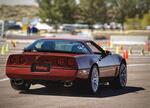
When we ran the 96 LT1 at the drag strip we just couldn’t break into the 12’s et. 13.10, 13.08, 13… over and over. Granted, the car was in line heating up before getting to the line on all these runs.
We said enough racing, parked the car and went into the spectator stand to watch instead. After about 45 mins my son said, “let me try one more time.” By this time in the evening the staging lanes were almost bare but still open for racers. He started the car and basically drove right up to the line without any wait. Heated the tires, staged up and went 12.88 @ 110 mph. It was a great finish to the evening. I chalked it up to a cooler engine on that particular run.
We said enough racing, parked the car and went into the spectator stand to watch instead. After about 45 mins my son said, “let me try one more time.” By this time in the evening the staging lanes were almost bare but still open for racers. He started the car and basically drove right up to the line without any wait. Heated the tires, staged up and went 12.88 @ 110 mph. It was a great finish to the evening. I chalked it up to a cooler engine on that particular run.
Drifting
Joined: Jun 2020
Posts: 1,709
Likes: 734
From: Stay dangerous my friends
Easy enough to say "generally" that lower coolant temps will indicate higher horsepower/torque, but it's not a simple function of just coolant temp.
The more significant factor in the formula is intake temps, sometimes the intake port temps are closely correlated with the coolant temp. This hurts performance on forced induction engines especially.
Another more significant factor is knock tolerance, the cooling systems' weaknesses in preventing hot spots and steam pockets which cause the knock event. This is a function of system pressure and the added water pump pressure, and the coolant properties. There are coolants designed to raise the knock tolerance threshold higher, and the coolant itself is a major source of vulnerability to catastrophic engine damage. The metal surface temperature spiking causes the detonation.
Another factor is ECU tuning, as higher coolant temps they pull timing due to the above.
But at the highest end of normally aspirated engines, there is extensive test data to show that higher coolant temps can increase power. I can dig this up in some literature, but I've operated my own load cell dyno for many years (mostly on high end sport bikes), the power climbs and sometimes into the 220+ range before the cooling system starts to rapidly give up steam. The power that the engine produces is very accurately measured each millisecond, and with step tuning the power rises during each step when held for 3-4 seconds, if it doesn't there's something off in the tune, plus I can roll off with the slightest hint of power degredation which provides the data for maximum coolant temps. Full power/rpm it tolerates temps better than lower RPM's as the water pump head pressure is ideally optimized for the RPM limit without cavitation. I take my own street bikes up to 240F on the dyno as I can run PG type coolant without any water, and it it's well withing the coolant's capability... whereas race tracks typically limit you to water with water wetter. MotoGP bikes have very high coolant pressure systems to do this with water based coolant, and you can often see them adding rows of 2" wide aluminum tape to the radiators to limit cooling under cooler conditions.
People at the highest end of motorsports have experimented with ways to increase cylinder head temps without exceeding the surface temp factors, some of them are very interesting. Also Evans Cooling Systems (they developed the LT1 cooling system for GM by the way) discovered and documented the benefits of PG based coolant and significant improvement with knock limitations. They make some coolant formulations today, but 30 years ago they also made a lot of high end cooling system parts, and more testing of cooling systems/components on SBC's than anybody else that I'm aware know of.
This is just to say that to be accurate about coolant temp correlation with power, we need to understand all of the other factors.
On another note, don't turn the fan temp down too much (I've seen a lot of people do this over the decades) because it creates a situation where the fan is running at cruising speeds (above perhaps 40mph), where a spinning fan is actually starting to impede differential air pressure across the radiator. Also, tuning Gen 1 SBC / L98 engines that the coolant temp gauge takes a reading off of the #2 bank cylinder heads, whereas the ECM looks at the temp at the front manifold crossover. I often see a 20 degree split between the two, and the gauge is looking at what's probably close to the worst case scenario... which is what I want to see.
The more significant factor in the formula is intake temps, sometimes the intake port temps are closely correlated with the coolant temp. This hurts performance on forced induction engines especially.
Another more significant factor is knock tolerance, the cooling systems' weaknesses in preventing hot spots and steam pockets which cause the knock event. This is a function of system pressure and the added water pump pressure, and the coolant properties. There are coolants designed to raise the knock tolerance threshold higher, and the coolant itself is a major source of vulnerability to catastrophic engine damage. The metal surface temperature spiking causes the detonation.
Another factor is ECU tuning, as higher coolant temps they pull timing due to the above.
But at the highest end of normally aspirated engines, there is extensive test data to show that higher coolant temps can increase power. I can dig this up in some literature, but I've operated my own load cell dyno for many years (mostly on high end sport bikes), the power climbs and sometimes into the 220+ range before the cooling system starts to rapidly give up steam. The power that the engine produces is very accurately measured each millisecond, and with step tuning the power rises during each step when held for 3-4 seconds, if it doesn't there's something off in the tune, plus I can roll off with the slightest hint of power degredation which provides the data for maximum coolant temps. Full power/rpm it tolerates temps better than lower RPM's as the water pump head pressure is ideally optimized for the RPM limit without cavitation. I take my own street bikes up to 240F on the dyno as I can run PG type coolant without any water, and it it's well withing the coolant's capability... whereas race tracks typically limit you to water with water wetter. MotoGP bikes have very high coolant pressure systems to do this with water based coolant, and you can often see them adding rows of 2" wide aluminum tape to the radiators to limit cooling under cooler conditions.
People at the highest end of motorsports have experimented with ways to increase cylinder head temps without exceeding the surface temp factors, some of them are very interesting. Also Evans Cooling Systems (they developed the LT1 cooling system for GM by the way) discovered and documented the benefits of PG based coolant and significant improvement with knock limitations. They make some coolant formulations today, but 30 years ago they also made a lot of high end cooling system parts, and more testing of cooling systems/components on SBC's than anybody else that I'm aware know of.
This is just to say that to be accurate about coolant temp correlation with power, we need to understand all of the other factors.
On another note, don't turn the fan temp down too much (I've seen a lot of people do this over the decades) because it creates a situation where the fan is running at cruising speeds (above perhaps 40mph), where a spinning fan is actually starting to impede differential air pressure across the radiator. Also, tuning Gen 1 SBC / L98 engines that the coolant temp gauge takes a reading off of the #2 bank cylinder heads, whereas the ECM looks at the temp at the front manifold crossover. I often see a 20 degree split between the two, and the gauge is looking at what's probably close to the worst case scenario... which is what I want to see.