




IMPORTANT ELECTRICAL INFORMATION (Long!)

Advanced


Joined: Sep 2007
Posts: 61
Likes: 2
From: Duluth GA

 Your and my wife would get along well. She has her own Vette/s also (71 and 06 Z51) I get the same phone calls. (cars doing weird stuff, come get it!)
 I love my wife so I always respond rapidly and resolve the issues.

First thing that I would check would be the seat control module wiring harness for damage. Those under seat wiring harnesses and connectors can take a beating.
Next is the passengers and drivers door wiring harnesses. Pop out the accordion tube and fish out the door wiring harnesses from the door frame opening. Look for bare wires.
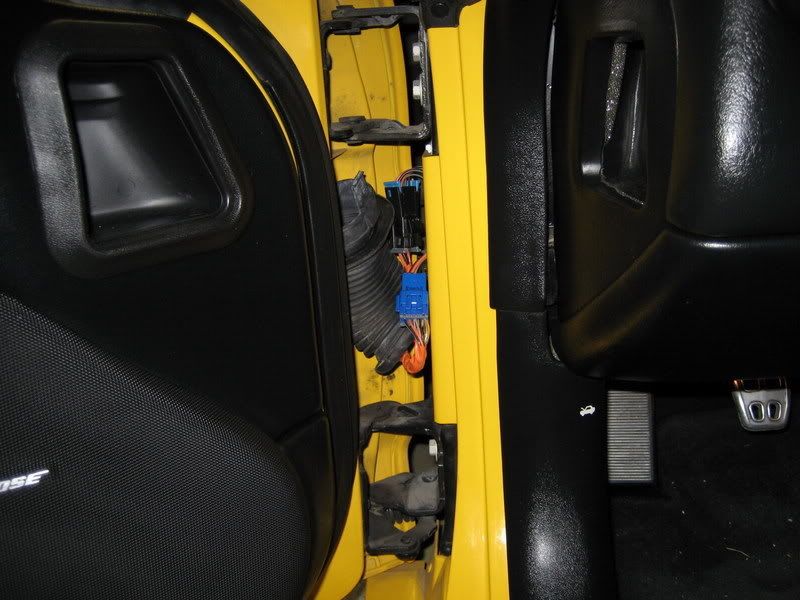
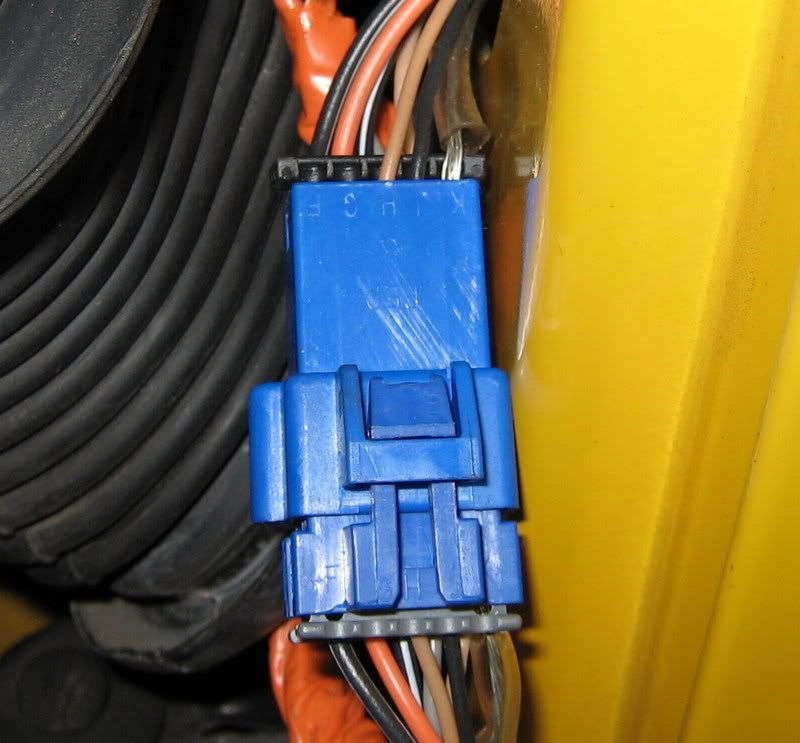
Seal that bare wire with liqiud electrical tape.
Report back the reults
BC
So after a few more expletives I buttoned her up to work on in the morning. The long-winded story was my way of re-re-restating what dozens have said here before - CHECK YOUR DOOR WIRING HARNESS!!! Thanks again to all, those grounds are scheduled for this weekend if I don't do 'em tomorrow.
Last edited by Scoobi_FreeBSD; Feb 24, 2009 at 10:55 PM. Reason: trunk, not hood.
Advanced
Joined: Sep 2007
Posts: 61
Likes: 2
From: Duluth GA
I haven't insulated the bare wire yet, I don't have the "liquid tape" stuff and the guy at Pep Boys had no idea what it was. So everything's pushed back in the accordion tube for now.
Few questions though:
1. Is the "bare wire" you're speaking of simply the area between the wire's clear insulating jacket and the connector it's inserted into? How is that going to come into contact with anything, or, more specifically, what is it coming in contact with to affect the bus?
2. Where do I get the spray-on insulator stuff?
3. Can the entire wire simply be replaced with a "proper" wire? I think I'd rather do that than slap some liquid insulator in there - at least replace the portion of the wire at the connector.
Thanks again,
Anthony
Few questions though:
1. Is the "bare wire" you're speaking of simply the area between the wire's clear insulating jacket and the connector it's inserted into? How is that going to come into contact with anything, or, more specifically, what is it coming in contact with to affect the bus?
2. Where do I get the spray-on insulator stuff?
3. Can the entire wire simply be replaced with a "proper" wire? I think I'd rather do that than slap some liquid insulator in there - at least replace the portion of the wire at the connector.
Thanks again,
Anthony

Instructor

Joined: Oct 2007
Posts: 214
Likes: 0
Well... wife got stranded this morning.
Lots of codes again, No PCM or TCA comm at all. Car was in a very precarious place so I did what I could to do a quick troubleshoot.
Pulled the bellows on the door, and all connectors are fine, as are wires. No obvious probs. Tough to really dig in there as the door was out in a busy street. yikes. Don't know where the seat harness runs, but again, tough to do anything.
Conveniently there's a Corvette shop 2 blocks away. Car miraculously started and we limped it there with no gauges at all.
The guys there were very cool and owner hooked up a scan tool. Two codes popping up consistently after all codes cleared was horn relay and backup light relay. Then attempting to start threw 2 other codes, I wasn't able to see clearly, but was flagged as disconnected or open ground..
Car stranded the mechanic a block away also when he was checking things out. Good part is that this is not so intermittent today. Bad part is that I'd prefer to be working on the car myself!
bob
Lots of codes again, No PCM or TCA comm at all. Car was in a very precarious place so I did what I could to do a quick troubleshoot.
Pulled the bellows on the door, and all connectors are fine, as are wires. No obvious probs. Tough to really dig in there as the door was out in a busy street. yikes. Don't know where the seat harness runs, but again, tough to do anything.
Conveniently there's a Corvette shop 2 blocks away. Car miraculously started and we limped it there with no gauges at all.
The guys there were very cool and owner hooked up a scan tool. Two codes popping up consistently after all codes cleared was horn relay and backup light relay. Then attempting to start threw 2 other codes, I wasn't able to see clearly, but was flagged as disconnected or open ground..
Car stranded the mechanic a block away also when he was checking things out. Good part is that this is not so intermittent today. Bad part is that I'd prefer to be working on the car myself!
bob
Instructor
Joined: Oct 2007
Posts: 214
Likes: 0
Car appears to be fixed. Thanks to Max at Race Street Rally.
I have to say that the level of complexity in this vehicles design from the electrics perspective never ceases to amaze me. The reliance on *pristine* wiring connections is the Corvettes achilles heel.
The smoking gun appears to be the positive battery cable junction located under the small black plastic Pos+ cover on the side of the under hood Relay Center. The nut was loose enough that the wires could be wiggled by hand. Wiggling the wires while the engine was running duplicated the failure behavior. Once the nut was tightened up all seems good.
Max is confident the problem is resolved. I, ever the pessimist, am hopeful and deferring final judgement for a few weeks becuase this car has played tricks on me before... In fact I think I'll run the car up on the ramps this weekend and make sure the positive cable is tight at the starter solenoid end also.. Needs an oil change anyway.

Thanks to Max at Race Street Rally.I have to say that the level of complexity in this vehicles design from the electrics perspective never ceases to amaze me. The reliance on *pristine* wiring connections is the Corvettes achilles heel.
The smoking gun appears to be the positive battery cable junction located under the small black plastic Pos+ cover on the side of the under hood Relay Center. The nut was loose enough that the wires could be wiggled by hand. Wiggling the wires while the engine was running duplicated the failure behavior. Once the nut was tightened up all seems good.
Max is confident the problem is resolved. I, ever the pessimist, am hopeful and deferring final judgement for a few weeks becuase this car has played tricks on me before... In fact I think I'll run the car up on the ramps this weekend and make sure the positive cable is tight at the starter solenoid end also.. Needs an oil change anyway.
Last edited by ruffian; Feb 25, 2009 at 09:38 PM.

Thread Starter
Tech Contributor


Joined: Dec 1999
Posts: 32,910
Likes: 2,402
From: Anthony TX
CI 6,7,8,9,11 Vet
St. Jude Donor '08
Ive had this issue and insulated the bare wire and the problem has NOT returned. The BARE WIRE has something to do with the issue. All I csn tell you is to repair the bare wire.
I haven't insulated the bare wire yet, I don't have the "liquid tape" stuff and the guy at Pep Boys had no idea what it was. So everything's pushed back in the accordion tube for now.
Few questions though:
1. Is the "bare wire" you're speaking of simply the area between the wire's clear insulating jacket and the connector it's inserted into? How is that going to come into contact with anything, or, more specifically, what is it coming in contact with to affect the bus?
2. Where do I get the spray-on insulator stuff?
3. Can the entire wire simply be replaced with a "proper" wire? I think I'd rather do that than slap some liquid insulator in there - at least replace the portion of the wire at the connector.
Thanks again,
Anthony
Few questions though:
1. Is the "bare wire" you're speaking of simply the area between the wire's clear insulating jacket and the connector it's inserted into? How is that going to come into contact with anything, or, more specifically, what is it coming in contact with to affect the bus?
2. Where do I get the spray-on insulator stuff?
3. Can the entire wire simply be replaced with a "proper" wire? I think I'd rather do that than slap some liquid insulator in there - at least replace the portion of the wire at the connector.
Thanks again,
Anthony
Instructor
Joined: Jan 2009
Posts: 140
Likes: 1
From: Whitesboro Texas
You can get the liquid tape at most boat dealerships. Most folks with boats use the stuff on their wiring..
Just an FYI. I had he same problems with my electrical system. The harness under the drivers seat turned out to be the main culprit. I used all of Bill's suggestions and low and behold " No more codes"
Just be patient.
Rick
Just an FYI. I had he same problems with my electrical system. The harness under the drivers seat turned out to be the main culprit. I used all of Bill's suggestions and low and behold " No more codes"
Just be patient.
Rick
Last edited by Rick Perkins; Feb 26, 2009 at 09:57 AM.
Thread Starter
Tech Contributor
Joined: Dec 1999
Posts: 32,910
Likes: 2,402
From: Anthony TX
CI 6,7,8,9,11 Vet
St. Jude Donor '08
Ive seen it at the local Walmart in Groton CT.
BC
BC
You can get the liquid tape at most boat dealerships. Most folks with boats use the stuff on their wiring..
Just an FYI. I had he same problems with my electrical system. The harness under the drivers seat turned out to be the main culprit. I used all of Bill's suggestions and low and behold " No more codes"
Just be patient.
Rick
Just an FYI. I had he same problems with my electrical system. The harness under the drivers seat turned out to be the main culprit. I used all of Bill's suggestions and low and behold " No more codes"
Just be patient.
Rick
Instructor
Joined: Jan 2009
Posts: 140
Likes: 1
From: Whitesboro Texas
Seat control module
I've searched this thread for an answer to this one but they all point to battery power draw. I have a buzzing noise coming from the seat control module under the driver seat. I pulled the seat today and found the elevator shaft broken. I did a temporary repair on it. The seat control module continues to buzz intermitently. Would I be better off replacing the module and the switches on the side of the seat or does anyone know of a fix for this? I plan on replacing the control switch anyway. It is broken and needs replacement. The only switch that works is the forward / back and the up down. As perverse as it sound, I've had a blast fixing this car.
Rick
Rick
Corvette Stories
The Best of Corvette for Corvette Enthusiasts

Top 10 Most Expensive Corvettes Ever Sold on Bring A Trailer
Brett Foote
10 Things Every Corvette Owner Needs (2026 Edition)
Michael S. Palmer
8 Most "Only Corvette Owners Understand" Quirks and Problems
Pouria Savadkouei
10 Reasons the C6 Z06 is Still A Performance Benchmark After 20 Years
Joe Kucinski
How Much Horsepower Every Corvette Engine "LOST" in 1972
Joe Kucinski
Top 10 DOs and DON'Ts for Protecting Your Convertible Top!
Michael S. Palmer
Top 10 Most Explosive Corvettes Ever Made: Power-to-Weight Ratio Ranked!
Joe Kucinski
150 hp to 1,250 hp: Every Corvette Generation Compared by the Specs That Matter
Joe Kucinski
8 Coolest Corvette Pace Cars (and Replicas) of All Time
Verdad Gallardo
Thread Starter
Tech Contributor
Joined: Dec 1999
Posts: 32,910
Likes: 2,402
From: Anthony TX
CI 6,7,8,9,11 Vet
St. Jude Donor '08
I've searched this thread for an answer to this one but they all point to battery power draw. I have a buzzing noise coming from the seat control module under the driver seat. I pulled the seat today and found the elevator shaft broken. I did a temporary repair on it. The seat control module continues to buzz intermitently. Would I be better off replacing the module and the switches on the side of the seat or does anyone know of a fix for this? I plan on replacing the control switch anyway. It is broken and needs replacement. The only switch that works is the forward / back and the up down. As perverse as it sound, I've had a blast fixing this car.
Rick
Rick
There are several things on the seat that can fail. If your multifunction switch doesn't return to the center position every time you release it, its BAD. Cant get much simpler than that. until you fix that switch, troubleshooting any further is a mute point. Repair /replace that switch and then report back what you see.
BC

Advanced
Joined: Feb 2005
Posts: 90
Likes: 0
From: Boaz Alabama
Bill, my 02 vert. has had a driver side door panel prob, it just goes dead and then nothing, today I was coming home, gages went crazy, DTC says reduced power and all of that, I put it in neutral, turned it off and restarted gages are back ok, but I have the door panel issue,, which would you say to look at first,,,, Thanks...
<Update>....Just checked the door today and seems as I wiggle the harness boot,,, the door comes back alive.. I will pull it when I get more time,,,,
<Update>....Just checked the door today and seems as I wiggle the harness boot,,, the door comes back alive.. I will pull it when I get more time,,,,
Last edited by ztron; Mar 11, 2009 at 08:14 AM.

Instructor
Joined: Jun 2006
Posts: 129
Likes: 0
From: Bristol VA
Ok ran into some strange electrical issues. About 4 days ago I started getting the dreaded C1214 code with the three basic warnings (service trac, abs, active handling) so I know I need to check those connectors. But today I put the top down to drive to work and about halfway there the radio died and the check gages light came on.
Battery voltage, rpm's, speedometer, HUD, Climate Control, power seats all work. Windows (from the driver side module), power mirrors, locks, essentially all controls from the driver door don't work. The DIC is flashing "reduced engine power" "low fuel" "service vehicle soon" and a few other things. If I turn the car off and back on it goes away but will randomly happen again. I've never had it do this with the windows up, only when I've had the windows down. It shows several history codes that are all U1016 and other U codes (I'll have to get the list from my office tomorrow).
Does this sound like an issue that could potentially be resolved by cleaning the grounds? I daily drive my corvette in almost all weather.
Battery voltage, rpm's, speedometer, HUD, Climate Control, power seats all work. Windows (from the driver side module), power mirrors, locks, essentially all controls from the driver door don't work. The DIC is flashing "reduced engine power" "low fuel" "service vehicle soon" and a few other things. If I turn the car off and back on it goes away but will randomly happen again. I've never had it do this with the windows up, only when I've had the windows down. It shows several history codes that are all U1016 and other U codes (I'll have to get the list from my office tomorrow).
Does this sound like an issue that could potentially be resolved by cleaning the grounds? I daily drive my corvette in almost all weather.
Thread Starter
Tech Contributor
Joined: Dec 1999
Posts: 32,910
Likes: 2,402
From: Anthony TX
CI 6,7,8,9,11 Vet
St. Jude Donor '08
Ok ran into some strange electrical issues. About 4 days ago I started getting the dreaded C1214 code with the three basic warnings (service trac, abs, active handling) so I know I need to check those connectors. But today I put the top down to drive to work and about halfway there the radio died and the check gages light came on.
Battery voltage, rpm's, speedometer, HUD, Climate Control, power seats all work. Windows (from the driver side module), power mirrors, locks, essentially all controls from the driver door don't work. The DIC is flashing "reduced engine power" "low fuel" "service vehicle soon" and a few other things. If I turn the car off and back on it goes away but will randomly happen again. I've never had it do this with the windows up, only when I've had the windows down. It shows several history codes that are all U1016 and other U codes (I'll have to get the list from my office tomorrow).
Does this sound like an issue that could potentially be resolved by cleaning the grounds? I daily drive my corvette in almost all weather.
Battery voltage, rpm's, speedometer, HUD, Climate Control, power seats all work. Windows (from the driver side module), power mirrors, locks, essentially all controls from the driver door don't work. The DIC is flashing "reduced engine power" "low fuel" "service vehicle soon" and a few other things. If I turn the car off and back on it goes away but will randomly happen again. I've never had it do this with the windows up, only when I've had the windows down. It shows several history codes that are all U1016 and other U codes (I'll have to get the list from my office tomorrow).
Does this sound like an issue that could potentially be resolved by cleaning the grounds? I daily drive my corvette in almost all weather.
LOOK AT THE POST DIRECTLY ABOVE YOURS!!!!!!!!Thats most likely your issue!

BC
Thread Starter
Tech Contributor
Joined: Dec 1999
Posts: 32,910
Likes: 2,402
From: Anthony TX
CI 6,7,8,9,11 Vet
St. Jude Donor '08
I added this information to DPG's BIG THREE post. It seemed like some more information to post here to arm C5 owners with more electrical ammo.
If your having power / voltage issues,, here are some ways that you can use to help combat the issue:
I've been thinking about making this post for a while. Its raining and cold out and my ZO6 is beyond dead
 so, I'm bummed out.
If you improve the following MAJOR wiring paths, you will significantly improve the electrical system operation and efficiency!! Ive been studying this issue for a LONG TIME and here are my recommendation:
1- Follow this post and clean and tune up your IGNITION SWITCH. Its FREE and works very well!! Over a period of time the contacts inside the switch get burnt and some critical body control and PCM circuits receive less than actual battery voltage. Once you clean the ignition switch and improve the contact pressure on the switches, you will see a significant improvement in module functionality:
http://forums.corvetteforum.com/c5-t...ch-repair.html
2- Improve the battery to alternator circuit. The alternator charges the battery thru the starter solenoid. In that circuit there are in line fuseaible links and eyelet type connections that are exposed to heat, weather and corrosion. As time goes by, these connections become POOR and alternator performance suffers. Examine the attached GM Schematic and notice how the alternator connects to the battery and the fusible links on the starter solenoid for the alternator.
-----------------------------------------------------------------

--------------------------------------------------------------------
Recommendation! Run a 4 - 8 gage wire from the POSITIVE battery terminal to the field terminal on the back of the alternator. Obtain a 60 amp fuse and fuse holder and install a fuse in that line near the battery to protect that hot wire from short circuits.
3- Better Chassis Ground at G-104/108. Chassis ground G-104/108 is a significant grounding point for numerous other chassis grounded circuits. ALL of the other chassis ground points enter the negative battery terminal through this wire.

Remove the negative battery terminal and remove the plastic/rubber cover from the battery terminal. You will see that the wire connections to the neg terminal are CRIMPED to the wire. This crimped connection frequently gets corroded/burnt/loose etc.. and causes poor performance. Remove the small negative ground wire from that connection and replace it with a 4 -8 gage wire. When you get the wire in the crimp connection, solder the connection. I use a giant soldering gun or a torch on low flame. Use lots of non acid flux for a good clean solder joint.
While your examining the battery terminals, inspect the POSITIVE BATTERY terminal wire crimped connections for proper conditions.
MAKE SURE THAT YOU PROPERLY ATTACH THE BATTERY TERMINALS TO THE BATTERY!! They need to be clean and tight. The GM torque spec for 97-2003 battery terminals is 11 ft/lbs.
If you follow the POSITIVE battery wires out of the crimped connection on the battery lead, you will see that it goes to TWO places:
- The Starter (main starter wire)
- The Engine Compartment Fuse Block, B+ terminal (main power for ALL the under-hood loads)
If you look at the pic below, you will see that the under hood fuse center has a B+ terminal on it that is where the battery cable connects to power the fuse block. You will also notice that theres a SECOND wire on that terminal. That wire is the B+ power wire for the Instrument Panel Fuse Block. NOTE! You will also note that in my pic, theres a "THIRD" connection. Thats my heated seat power line. You will NOT have this wire on yours

Some people have improved instrument panel circuit operation by incorporating that feed wire directly to the battery terminal; either in the crimp connection or if you have a side and top terminal on your battery, on one of those terminals.
General Chassis Grounds and circuit performance. Over the years, I have seen too many electrical problems to count. Many problems that I have seen can be contributed to poor chassis grounds. I have covered this in many electrical post but, make sure that you inspect and maintain your chassis grounds. Heres are some well documented examples of what hiding at your ground and grounding points!


THE GROUND SCHEMATIC!

The BIG THREE really does help. Get that engine and alternator better grounded to the CHASSIS!!!!
I hope this helps the BIG THREE get some more exposure and to help those of you who are experiencing POWER issue solve them. I will also copy this into my sticky (IMPORTANT ELECTRICAL INFORMATION (Long)
Bill Curlee
If your having power / voltage issues,, here are some ways that you can use to help combat the issue:
I've been thinking about making this post for a while. Its raining and cold out and my ZO6 is beyond dead
so, I'm bummed out.If you improve the following MAJOR wiring paths, you will significantly improve the electrical system operation and efficiency!! Ive been studying this issue for a LONG TIME and here are my recommendation:
1- Follow this post and clean and tune up your IGNITION SWITCH. Its FREE and works very well!! Over a period of time the contacts inside the switch get burnt and some critical body control and PCM circuits receive less than actual battery voltage. Once you clean the ignition switch and improve the contact pressure on the switches, you will see a significant improvement in module functionality:
http://forums.corvetteforum.com/c5-t...ch-repair.html
2- Improve the battery to alternator circuit. The alternator charges the battery thru the starter solenoid. In that circuit there are in line fuseaible links and eyelet type connections that are exposed to heat, weather and corrosion. As time goes by, these connections become POOR and alternator performance suffers. Examine the attached GM Schematic and notice how the alternator connects to the battery and the fusible links on the starter solenoid for the alternator.
-----------------------------------------------------------------
--------------------------------------------------------------------
Recommendation! Run a 4 - 8 gage wire from the POSITIVE battery terminal to the field terminal on the back of the alternator. Obtain a 60 amp fuse and fuse holder and install a fuse in that line near the battery to protect that hot wire from short circuits.
3- Better Chassis Ground at G-104/108. Chassis ground G-104/108 is a significant grounding point for numerous other chassis grounded circuits. ALL of the other chassis ground points enter the negative battery terminal through this wire.
Remove the negative battery terminal and remove the plastic/rubber cover from the battery terminal. You will see that the wire connections to the neg terminal are CRIMPED to the wire. This crimped connection frequently gets corroded/burnt/loose etc.. and causes poor performance. Remove the small negative ground wire from that connection and replace it with a 4 -8 gage wire. When you get the wire in the crimp connection, solder the connection. I use a giant soldering gun or a torch on low flame. Use lots of non acid flux for a good clean solder joint.
While your examining the battery terminals, inspect the POSITIVE BATTERY terminal wire crimped connections for proper conditions.
MAKE SURE THAT YOU PROPERLY ATTACH THE BATTERY TERMINALS TO THE BATTERY!!
They need to be clean and tight. The GM torque spec for 97-2003 battery terminals is 11 ft/lbs.If you follow the POSITIVE battery wires out of the crimped connection on the battery lead, you will see that it goes to TWO places:
- The Starter (main starter wire)
- The Engine Compartment Fuse Block, B+ terminal (main power for ALL the under-hood loads)
If you look at the pic below, you will see that the under hood fuse center has a B+ terminal on it that is where the battery cable connects to power the fuse block. You will also notice that theres a SECOND wire on that terminal. That wire is the B+ power wire for the Instrument Panel Fuse Block.
NOTE! You will also note that in my pic, theres a "THIRD" connection. Thats my heated seat power line. You will NOT have this wire on yoursSome people have improved instrument panel circuit operation by incorporating that feed wire directly to the battery terminal; either in the crimp connection or if you have a side and top terminal on your battery, on one of those terminals.
General Chassis Grounds and circuit performance. Over the years, I have seen too many electrical problems to count. Many problems that I have seen can be contributed to poor chassis grounds. I have covered this in many electrical post but, make sure that you inspect and maintain your chassis grounds. Heres are some well documented examples of what hiding at your ground and grounding points!
THE GROUND SCHEMATIC!
The BIG THREE really does help. Get that engine and alternator better grounded to the CHASSIS!!!!
I hope this helps the BIG THREE get some more exposure and to help those of you who are experiencing POWER issue solve them. I will also copy this into my sticky (IMPORTANT ELECTRICAL INFORMATION (Long)
Bill Curlee
Last edited by Bill Curlee; Apr 11, 2009 at 02:01 PM.


Racer
Joined: Sep 2005
Posts: 391
Likes: 0
From: Palm Coast FL
Hello Bill my name is Mike and I just bought a 99 FRC. I was told to ask you about an issue with my DIC switch and dimmer switch. Both light up when I put my lights on. When I turn the **** nothing happens on the dimmer. EDIT- it's working fine now. Also when I press the buttons on the dic switch nothing happens. Things like door ajar, competitive mode show up on the bottom. The Tire monitor sys stays on, but I think that's because the wheels are off an 07 Vette and have to be calibrated. I'm not sure if the car is throwing a code or not. I bought another dic switch thinking it's that but I'm reluctant to pull the dash if that's not the problem. Any help would be appreciated. Thanks in advance Mike.

Melting Slicks


Joined: Feb 2001
Posts: 2,156
Likes: 12
From: Farnham Virginia
Instrument Panel Fuse "CRK fuse# 14"
Bill,
I pm'd you on 4/11/09 about a random non-starting, flashing lights condition in my 01 coupe. I asked if it could be the ignition switch & you gave me a link to check all the fuses first. Well, I had checked all the fuses except I forgot to check the "CRK fuse". All other fuse voltages are present as expected. Well, I few minutes ago I checked fuse #14 and here's my result.
a) When the problem isn't there, I get zero volts at fuse #14 until I crank the engine. Voltage spikes at 10-11+ volts as the engine starts.
b) When the flashing dash lights/no start condition is present, I read battery voltage at fuse #14. Car won't start or turn over but battery voltage is present at the CRK fuse.
So, should I assume the ignition switch is the culprit?
Thanks in advance for your help,
Wayne
I pm'd you on 4/11/09 about a random non-starting, flashing lights condition in my 01 coupe. I asked if it could be the ignition switch & you gave me a link to check all the fuses first. Well, I had checked all the fuses except I forgot to check the "CRK fuse". All other fuse voltages are present as expected. Well, I few minutes ago I checked fuse #14 and here's my result.
a) When the problem isn't there, I get zero volts at fuse #14 until I crank the engine. Voltage spikes at 10-11+ volts as the engine starts.
b) When the flashing dash lights/no start condition is present, I read battery voltage at fuse #14. Car won't start or turn over but battery voltage is present at the CRK fuse.
So, should I assume the ignition switch is the culprit?
Thanks in advance for your help,
Wayne
Thread Starter
Tech Contributor
Joined: Dec 1999
Posts: 32,910
Likes: 2,402
From: Anthony TX
CI 6,7,8,9,11 Vet
St. Jude Donor '08
Wayne
When the starter cranks the engine, it pulls 300+ amps and battery voltage goes low. When the starter doesnt crank, you see full battery voltage on that circuit.
The symptoms that your describing tells me that it could very well be the switch. Its easy to remove and clean, Give that a try.
BC
When the starter cranks the engine, it pulls 300+ amps and battery voltage goes low. When the starter doesnt crank, you see full battery voltage on that circuit.
The symptoms that your describing tells me that it could very well be the switch. Its easy to remove and clean, Give that a try.
BC
Melting Slicks
Joined: Feb 2001
Posts: 2,156
Likes: 12
From: Farnham Virginia
Wayne
When the starter cranks the engine, it pulls 300+ amps and battery voltage goes low. When the starter doesnt crank, you see full battery voltage on that circuit.
The symptoms that your describing tells me that it could very well be the switch. Its easy to remove and clean, Give that a try.
BC
When the starter cranks the engine, it pulls 300+ amps and battery voltage goes low. When the starter doesnt crank, you see full battery voltage on that circuit.
The symptoms that your describing tells me that it could very well be the switch. Its easy to remove and clean, Give that a try.
BC
Thanks Bill, I'll give it a try and see what happens.
Wayne

Le Mans Master

Joined: Dec 2006
Posts: 7,251
Likes: 16
From: Phoenix Arizona
Wayne
When the starter cranks the engine, it pulls 300+ amps and battery voltage goes low. When the starter doesnt crank, you see full battery voltage on that circuit.
The symptoms that your describing tells me that it could very well be the switch. Its easy to remove and clean, Give that a try.
BC
When the starter cranks the engine, it pulls 300+ amps and battery voltage goes low. When the starter doesnt crank, you see full battery voltage on that circuit.
The symptoms that your describing tells me that it could very well be the switch. Its easy to remove and clean, Give that a try.
BC
 or.......the solenoid
Thread Starter
Tech Contributor
Joined: Dec 1999
Posts: 32,910
Likes: 2,402
From: Anthony TX
CI 6,7,8,9,11 Vet
St. Jude Donor '08